In today’s crowded inbox, attention is short and competition is intense. That’s why the very first email you send matters more than most marketers realize. A welcome email isn’t just a polite greeting—it’s a strategic opportunity to turn a new subscriber into an engaged reader, customer, or user.
Data consistently shows that welcome emails outperform nearly every other type of email. They can generate 4x higher open rates and 5x more clicks compared to standard campaigns . In many cases, they also drive significantly more revenue and conversions when done right .
Why does this happen? Because timing is everything. When someone signs up, they are at their highest level of interest. They’re curious, attentive, and expecting to hear from you. This creates a narrow but powerful window to build trust, deliver value, and guide them toward the next step.
What is a welcome email
A welcome email is the first message a person receives after subscribing to your email list, creating an account, or signing up for a product or service.
It serves as the starting point of your relationship with a new subscriber. Instead of jumping straight into promotions, a welcome email introduces your brand, explains what the subscriber can expect, and helps them take their first meaningful action.
Typically, a strong welcome email includes:
- A friendly introduction to your brand or product
- A clear explanation of what value the subscriber will receive
- Guidance on what to do next (e.g., explore features, read content, or make a purchase)
- Optional incentives like discounts or free resources
More importantly, it sets the tone for your entire email strategy. Whether your brand feels professional, playful, educational, or sales-driven often becomes clear in this very first interaction.
Why welcome emails matter
First impressions count
Your welcome email is your first real conversation with a subscriber—and first impressions are hard to change. If the message feels generic, confusing, or overly sales-focused, you risk losing attention immediately.
On the other hand, a thoughtful welcome email helps establish credibility and trust. It reassures subscribers that they made the right decision by signing up and gives your brand a human, relatable voice.
This matters because users are most engaged right after subscribing. Welcome emails can achieve open rates as high as 50–80% or more, far exceeding regular campaigns .
They keep people engaged
Engagement starts early—and welcome emails are your best chance to capture it.
Research shows that more than 8 out of 10 people open welcome emails, and they generate significantly more clicks than standard marketing emails . This early interaction sets the tone for future engagement.
If you use this moment well—by providing value, guiding users, or sparking curiosity—you increase the likelihood that subscribers will:
- Open future emails
- Interact with your content
- Move further down your funnel
Without a strong welcome email, many subscribers lose interest quickly or forget why they signed up in the first place.
They set expectations early
A welcome email is also where you define the relationship.
Subscribers want to know:
- What kind of emails they’ll receive
- How often they’ll hear from you
- What value they’ll gain
In fact, around 74% of people expect a welcome email immediately after signing up . If you don’t meet that expectation—or fail to clarify what comes next—you risk confusion, unsubscribes, or disengagement.
By setting clear expectations early, you:
- Reduce spam complaints
- Build trust and transparency
- Create a smoother customer journey
It also gives you a chance to guide behavior—whether that’s exploring your product, reading key content, or making a first purchase.
Ideas to make a great welcome email
A great welcome email isn’t about saying “thanks for signing up.” It’s about delivering value instantly, guiding the reader, and making the next step obvious. The most effective emails follow a simple principle: clarity beats complexity.
Strong welcome emails typically include:
- A clear and friendly introduction
- Immediate value (discount, resource, or insight)
- One focused call-to-action
- Personalization based on how the user signed up
When these elements come together, your welcome email becomes more than a greeting—it becomes a conversion tool.
A simple welcome email
A simple welcome email is often the most effective starting point—especially for newsletters, blogs, or brands that don’t require complex onboarding.
Instead of overwhelming new subscribers, this type of email focuses on:
- Saying hello
- Delivering what was promised
- Guiding one clear next step
This works because new subscribers are most engaged right after signing up. A clean, focused email helps them act quickly without confusion.
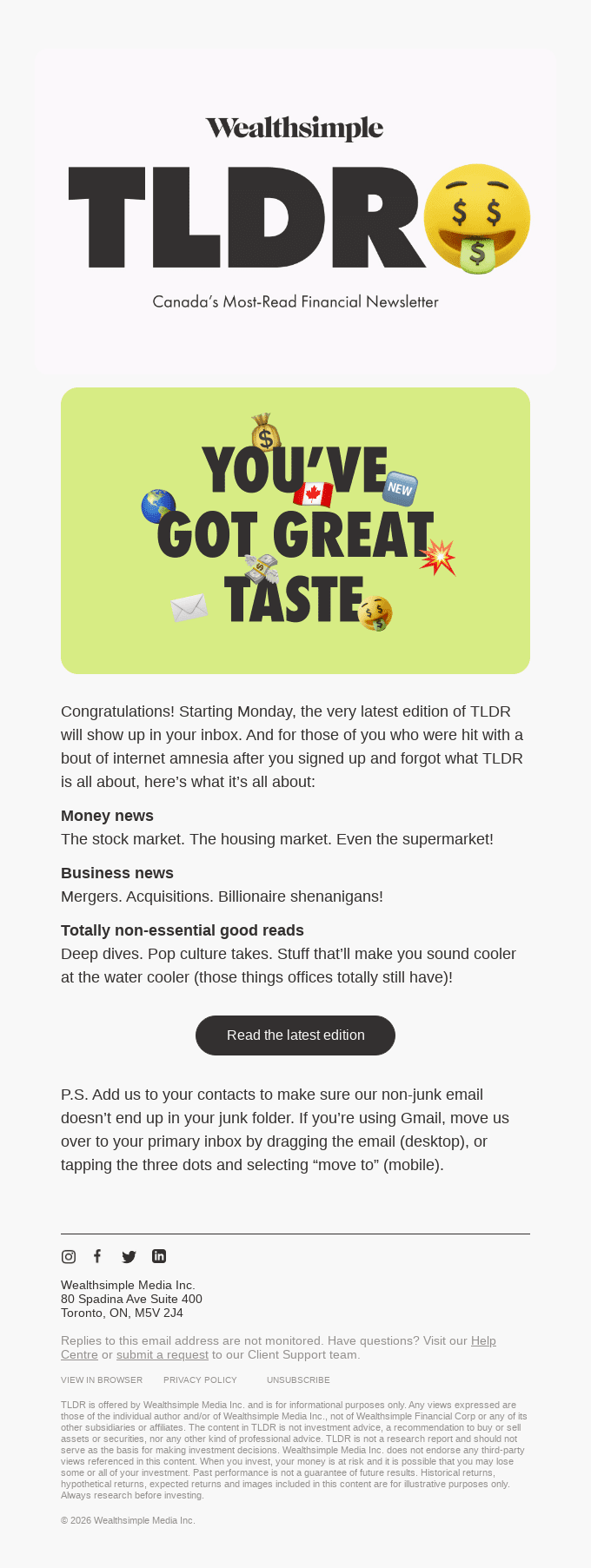
Here are some ways to do it:
1. Using creative copy:
Your copy is what makes your email feel human instead of automated.
Instead of generic lines like “Thanks for subscribing,” use:
- A conversational tone
- A relatable hook
- Messaging that reflects your brand personality
For example:
- Confirm their action (“You’re in—here’s what you signed up for”)
- Reinforce value (“Here’s how this will help you”)
- Guide the next step (“Start here” or “Explore this first”)
Creative copy works because it builds an emotional connection early, which increases engagement and future opens. It also helps your email stand out in crowded inboxes.
2. Illustrations:
Visual elements like illustrations, icons, or simple graphics can make your welcome email more engaging and easier to scan.
Why this matters:
- Most users skim emails in seconds
- Visuals help highlight key points quickly
- They reinforce your brand identity
A simple illustration can:
- Show how your product works
- Highlight key benefits
- Add personality without adding complexity
Just keep it clean—too many visuals can distract from your main message.
Welcome email with micro interactions
Micro interactions are small actions you encourage users to take inside your welcome email. While they may seem minor, they have a big impact on deliverability, engagement, and long-term performance.
These actions signal to email providers that your emails are valuable—helping you land in the inbox instead of spam.
1. Ask them to add your email to their contact list
This is one of the simplest but most overlooked tactics.
When subscribers add your email address to their contacts:
- Your emails are less likely to go to spam
- Your deliverability improves over time
You can include a short line like:
“To make sure you don’t miss anything, add us to your contacts.”
This small step helps protect your future campaigns and ensures consistent visibility.
2. Pose a question to motivate them to reply
Encouraging replies is one of the most powerful engagement signals.
You can ask simple questions like:
- “What are you hoping to achieve?”
- “What made you sign up today?”
Why this works:
- Replies improve email deliverability
- They create a two-way conversation
- You gain valuable insights about your audience
Emails that feel interactive perform better because they shift from broadcasting to conversation.
Here an example: 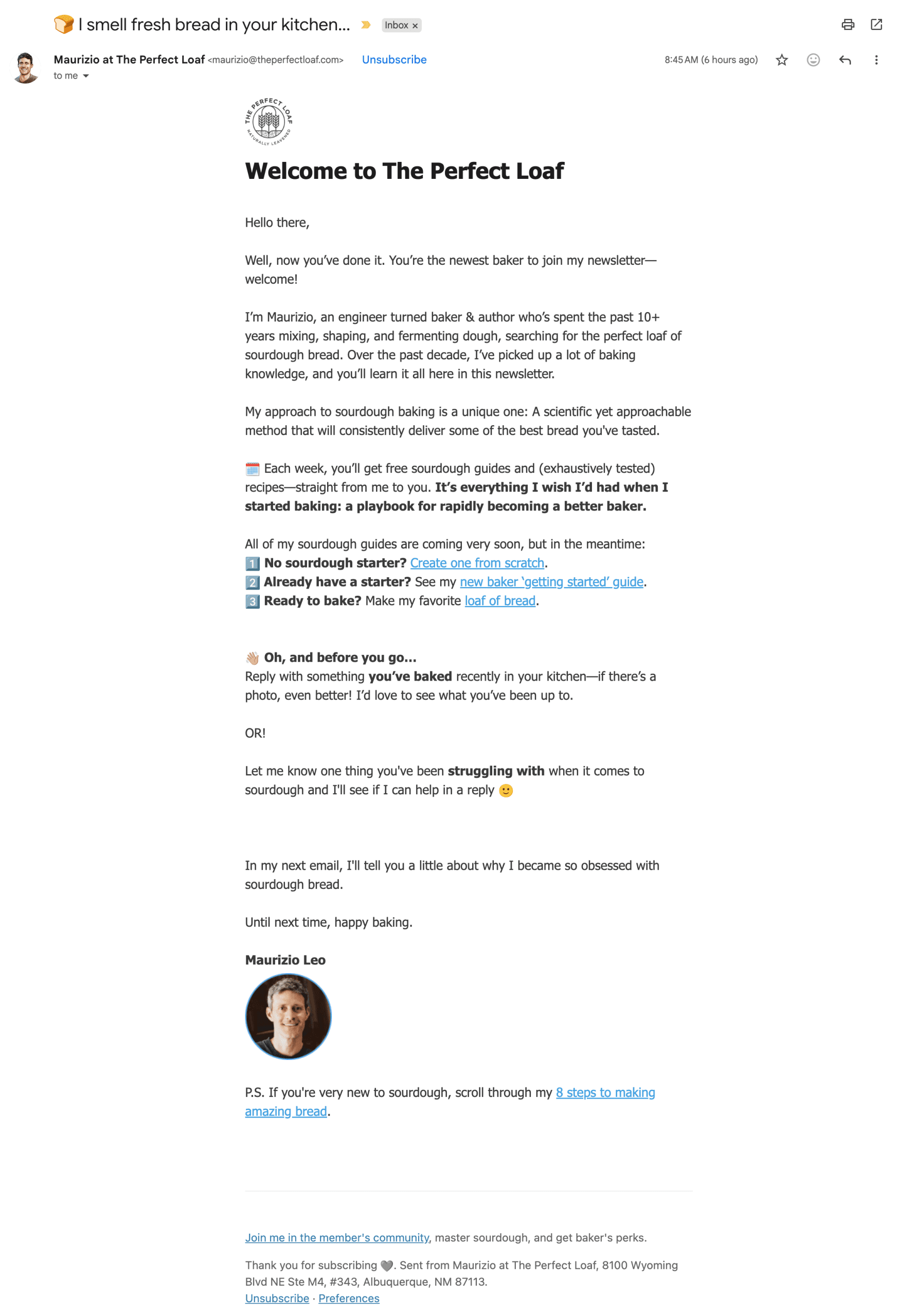
Promotional welcome email

A promotional welcome email combines introduction with an incentive—usually designed to drive immediate action.
This is especially common in:
- E-commerce brands
- SaaS free trials
- Subscription-based services
A typical structure includes:
- A welcome message
- A clear value proposition
- A time-sensitive offer (discount, free trial, bonus)
- One strong CTA
For example:
- “Here’s 10% off your first order”
- “Start your free trial today”
This approach works because new subscribers are at peak interest. If you give them a compelling reason to act immediately, conversion rates can increase significantly.
However, balance is key:
- Don’t make it purely sales-focused
- Pair the offer with value and context
- Keep the message clear and focused
Even in promotional emails, clarity and relevance matter more than aggressive selling. The goal is to convert without overwhelming—and to set the stage for a longer relationship.
Having a welcome email series
A single welcome email can work—but if you want to educate, build trust, and convert consistently, a welcome email series is far more powerful.
A welcome email series is an automated sequence of emails sent over a few days after someone signs up. Instead of trying to say everything in one message, you break your communication into focused steps, each with a clear goal.
This approach matters because new subscribers are at their peak interest right after signing up. If you guide them properly during this window, you can significantly increase engagement, product adoption, and conversions. In fact, structured welcome sequences can generate more revenue and long-term engagement than one-off emails.
Why a welcome email series works better
- It avoids overwhelming new users with too much information at once
- It creates a guided journey instead of random communication
- It allows you to build trust gradually
- It increases the chances of meaningful action (trial, purchase, reply, etc.)
Most high-performing brands use 3–7 emails spaced over 1–2 weeks, depending on the business model and audience.
Structure for a welcome email series for SaaS
For SaaS products, the goal of a welcome series is simple: get users to experience value as quickly as possible. That usually means guiding them from signup → activation → adoption.
Here’s a proven structure you can follow:
Email 1: Welcome
This email should be sent immediately after signup.
Its purpose is to:
- Confirm the signup
- Deliver any promised resource (free trial, checklist, etc.)
- Introduce your product briefly
- Set expectations for what’s coming next
Keep it simple and focused. Include one clear call-to-action like:
- “Start your dashboard”
- “Set up your account”
This email sets the tone for everything that follows.
Email 2: Highlight main feature
Once the user is onboard, your next goal is to show them value quickly.
Instead of listing all features, focus on:
- Your core feature (the main reason people use your product)
- The outcome it delivers
For example:
- A project management tool might highlight task tracking
- A marketing tool might highlight automation
The key here is not explaining everything—but helping users experience one important benefit fast.
Email 3: Introduce other features
Now that the user understands the main feature, you can expand their knowledge.
This email should:
- Introduce supporting features
- Show how they enhance the main use case
- Help users explore more of your product
Use simple explanations, short visuals, or quick walkthroughs.
Avoid feature overload—focus on use cases, not technical details.
Email 4: Share case studies to build trust
At this stage, users are aware of your product—but they may still need reassurance.
This email builds credibility through:
- Customer success stories
- Testimonials
- Real-world use cases
This works because people trust other users more than brands. Social proof helps remove doubt and shows what’s possible.
A strong case study answers:
- Who used the product
- What problem they had
- What results they achieved
Email 5: Encourage action (conversion email)
Now it’s time to drive a meaningful action.
Depending on your SaaS model, this could be:
- Starting a free trial
- Booking a demo
- Upgrading to a paid plan
This email should:
- Reinforce value
- Highlight urgency or benefits
- Provide a clear, frictionless CTA
The tone should feel helpful—not pushy.
Best welcome email examples
Looking at real-world examples helps you understand what actually works—not just in theory, but in practice. Below are six types of welcome emails that consistently perform well, along with what makes each one effective.
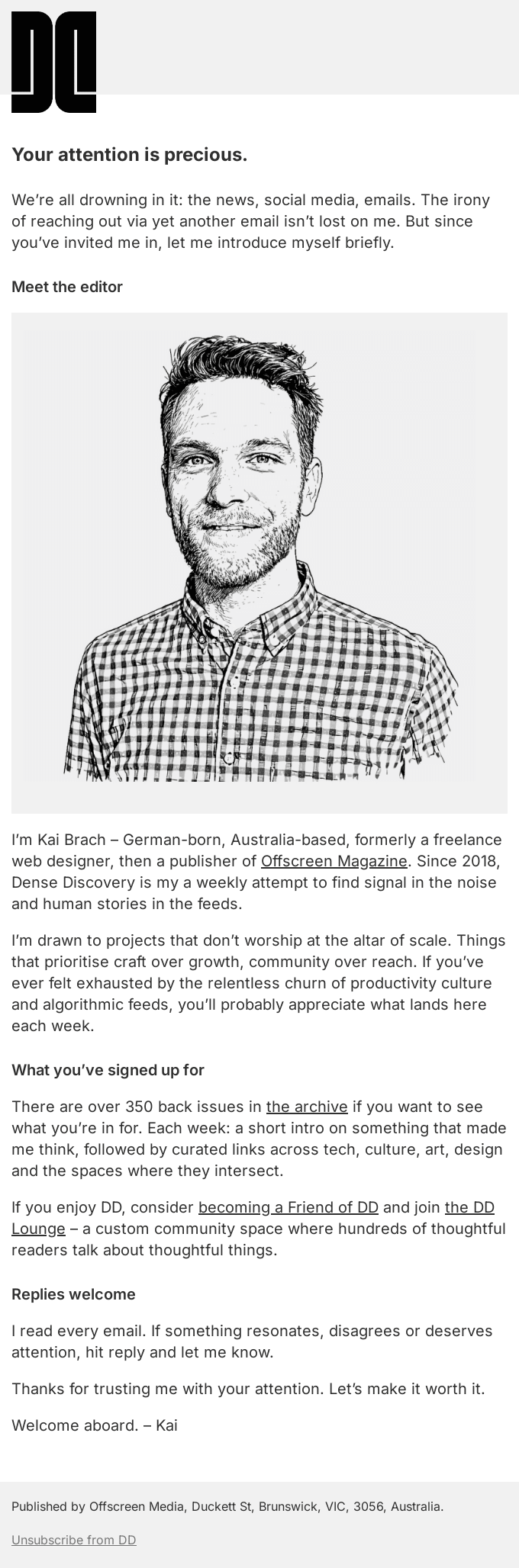
1. Dense Discovery – simple, effective welcome email
This type of welcome email focuses on clarity and simplicity.
Instead of adding too many elements, it:
- Clearly welcomes the subscriber
- Explains what they signed up for
- Provides a direct next step
Why it works:
- No confusion
- Easy to read and act on
- Perfect for newsletters or content-driven brands
This approach proves that you don’t need complex design or heavy copywriting—just clear communication and value.
Here an example:
2. Marketing Examples – simple & elegant
This style focuses on clean design and thoughtful presentation.
Key characteristics:
- Minimal layout
- Clear typography
- Well-structured content
Why it works:
- Makes the email easy to scan
- Feels professional and trustworthy
- Keeps the focus on the message
It’s especially effective for brands that want to position themselves as modern, premium, or design-conscious.
Here an example:

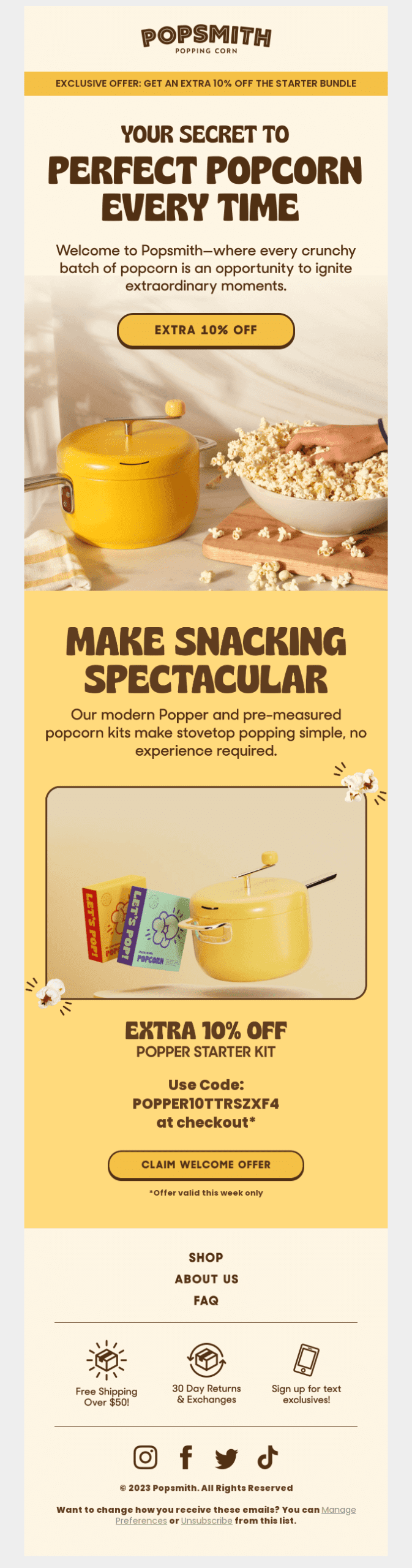
3. Popsmith – getting users onboarded with a discount
This is a classic promotional welcome email done right.
Instead of just offering a discount, it:
- Combines a warm welcome with an incentive
- Encourages immediate action
- Highlights products or benefits
Why it works:
- Takes advantage of peak interest
- Reduces hesitation for first-time buyers
- Drives quick conversions
This approach is widely used in eCommerce because it blends emotion (welcome) + motivation (discount).
Here an example:
4. wildwonder – building one-on-one connection
This example focuses on human connection and brand personality.
Instead of sounding corporate, it:
- Uses a conversational tone
- Feels like a personal message
- Builds emotional connection
Why it works:
- Makes subscribers feel valued
- Encourages replies and engagement
- Creates a stronger brand relationship
Emails that feel personal often outperform polished but generic ones.
Here an example:

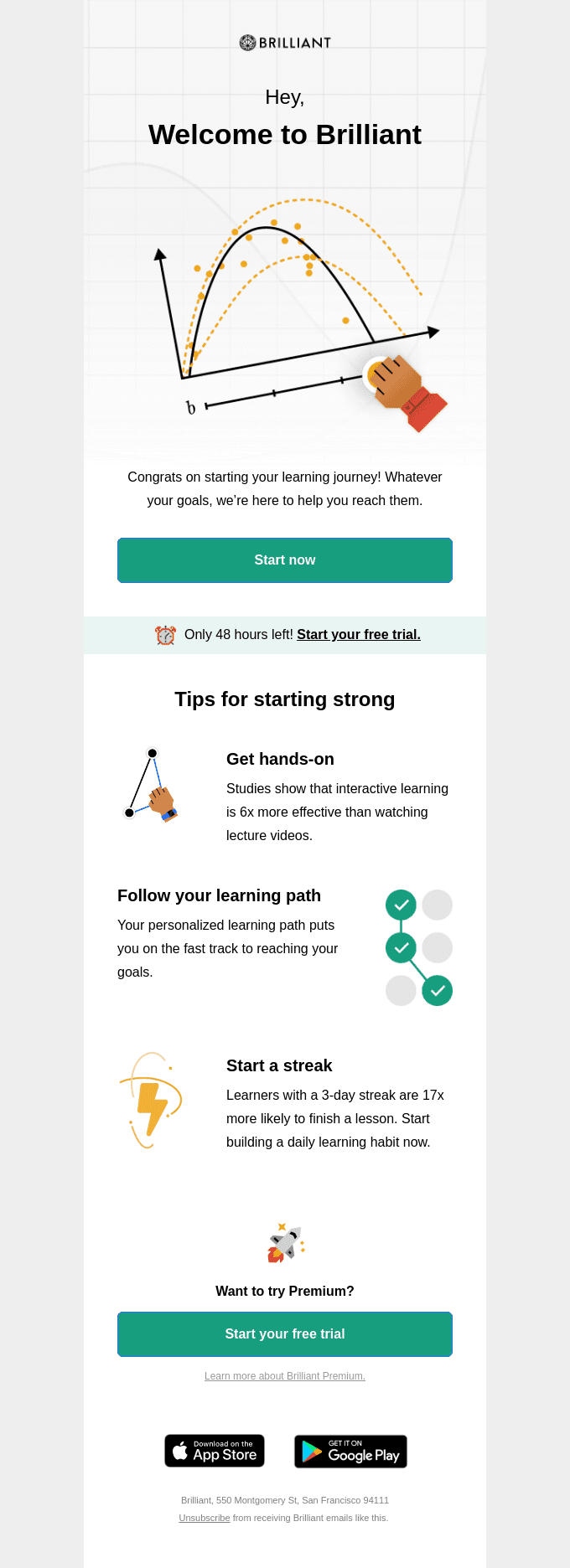
5. Brilliant – explaining how to get started
This type of welcome email focuses on onboarding and clarity.
It helps users:
- Understand how the product works
- Take the first step
- Avoid confusion
Why it works:
- Reduces friction for new users
- Improves activation rates
- Makes the experience smoother
For SaaS or apps, this is one of the most important types of welcome emails.
Here an example:
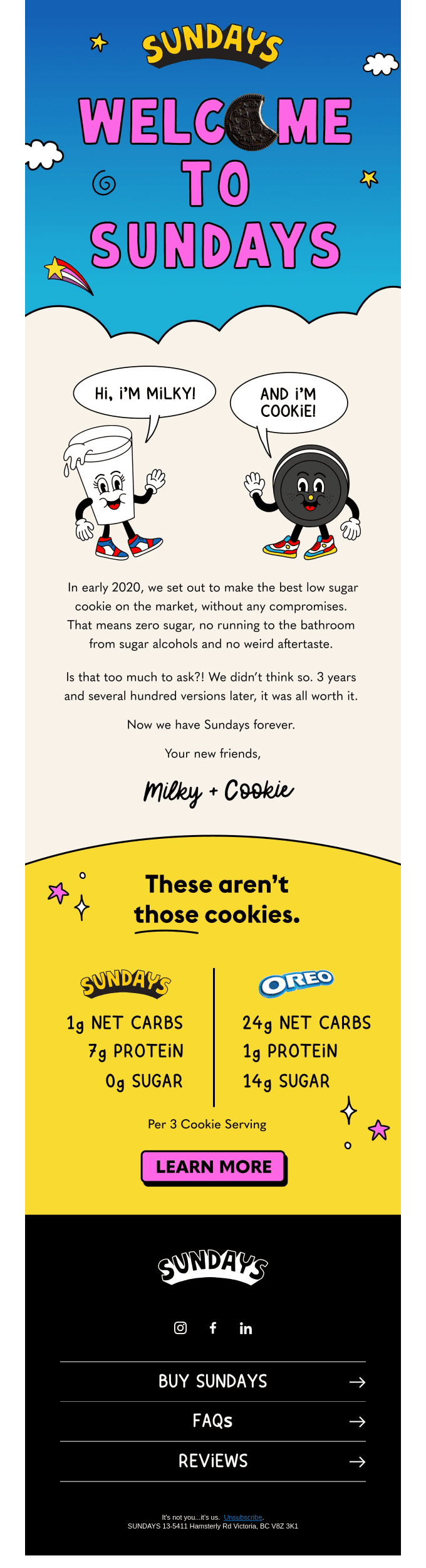
6. Sundays – welcoming with a fun and quick benefit summary
This example stands out by combining:
- A friendly tone
- A quick summary of benefits
- A light, engaging style
Instead of long explanations, it quickly answers:
- “What’s in it for me?”
Why it works:
- Captures attention quickly
- Keeps the email short and engaging
- Communicates value instantly
Here an example:
How to set up welcome emails using Teno Mail
Setting up welcome emails in Teno Mail is designed to be simple, even if you’re new to email automation. The platform focuses on helping you create, automate, and optimize email flows without technical complexity.
Here’s how you can set up a welcome email step by step:
1. Create your email list
Start by creating or importing your subscriber list inside Teno Mail. You can:
- Add contacts manually
- Import from a CSV file
- Connect signup forms from your website or landing pages
This ensures every new subscriber is automatically added to your system.
2. Build a signup form or integration
Teno Mail allows you to collect subscribers through:
- Embedded website forms
- Pop-ups or landing pages
- API or third-party integrations
Once connected, every new signup becomes a trigger for your welcome email.
3. Create your welcome email
Use the built-in email editor to design your message. You can:
- Choose from pre-designed templates
- Customize layout, colors, and branding
- Add text, images, buttons, and links
Make sure your email includes:
- A clear welcome message
- Value or incentive (if applicable)
- A strong call-to-action
4. Set up automation (trigger-based email)
This is where the real power comes in.
In Teno Mail, you can create an automation workflow:
- Trigger: “When a user subscribes”
- Action: “Send welcome email”
You can also expand this into a sequence by adding:
- Delays (e.g., send next email after 2 days)
- Multiple emails (for onboarding or nurturing)
This allows you to build a full welcome email series effortlessly.
5. Personalize your emails
Teno Mail supports personalization using subscriber data such as:
- Name
- Signup source
- Behavior
Personalized emails feel more relevant and can significantly improve engagement and conversion rates.
6. Test and optimize
Before going live:
- Send test emails to yourself
- Check mobile responsiveness
- Verify links and CTAs
After launching, monitor performance metrics like:
- Open rates
- Click-through rates
- Conversions
Use these insights to improve your welcome emails over time.
Wrapping It Up
Welcome emails are more than just a polite introduction—they’re one of the most powerful tools in your email marketing strategy. From the moment someone subscribes, you have a short window of high attention and intent. How you use that moment determines whether a subscriber becomes an engaged reader, an active user, or a lost opportunity.
Throughout this guide, one theme stands out clearly: clarity, timing, and relevance drive results. Whether you choose a simple welcome email, a promotional offer, or a full onboarding sequence, the goal is always the same—help the subscriber take the next step with confidence.
The most effective welcome emails:
- Deliver immediate value
- Set clear expectations
- Guide users toward meaningful action
- Build trust from the very first interaction
And if you want to go further, a well-structured welcome email series allows you to educate, nurture, and convert over time without overwhelming your audience.
Read More: Stop Guessing What Works in Your Emails. Let AI Show You.