Email forwarding is one of the most commonly used features across personal and professional communication. Whether someone is sharing a newsletter with a colleague, forwarding an invoice to the finance department, or sending a promotional email to a friend, forwarding helps information reach more people with minimal effort.
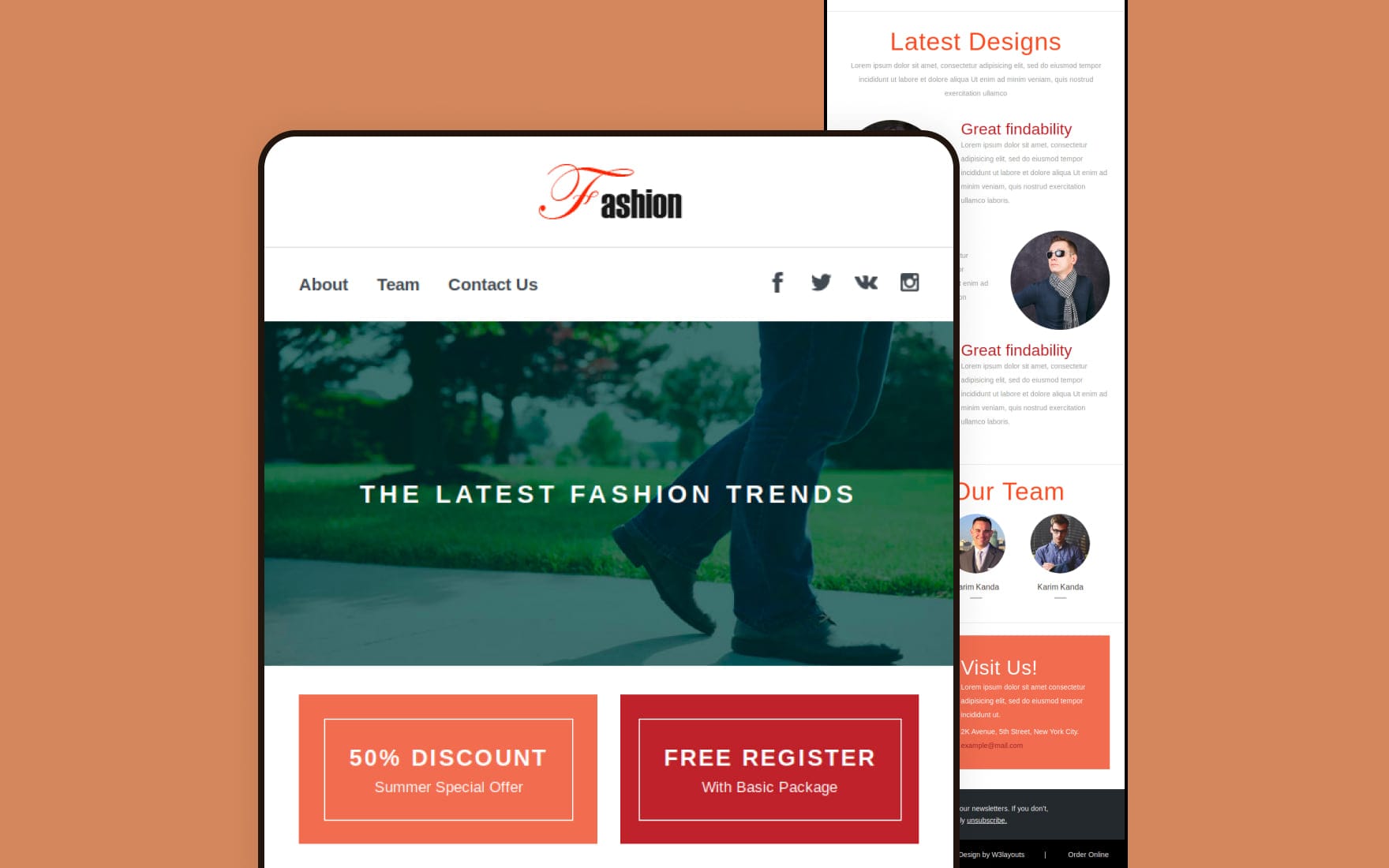
However, what appears to be a simple action often introduces unexpected technical problems. A beautifully designed email that looked perfect in the original inbox may appear broken, cluttered, or inconsistent after being forwarded. Images may shift out of place, buttons can lose their styling, text may appear multiple times, and carefully aligned layouts can become distorted. These issues are especially noticeable in HTML emails, where the design depends on a combination of HTML structure, CSS styling, and client-specific rendering rules.
The reason is that forwarding does not simply pass the original email unchanged. Instead, the receiving email client creates a new message, processes the original HTML again, and often rewrites parts of the underlying code. During this process, different email applications apply their own rendering engines, modify existing markup, add additional containers, or remove unsupported styling. Even when the original email was tested thoroughly before being sent, forwarding introduces a completely new rendering environment that the sender cannot control.
This challenge becomes even greater because every email client interprets HTML differently. An email forwarded from Outlook may display differently in Gmail, while Yahoo Mail, Apple Mail, and mobile email apps each have their own rendering behavior. As a result, the forwarded version may no longer reflect the design or user experience that the sender originally intended.
For businesses, marketers, and organizations that rely on professional email communication, these formatting issues can have real consequences. Broken layouts reduce readability, duplicate content can confuse recipients, inconsistent branding may weaken trust, and damaged call-to-action buttons can lower engagement. While no sender can completely control how recipients forward emails, understanding why these problems occur makes it much easier to design emails that remain readable and functional across different forwarding scenarios.
Why Does Forwarding Affect Email Formatting?

Unlike forwarding a PDF or an image, forwarding an HTML email is not simply copying the original file. Most email clients reconstruct the message before sending it again. During this reconstruction process, the client may rewrite HTML elements, inject new code, remove unsupported CSS, or reorganize existing content to fit its own rendering engine.
Since there is no universal HTML standard across email clients, every platform handles forwarded messages differently. Outlook relies heavily on Microsoft Word’s rendering engine, Gmail applies its own HTML sanitization rules, while Apple Mail generally preserves more of the original structure. These differences explain why the same forwarded email can look completely different depending on where it is opened.
The most common formatting problems fall into three major categories.
Layout Distortions
Email layouts are typically built using HTML tables rather than modern web design techniques. Although tables may seem outdated, they remain the most reliable way to create responsive emails across dozens of email clients.
During forwarding, however, email clients often wrap the original message inside additional HTML containers, quotation blocks, or nested tables. These extra layers can interfere with the original structure and cause the layout to render differently than intended.
Common layout distortions include:
- Images shifting away from their intended positions.
- Tables expanding or collapsing unexpectedly.
- Uneven spacing between content blocks.
- Misaligned columns.
- Buttons appearing in the wrong location.
- Increased or reduced padding around text.
Complex newsletter designs are particularly vulnerable because they contain multiple nested tables and responsive elements. Every additional HTML layer inserted during forwarding increases the chance that part of the layout will break.
In some cases, forwarding also changes the available content width. A design originally optimized for a 600-pixel email container may become compressed or stretched after the forwarding client wraps the message inside another container.
These layout inconsistencies can significantly reduce readability, especially on mobile devices where available screen space is already limited.
Text Duplication
One of the most confusing problems users encounter after forwarding an email is duplicated content.
Recipients may notice repeated paragraphs, duplicated headlines, multiple buttons, or identical content appearing twice within the same message. At first glance, this often looks like a mistake made by the sender, but it usually originates during the forwarding process itself.
Some email clients insert hidden HTML elements into messages to preserve formatting when users reply or forward emails. Under certain conditions, these hidden elements become visible after the email is reprocessed, causing parts of the message to appear more than once.
Additional duplication may occur when:
- Nested HTML structures are interpreted incorrectly.
- Quoted content is rendered multiple times.
- Dynamic content blocks are processed again.
- Conditional HTML comments become visible.
- Forwarding clients recreate existing content containers.
This issue is especially noticeable in lengthy newsletters, promotional campaigns, and emails containing multiple content sections.
Duplicate content creates unnecessary visual clutter and makes important information harder to locate. Instead of guiding readers toward a clear call-to-action, duplicated sections may confuse recipients about which information is current or relevant.
Broken Styling
Visual styling plays an essential role in professional email communication. Fonts, colors, spacing, alignment, buttons, and branding all depend on HTML and CSS working together correctly.
Unfortunately, forwarding often strips or modifies portions of the original styling.
Many email clients remove unsupported CSS, ignore embedded style sheets, or rewrite existing formatting during the forwarding process. Even inline styles—which generally offer the highest compatibility—may not always survive intact if the forwarding client restructures the HTML.
Broken styling commonly results in:
- Default system fonts replacing branded typography.
- Incorrect font sizes.
- Missing font weights.
- Changed text colors.
- Broken button styling.
- Lost background colors.
- Inconsistent spacing.
- Incorrect alignment.
Interactive design elements may also stop functioning as intended. Rounded buttons can become plain rectangles, columns may stack incorrectly, and visual hierarchy may disappear entirely.
Although the email content usually remains readable, the professional appearance of the message often suffers significantly.
Key Challenges with Forwarding Emails
Forwarding affects much more than appearance alone. It introduces technical inconsistencies that make it difficult for senders to deliver a consistent experience across every recipient and email platform.
Understanding these challenges helps marketers and email designers build campaigns that remain more resilient after being forwarded.
Duplicated Text or Elements
The most visible challenge is unintended duplication.
Forwarded emails sometimes display repeated paragraphs, duplicated logos, extra dividers, multiple buttons, or repeated promotional banners. These duplicates are generally created when forwarding clients reinterpret hidden HTML elements or reconstruct existing content containers.
While duplication may seem like a minor visual issue, it can negatively affect user experience by:
- Making emails appear unprofessional.
- Creating unnecessary scrolling.
- Distracting readers from key information.
- Reducing trust in the message.
- Obscuring important calls to action.
For marketing campaigns, duplicated promotional sections may also create confusion about offers, pricing, or expiration dates.
The more complicated the email design, the greater the likelihood that duplicated elements will appear after forwarding.
HTML Rendering Differences
Unlike modern web browsers, email clients do not follow a single rendering standard.
Each platform has its own HTML engine, supported CSS properties, and security restrictions. As a result, identical HTML code may produce different visual results depending on the application displaying it.
For example:
- Outlook relies on a rendering engine with limited CSS support.
- Gmail removes or modifies certain HTML and CSS elements.
- Apple Mail generally supports a broader range of HTML features.
- Mobile email applications may simplify layouts even further.
When an email is forwarded between different clients, the HTML is effectively interpreted multiple times. Each interpretation introduces new opportunities for formatting changes, broken layouts, or altered styling.
This inconsistency makes forwarded HTML emails inherently less predictable than their original versions.
Compatibility Issues
Compatibility remains one of the biggest challenges in email design, and forwarding amplifies these limitations.
Modern websites can rely on advanced CSS, animations, flexible layouts, and JavaScript. Email clients, however, support only a limited subset of these technologies.
When an email containing advanced design techniques is forwarded, unsupported features are often removed or ignored.
Common compatibility issues include:
- Unsupported CSS properties.
- Broken responsive layouts.
- Missing media queries.
- Incorrect image scaling.
- Altered button appearance.
- Lost background images.
- Inconsistent spacing across devices.
The situation becomes even more complex when recipients use older desktop email applications or enterprise environments that rely on outdated rendering engines.
Because the sender has no control over which application recipients use—or how they forward the message—complete consistency can never be guaranteed.
For this reason, experienced email designers typically prioritize simplicity, broad compatibility, and robust HTML structures over visually complex designs. A simpler email is generally far more likely to survive forwarding with minimal disruption while still delivering a clear, professional experience to every recipient.
How to Mitigate the Impact of Forwarding

Although you cannot control how recipients forward your emails, you can significantly reduce formatting issues by following email design best practices. The goal is to create messages that remain readable, functional, and visually consistent even after they pass through different email clients and forwarding processes.
By simplifying your HTML structure, using widely supported styling techniques, and testing your emails thoroughly, you can improve compatibility across desktop, mobile, and web-based email applications. The following practices help minimize layout distortions, duplicated elements, and styling inconsistencies that often occur when emails are forwarded.
Simplify Your Email Design
Complex email designs are generally more vulnerable to formatting issues during forwarding. Every additional HTML table, nested container, custom font, or advanced CSS property increases the chances that an email client will render the forwarded version differently.
Instead of relying on intricate layouts, prioritize a clean and well-structured design that emphasizes readability. A straightforward layout is not only easier for email clients to process but also provides a better experience for recipients using different devices and inbox providers.
Some best practices include:
- Use a single-column layout whenever possible.
- Limit deeply nested HTML tables.
- Keep sections clearly separated with consistent spacing.
- Use standard fonts that are widely supported across email clients.
- Avoid unnecessary decorative elements that depend on advanced CSS.
- Minimize the number of custom HTML components.
Simple emails tend to remain stable even when forwarded multiple times. They are also easier to scan, improve accessibility, and often perform better on mobile devices.
Remember that email clients are far more restrictive than modern web browsers. Designing for compatibility rather than visual complexity helps preserve the integrity of your message throughout its lifecycle.
Include a Web Version Link
One of the most effective ways to protect the user experience is to provide recipients with access to a web-hosted version of your email.
A “View in Browser” or “Open Web Version” link allows recipients to access the original email through their browser instead of relying on the forwarded copy. Since web browsers support modern HTML and CSS more consistently than email clients, the online version usually preserves the intended layout, typography, images, and branding.
Including a web version offers several advantages:
- Preserves the original design and formatting.
- Eliminates rendering issues caused by forwarding.
- Ensures interactive elements display correctly.
- Improves accessibility for recipients experiencing display problems.
- Provides a reliable alternative if images or styles fail to load.
This approach is especially valuable for newsletters, promotional campaigns, product announcements, and other visually rich emails where design plays an important role in communicating your message.
Place the web version link near the top of the email so recipients can easily find it if the forwarded message appears distorted.
Test Across Multiple Clients
No matter how carefully an email is designed, assumptions about compatibility can lead to unexpected formatting problems. Every major email client interprets HTML differently, making comprehensive testing an essential part of the email creation process.
Before launching a campaign, preview your email across a wide range of environments, including:
- Gmail
- Outlook
- Apple Mail
- Yahoo Mail
- Android email apps
- iPhone Mail
- Popular webmail services
- Desktop email applications
Testing helps identify issues such as:
- Broken layouts
- Misaligned images
- Font inconsistencies
- Button rendering problems
- Responsive design failures
- Spacing irregularities
Whenever possible, include forwarding as part of your quality assurance process. Forward the email between different providers—for example, from Gmail to Outlook or Outlook to Apple Mail—to observe how the design changes after being reprocessed.
Testing cannot eliminate every forwarding issue, but it allows you to identify vulnerabilities before recipients encounter them. Early testing also gives designers the opportunity to simplify problematic sections or replace unsupported styling with more reliable alternatives.
Educate Your Subscribers
While technical optimization is important, subscriber behavior also plays a role in preserving email quality.
Many recipients forward emails without realizing that the process may alter formatting or create visual inconsistencies. Providing gentle guidance can help reduce confusion and improve the experience for both the original recipient and anyone they share the message with.
Depending on the purpose of your campaign, you might encourage readers to:
- Share the browser version instead of forwarding the email.
- Use dedicated “Share” or “Forward to a Friend” features if available.
- Visit the original webpage for the most up-to-date information.
- Access downloadable resources directly from your website.
For newsletters or recurring campaigns, consider including a short note explaining that forwarded emails may not display exactly as intended. This sets realistic expectations while directing readers toward the best viewing option.
Educating subscribers is particularly useful when your emails contain interactive content, dynamic personalization, embedded forms, or time-sensitive offers that may not function properly after forwarding.
Use Inline Styles Over External CSS
CSS support remains one of the biggest challenges in email development. Unlike websites, most email clients provide limited support for modern CSS techniques, and forwarding can introduce another layer of inconsistency by removing or rewriting certain styling rules.
To maximize compatibility, apply critical styling directly to individual HTML elements using inline CSS rather than relying on embedded or external style sheets.
Inline styles help preserve formatting for essential design elements such as:
- Font size
- Font color
- Text alignment
- Padding
- Background colors
- Borders
- Button appearance
For example, instead of depending on a shared stylesheet to style all buttons, each button should contain its own inline formatting. This increases the likelihood that the forwarded version will retain its intended appearance.
It is also wise to avoid CSS properties that have inconsistent support across email clients, such as:
- Complex animations
- Advanced positioning techniques
- CSS Grid
- Certain Flexbox implementations
- External font dependencies
- JavaScript-based interactions
Although inline styling requires more development effort, it remains one of the most reliable methods for maintaining consistent rendering across forwarded emails.
Email Forwarding Matters
Email forwarding is often viewed as a simple sharing feature, but from a technical perspective, it introduces an entirely new rendering process that can alter how an email appears. As messages move between different email clients, HTML is reinterpreted, CSS may be stripped or modified, and additional markup can be inserted automatically. These changes can lead to layout distortions, duplicated content, broken styling, and inconsistent user experiences.
For businesses, these issues extend beyond aesthetics. A poorly formatted forwarded email can reduce readability, weaken brand consistency, create confusion around important information, and even affect engagement if buttons or links become difficult to use. Since forwarded messages frequently reach new audiences, maintaining a professional appearance is essential for preserving credibility and encouraging further interaction.
While it is impossible to control every email client or forwarding scenario, thoughtful email development can significantly reduce the impact of these challenges. Keeping layouts simple, using broadly supported HTML and CSS, applying inline styles, testing across multiple platforms, and providing a browser-based version all contribute to more resilient email campaigns.
Ultimately, successful email design is about more than creating an attractive message—it is about ensuring that your content remains clear, accessible, and functional regardless of how recipients choose to view or share it. By planning for forwarding as part of your email strategy, you can deliver a more consistent experience that protects both your brand and your message long after the original email has been sent.
Read More: Email Marketing Growth: Trends & Benchmarks from the Greek Market