Email marketing remains one of the most effective ways to connect with customers, grow an audience, and increase sales. Even with the rise of social media and AI-powered marketing channels, email still gives businesses direct access to their subscribers without depending on changing algorithms or paid ads.
The good news is that you no longer need a large budget to start email marketing. Many platforms now offer generous free plans that include email campaigns, templates, automation tools, signup forms, analytics, and audience management features. These tools help startups, creators, bloggers, ecommerce stores, and small businesses build professional campaigns without spending money upfront.
However, not all free email marketing tools offer the same value. Some focus on automation, while others are designed for newsletters, ecommerce, or creator-focused publishing. A few platforms provide advanced segmentation and integrations in their free plans, while others place strict limits on contacts or monthly email sends.
Choosing the right platform depends on your business goals, audience size, technical needs, and growth plans. A tool that works perfectly for a small newsletter may not support a growing ecommerce brand or SaaS company later.
What to Look for in a Free Email Marketing Tool
Free email marketing platforms can look very similar at first. Most of them offer email templates, campaign builders, and subscriber management. Still, the details matter. Some free plans are useful for long-term growth, while others are only good for testing the platform.
Before choosing a tool, it is important to compare the areas below carefully.
Limits
The first thing to check is the limit on subscribers and monthly emails. Free plans almost always come with restrictions, but the size of those restrictions varies widely between platforms.
Some tools allow only a few hundred subscribers, while others support thousands. The same applies to monthly email sends. A platform may let you store 2,000 contacts but only allow 6,000 emails per month. That can become a problem if you send newsletters several times each week.
You should also look for hidden limitations. Some free plans restrict:
- Automation workflows
- Advanced segmentation
- A/B testing
- Custom templates
- Reporting features
- API access
- Team collaboration
Certain providers also place branding inside your emails on free plans. This may include logos, promotional footers, or platform advertisements.
If your audience is growing quickly, think long-term. Switching email platforms later can take time and may affect deliverability or subscriber organization. Choosing a tool with scalable limits helps avoid migration issues in the future.
Pricing
Even if you plan to use a free version now, you should still examine future pricing carefully. Many businesses outgrow free plans faster than expected.
Some platforms increase prices sharply once your contact list expands. Others offer more affordable upgrades with gradual pricing tiers. Looking at long-term costs early helps you avoid expensive surprises later.
Pay attention to how the provider charges users. Some tools price based on:
- Number of subscribers
- Monthly email volume
- Feature access
- Team members
- Automation usage
You should also check whether important features are locked behind expensive plans. A platform may appear affordable at first but require premium pricing for automation, advanced analytics, or ecommerce integrations.
Transparent pricing is usually a good sign. Reliable providers clearly explain what is included at every plan level.
Features
Features are one of the biggest differences between email marketing tools. The right feature set depends on how you plan to use email marketing.
For example, bloggers and creators may care more about newsletters and landing pages. Ecommerce brands often need automation, customer segmentation, and store integrations. SaaS companies may focus on behavioral triggers and onboarding emails.
Important features to look for include:
- Drag-and-drop email builders
- Email templates
- Marketing automation
- Subscriber segmentation
- Signup forms and popups
- Landing pages
- Analytics and reporting
- Ecommerce integrations
- A/B testing
- RSS-to-email campaigns
- AI writing or subject line tools
Automation has become especially important in modern email marketing. Even free plans now commonly include basic automations such as welcome emails, abandoned cart reminders, or subscriber sequences.
You should also evaluate ease of use. A platform with powerful features may still slow you down if the dashboard feels confusing or overly technical.
Support
Customer support becomes very important when campaigns fail, automations break, or deliverability problems appear.
Free plans often come with limited support compared to paid accounts. Some providers offer only help center articles and email tickets, while others provide live chat support even on free tiers.
Before selecting a platform, check what type of assistance is available:
- Live chat
- Email support
- Community forums
- Video tutorials
- Knowledge bases
- Onboarding guides
- Webinars
Fast support can save hours of frustration, especially for beginners. Good educational resources also help users learn automation, segmentation, and campaign optimization more quickly.
Some platforms are known for excellent customer service, while others prioritize enterprise users and offer minimal help for free accounts.
Deliverability
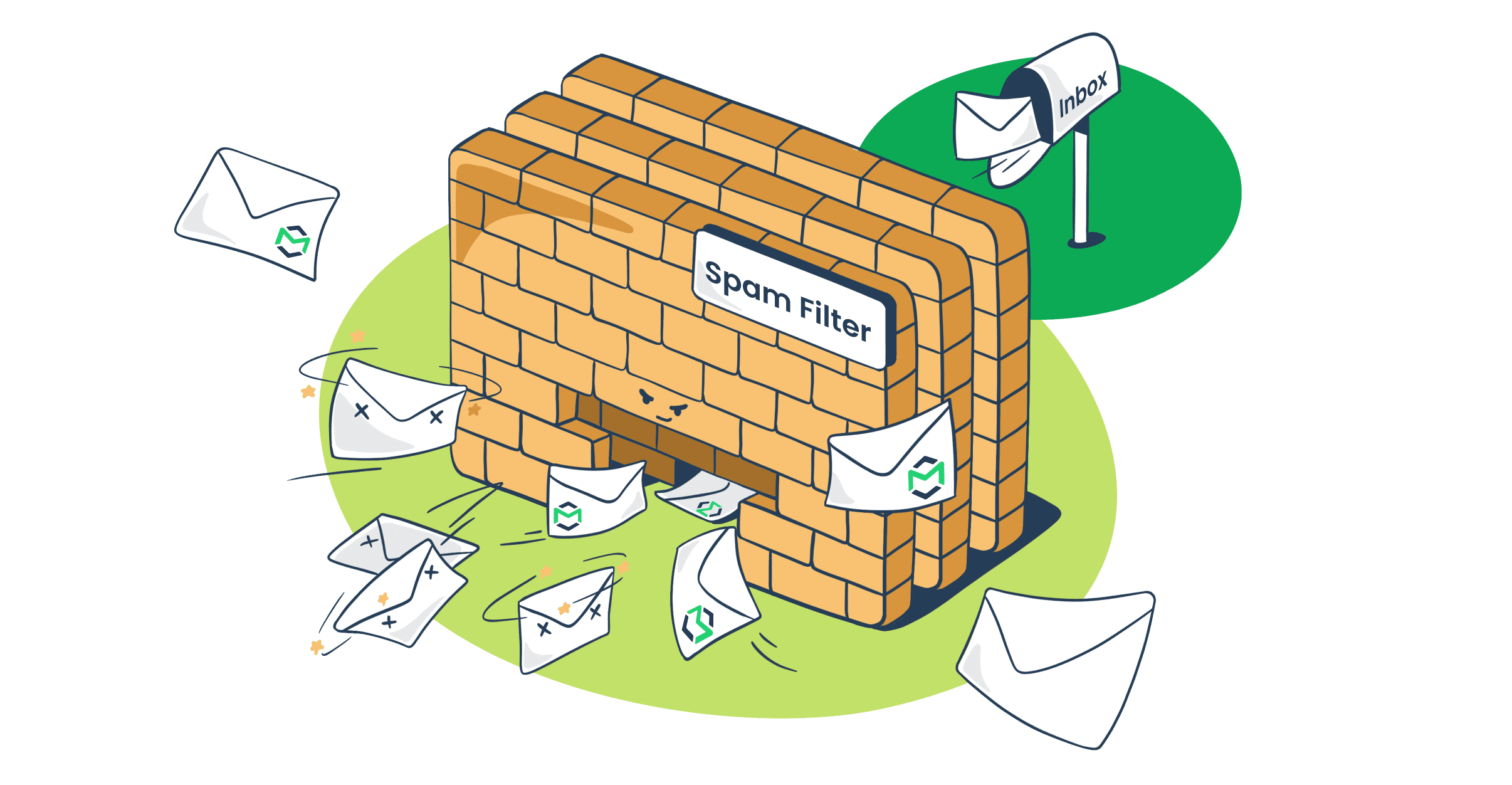
Deliverability refers to the ability of your emails to reach inboxes instead of spam folders. This is one of the most important parts of email marketing, yet many beginners overlook it.
Even the best-looking email campaign becomes useless if subscribers never see it.
Strong deliverability depends on several factors, including:
- Sender reputation
- Authentication protocols
- List quality
- Spam compliance
- Infrastructure quality
- IP reputation
Good email marketing platforms invest heavily in deliverability systems and compliance standards. Many also provide built-in tools for domain authentication, spam testing, and audience hygiene.
When comparing platforms, research their reputation for inbox placement. Providers with poor deliverability may damage campaign performance over time.
You should also check whether the platform supports:
- SPF, DKIM, and DMARC authentication
- Bounce management
- Unsubscribe handling
- GDPR compliance
- Spam testing tools
Reliable deliverability helps increase open rates, click-through rates, and overall email marketing success. It also protects your domain reputation as your subscriber list grows.
Best Free Email Marketing Tools
1. Teno Mail
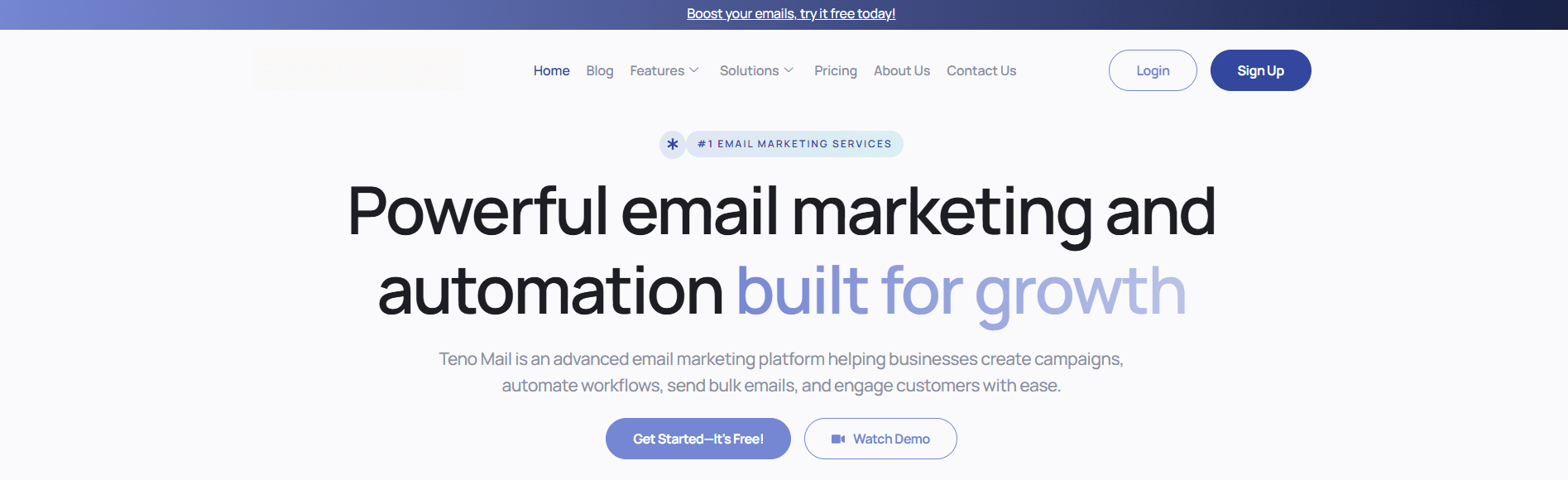
Teno Mail is a modern email marketing and automation platform designed for businesses that want an affordable and easy-to-use solution. The platform focuses on bulk email campaigns, automation workflows, audience management, and customer engagement tools. The interface is beginner-friendly, which makes it suitable for small businesses, startups, agencies, and marketers who do not want a complicated system. Users can create newsletters, automate campaigns, manage subscribers, and track email performance from a single dashboard. The platform also highlights automation and business growth features. Companies can build email sequences, organize audiences, and improve customer communication without needing advanced technical knowledge. Another strong point is simplicity. Many email platforms become difficult to manage as features grow, but Teno Mail keeps the dashboard clean and easy to navigate. This can help smaller teams save time when launching campaigns or managing subscribers.
Best for:
Small businesses, startups, agencies, and marketers looking for a simple all-in-one email marketing and automation platform.
Free plan:
Teno Mail offers a free plan that allows users to start email marketing without upfront costs. The platform includes access to core email campaign tools, audience management, and automation features for new users.
Pricing:
Pricing depends on the selected plan and business needs. Teno Mail offers scalable paid options for businesses that need larger sending volumes, advanced automation, or expanded marketing capabilities. Users can contact the platform directly for custom plan details.
2. EmailOctopus
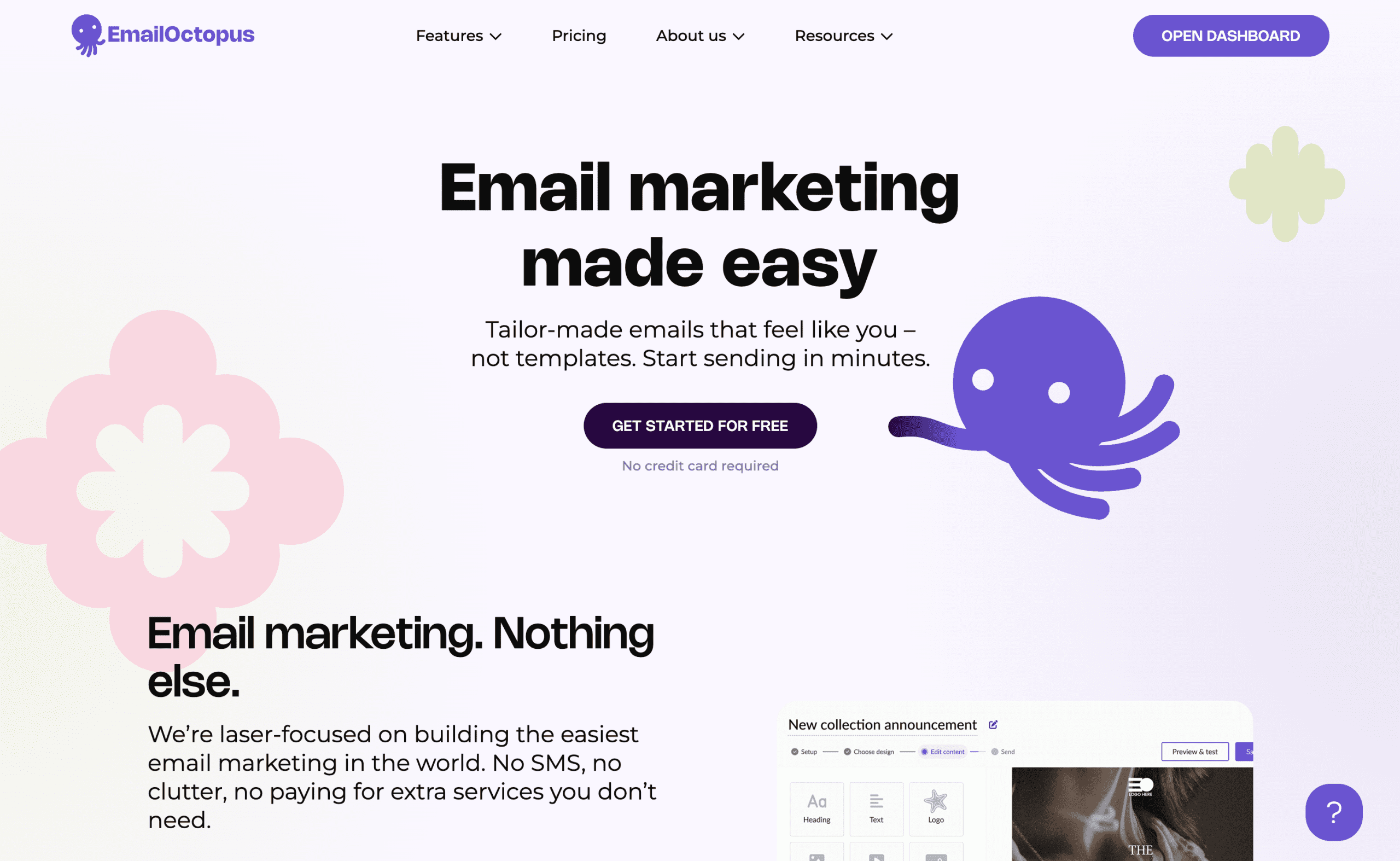
EmailOctopus has become one of the most popular low-cost email marketing platforms because of its generous free plan and simple interface. The platform focuses on helping businesses send newsletters, create automations, and grow subscriber lists without paying high monthly fees. The drag-and-drop editor is easy to use, even for beginners. Users can create professional emails quickly using templates or custom HTML designs. The platform also includes landing pages, signup forms, segmentation tools, and automation workflows. One reason many small businesses choose EmailOctopus is affordability. Compared to several large competitors, the pricing remains lower while still offering core marketing features. The platform also provides integrations with tools like Zapier, WordPress, Shopify, and Make. Businesses can automate lead collection and connect their marketing stack without much setup work.
Best for:
Small businesses, creators, bloggers, and startups looking for affordable email marketing with generous subscriber limits.
Free plan:
The free plan supports up to 2,500 subscribers and 10,000 emails per month. It includes basic automations, signup forms, landing pages, reporting, and one user account. Free emails include platform branding.
Pricing:
Paid plans start at around $9 per month when billed yearly. Pro plans remove branding, unlock unlimited forms and landing pages, add unlimited users, and provide long-term reporting access. Pricing scales based on subscriber count.
3. Loops
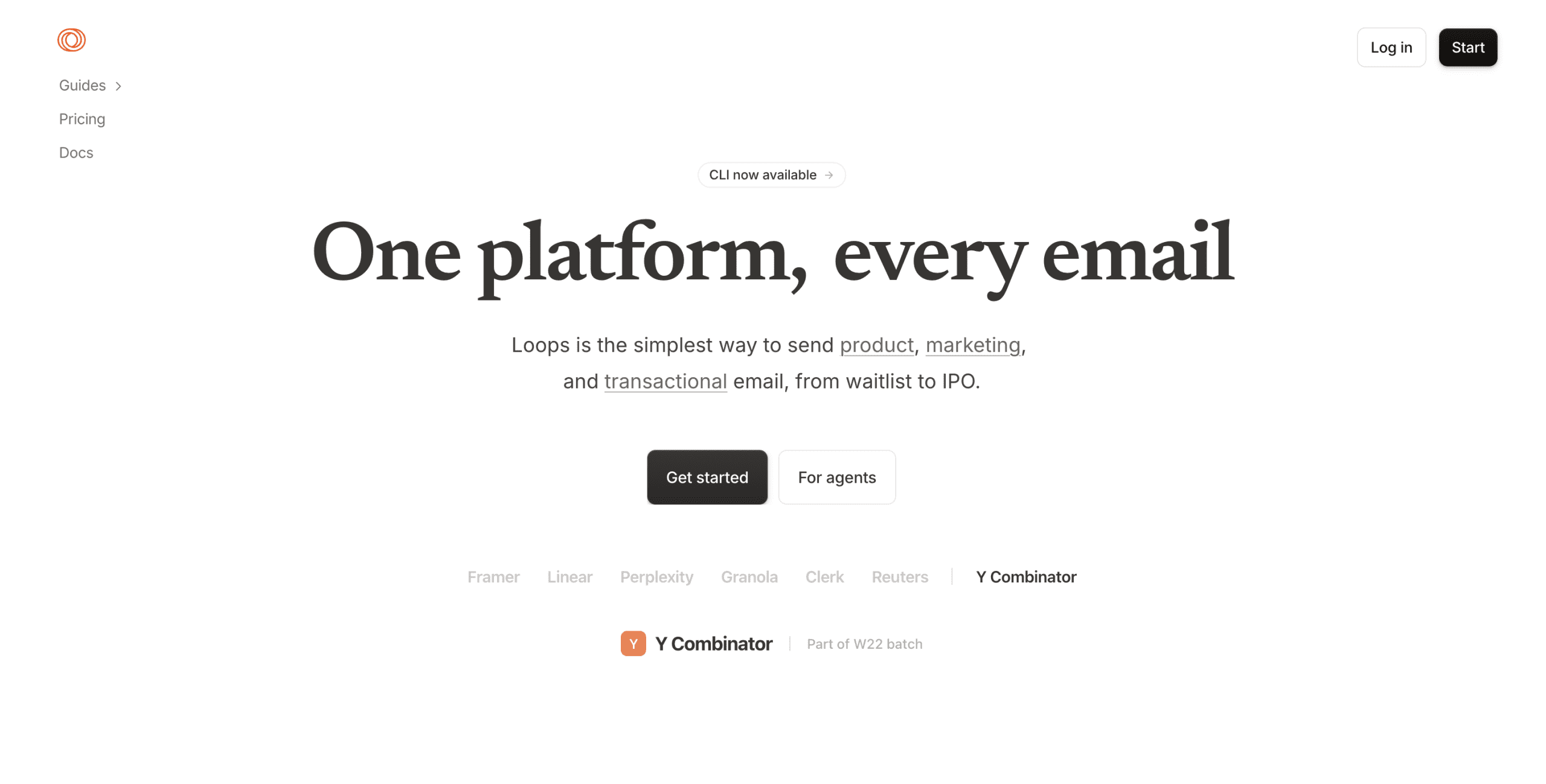
Loops is an email platform focused mainly on SaaS businesses and modern startups. Unlike traditional newsletter tools, Loops is designed around event-based email automation and customer engagement. The platform helps businesses send onboarding emails, product updates, transactional messages, and behavioral automations. This makes it especially useful for software companies that want to trigger emails based on user actions. Loops also offers a clean interface and developer-friendly workflows. Teams can connect product data, track user behavior, and personalize messaging without building overly complex automation systems. The platform puts strong attention on speed and usability. Instead of offering hundreds of complicated features, it focuses on practical automation and customer communication tools that SaaS businesses use daily.
Best for:
SaaS companies, startups, and product-led businesses that need behavioral email automation.
Free plan:
Loops offers a free plan that supports up to 1,000 subscribed contacts. The free version includes core email functionality and automation features for early-stage businesses.
Pricing:
Paid pricing varies depending on contact volume and business requirements. Loops mainly targets growing SaaS teams that need scalable automation and customer messaging systems.
4. Brevo (formerly Sendinblue)
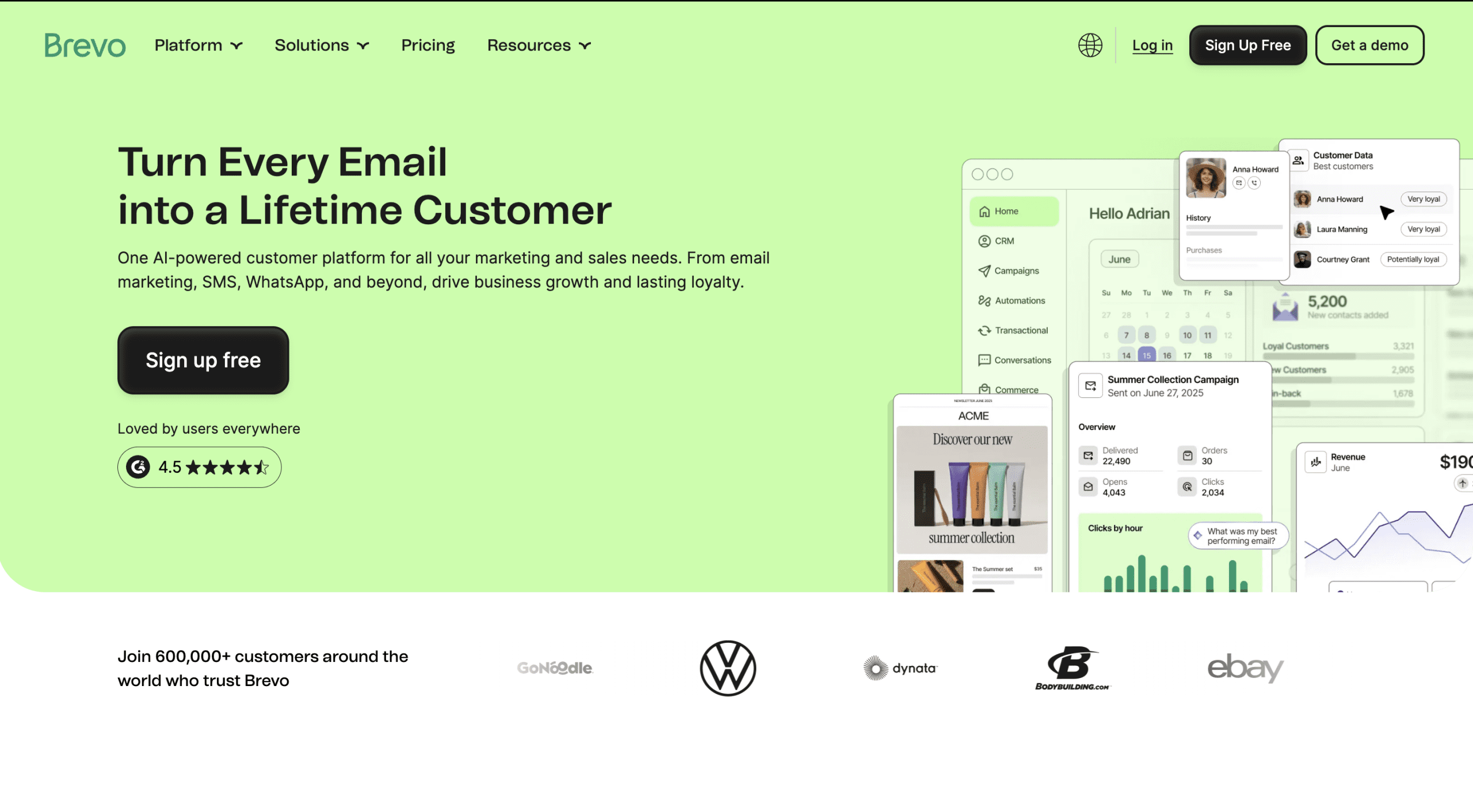
Brevo is a powerful marketing platform that combines email marketing, SMS campaigns, automation, CRM tools, and transactional emails in one system. One of Brevo’s biggest advantages is its email sending model. Instead of limiting contacts heavily, the platform mainly controls daily email volume. This makes it attractive for businesses with large subscriber lists that do not send emails frequently. The platform includes automation workflows, segmentation, landing pages, live chat, and CRM functionality. Users can manage customer communication from multiple channels inside one dashboard. Brevo is also known for strong deliverability and scalable infrastructure. Many ecommerce brands and growing businesses use the platform for both marketing campaigns and transactional emails like order confirmations and password resets.
Best for:
Businesses with larger contact lists that need both marketing and transactional email tools.
Free plan:
The free plan allows unlimited contacts and up to 300 emails per day. Users also receive email templates, automation access, signup forms, and CRM tools. Emails on the free plan include Brevo branding.
Pricing:
Paid plans start at around $9 per month. However, removing branding may require higher-tier plans or additional upgrades. Pricing increases based on email sending volume and feature access.
5. MailerLite
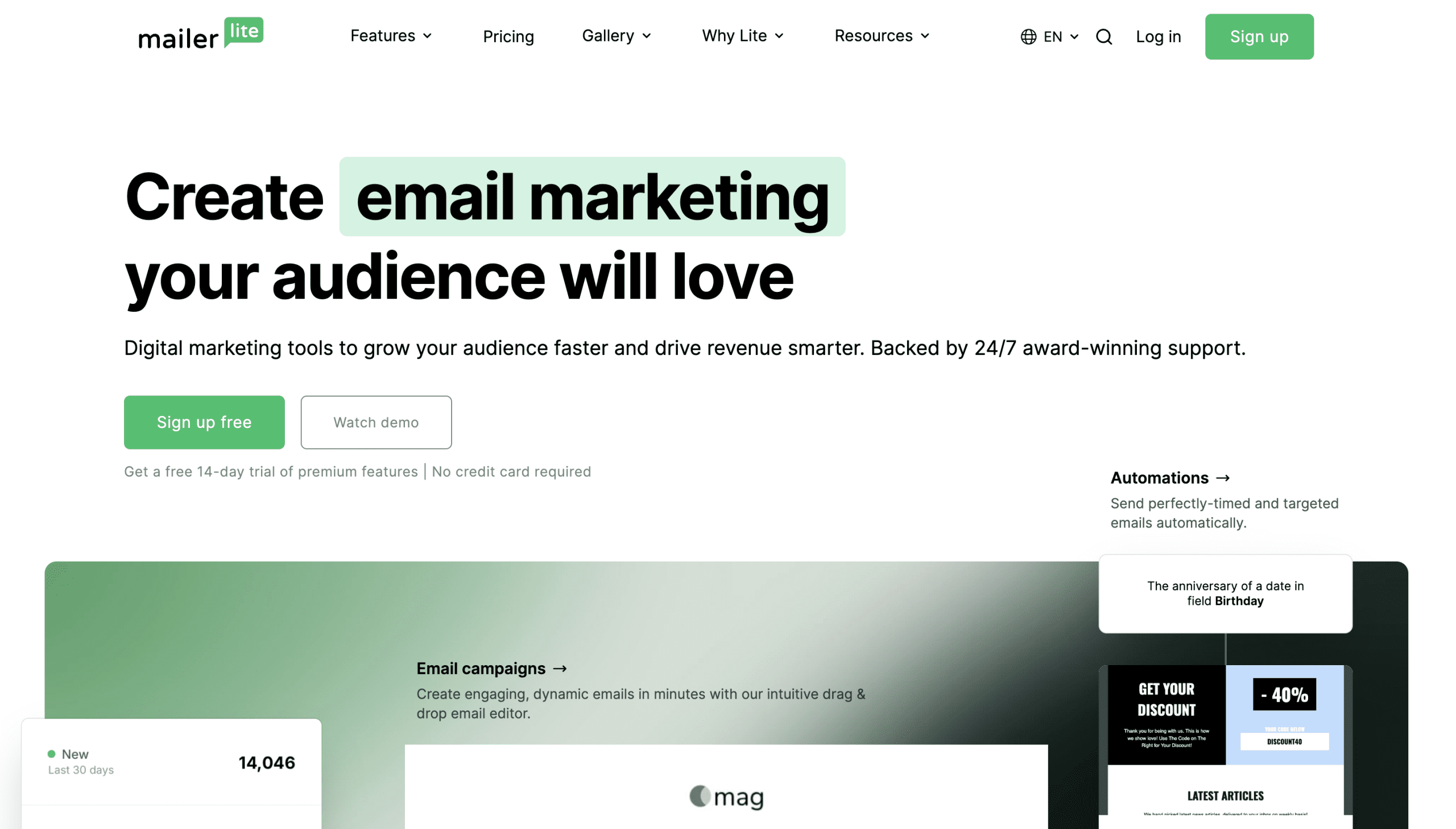
MailerLite is known for its clean design, beginner-friendly interface, and easy campaign builder. The platform has remained popular among bloggers, freelancers, creators, and small businesses for years. Users can build newsletters, landing pages, signup forms, automation sequences, and websites from one dashboard. The drag-and-drop editor is simple enough for beginners while still offering flexibility for experienced marketers. MailerLite also provides strong design tools. Many creators prefer the platform because emails look modern without requiring coding skills. The company reduced its free plan limits in recent years, but it still remains a strong option for smaller audiences and simple campaigns.
Best for:
Bloggers, freelancers, creators, and businesses that want a clean and easy-to-use email marketing platform.
Free plan:
The free plan supports up to 500 subscribers and 12,000 monthly emails. Users get access to landing pages, email campaigns, forms, and basic automation features.
Pricing:
Paid plans start at around $15 per month depending on subscriber count and selected features.
6. beehiiv
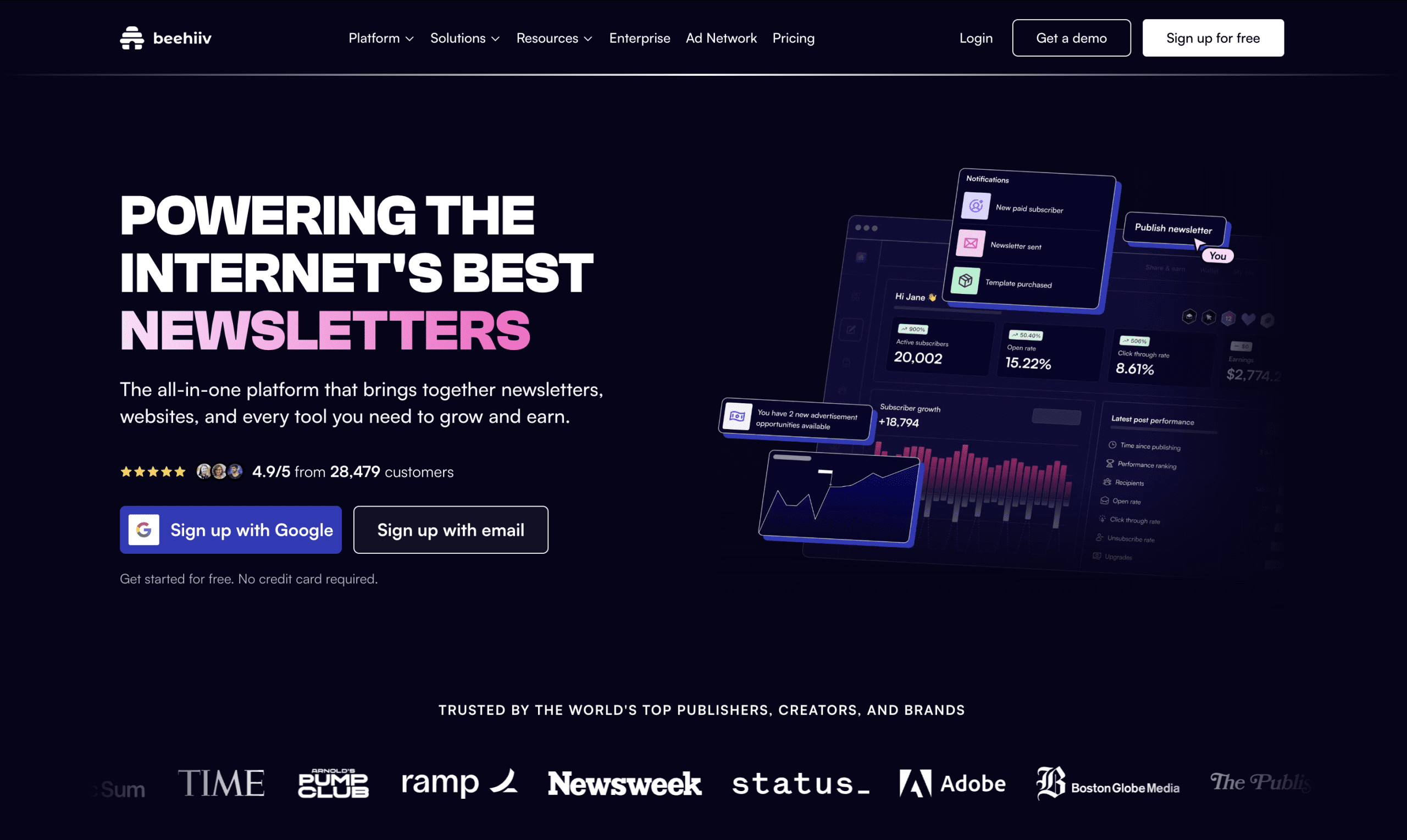
beehiiv was created specifically for newsletter publishers and content creators. The platform focuses heavily on audience growth, newsletter publishing, and monetization. Unlike traditional email marketing platforms, beehiiv includes tools such as referral programs, recommendation systems, audience growth analytics, and monetization options. These features help creators grow newsletter businesses faster. The platform also supports blog-style publishing and SEO-friendly newsletter archives. This makes it attractive for writers, journalists, media startups, and independent creators. beehiiv has become especially popular among creators building newsletter-first businesses because it combines publishing and email growth tools in one place.
Best for:
Newsletter creators, publishers, writers, and media-focused businesses that prioritize audience growth.
Free plan:
The free plan supports up to 2,500 subscribers and includes many core newsletter publishing tools. Some advanced growth and monetization features are reserved for paid plans.
Pricing:
Paid plans start at around $49 per month and unlock advanced growth features, referral programs, segmentation, and monetization tools.
7. Kit (formerly ConvertKit)
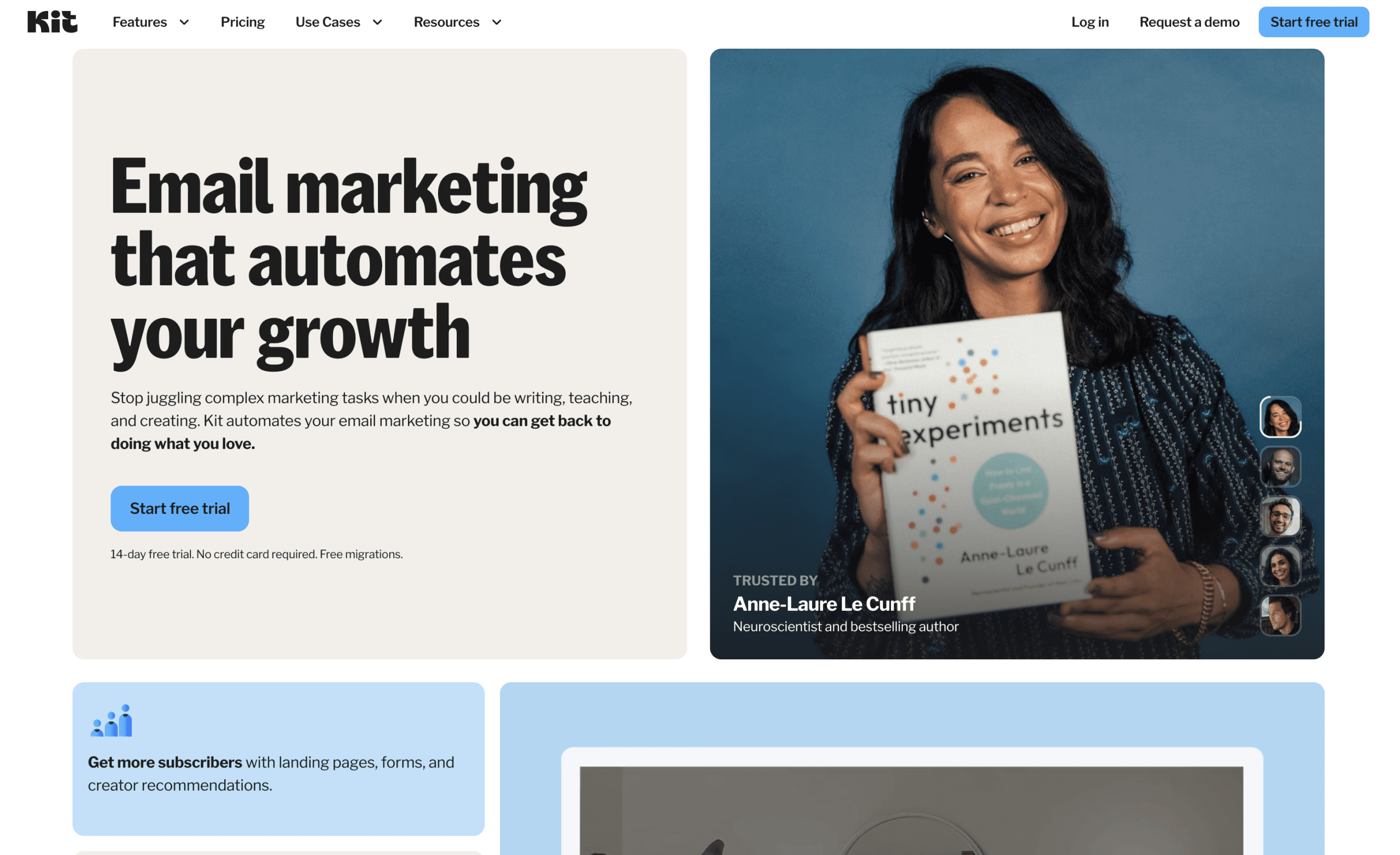
Kit is a creator-focused email marketing platform built for authors, YouTubers, educators, podcasters, coaches, and digital product sellers. The platform focuses heavily on audience building, creator monetization, and email automation. Users can create landing pages, sell products, build subscriber funnels, and automate email sequences. One major advantage is the large free subscriber allowance. Compared to many competitors, Kit supports significantly larger audiences before users need to upgrade. The platform also includes visual automation builders, tagging systems, and creator-focused integrations that help manage subscriber relationships more effectively.
Best for:
Creators, educators, influencers, and online businesses with growing audiences.
Free plan:
The free plan supports up to 10,000 subscribers with access to core email features and landing pages. However, users must participate in the platform’s recommendation network by promoting other newsletters.
Pricing:
Paid plans start at around $39 per month and unlock advanced automations, integrations, premium support, and additional creator tools.
8. Mailjet
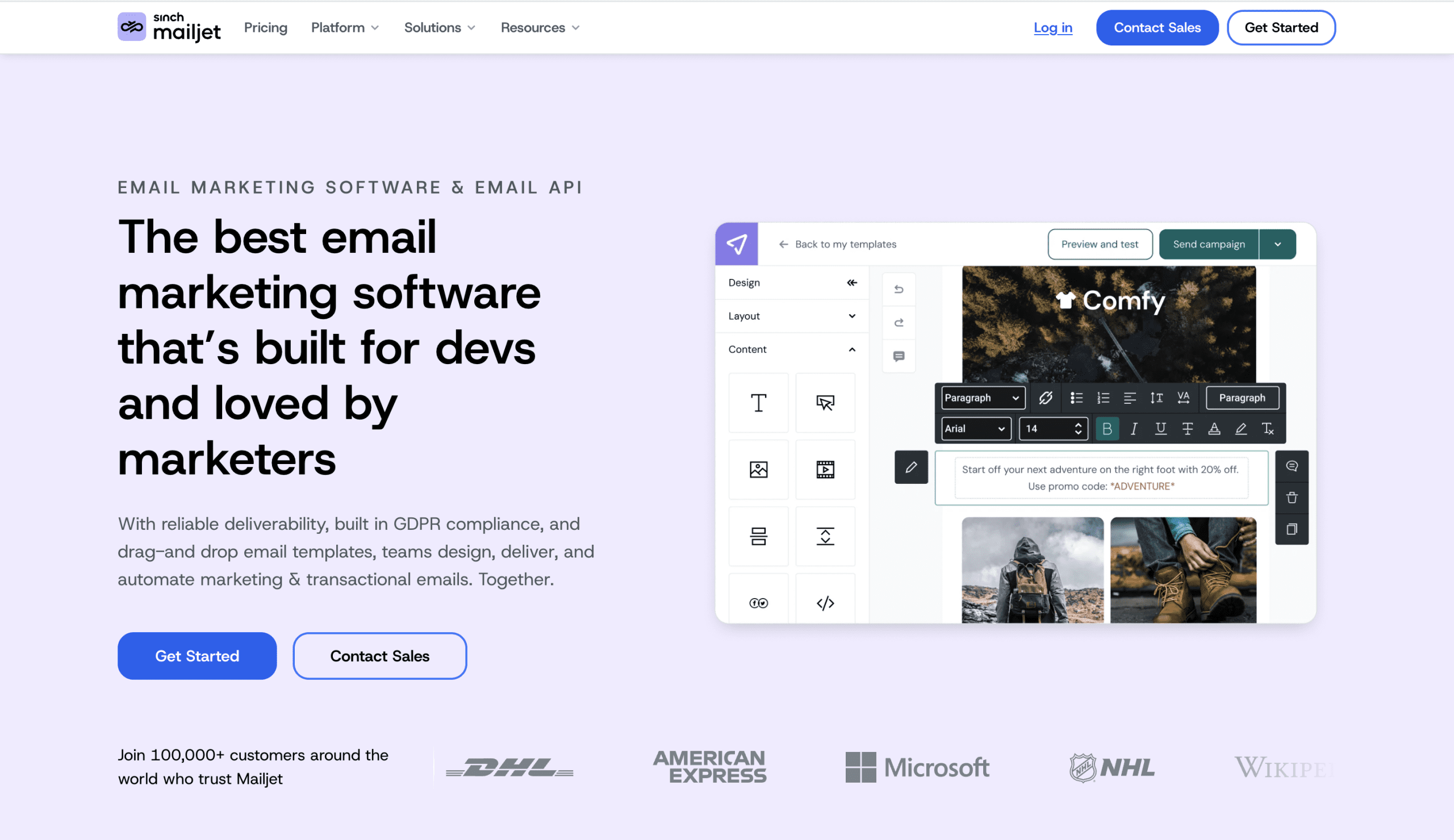
Mailjet combines email marketing and transactional email services in one platform. Businesses can use it for newsletters, automated campaigns, order confirmations, password resets, and system notifications. The platform includes a drag-and-drop email editor, collaboration tools, API access, and SMTP services. Teams can work together on campaigns and manage customer communications from one system. Mailjet is also developer-friendly. Businesses that need transactional emails alongside marketing campaigns often choose the platform because of its API and infrastructure support. The free plan offers useful features for smaller businesses, although the daily sending limit may become restrictive for fast-growing lists.
Best for:
Small businesses and teams that need both marketing and transactional email capabilities.
Free plan:
The free plan supports up to 1,000 contacts and 6,000 emails per month, with a daily sending limit of 200 emails. It includes signup forms, basic reporting, SMTP/API access, and email templates. Free emails contain Mailjet branding.
Pricing:
Paid Starter plans begin at around $9 per month. Removing branding and unlocking more advanced marketing features may require higher-tier plans starting around $17 per month.
How to Pick the Right Free Email Marketing Tool
Choosing the right free email marketing tool depends on your business goals, audience size, and the features you need most. Some platforms focus on automation, while others are better for newsletters, ecommerce, or creator-focused publishing.
For many users, Teno Mail stands out because it combines a generous free plan with a simple interface and essential email marketing features. It offers an easy setup process, user-friendly tools, and practical functionality for businesses that want to manage campaigns without dealing with a steep learning curve. Try Teno Mail free today!
FAQ
Are free email marketing tools sufficient for a business?
Free email marketing tools can work very well for small businesses, startups, creators, bloggers, and new ecommerce stores. Many free plans now include professional email templates, signup forms, analytics, audience management, and even automation features. This makes it possible to build and grow an email list without spending money in the beginning.
For businesses with a small subscriber base, free tools are often enough to run newsletters, promotional campaigns, welcome emails, and simple customer communication. They also help companies test different strategies before investing in premium plans.
However, growing businesses may eventually need advanced features such as deeper automation, detailed segmentation, team collaboration, higher sending limits, and better reporting tools.
What’s the downside with free plans?
The biggest downside is the restriction on subscribers and monthly email sends. Many free plans also limit automation workflows, integrations, analytics, and customization options.
Some providers add their branding to emails on free accounts. Others may lock advanced features behind expensive upgrades. Customer support is often limited as well, especially live chat or priority assistance.
Free plans are useful for starting out, but scaling can become difficult as your audience grows.
Can I automate with a free tool?
Yes, many modern free email marketing tools now include basic automation features. You can often create welcome emails, onboarding sequences, subscriber tagging, and simple drip campaigns without paying.
Still, automation access varies by platform. Some providers only allow one or two workflows on free plans, while others offer stronger automation capabilities with certain restrictions. Advanced behavioral automation and complex customer journeys usually require paid upgrades.
Read More: How to Combine Social Media and Email Marketing for Maximum Reach