One of the biggest challenges newsletter creators face is not choosing an email platform or designing beautiful templates—it is consistently finding fresh, relevant content ideas.
Many newsletter publishers start strong with dozens of ideas, only to run into a creative wall after a few weeks or months. Suddenly, every issue feels repetitive, engagement drops, and sending the next email becomes a stressful task.
The good news is that you do not need to invent entirely new topics every time you send a newsletter. The most successful newsletters rarely rely on constant inspiration. Instead, they use proven systems to uncover questions, trends, discussions, and insights that their audience already cares about.
Whether you run a B2B newsletter, an ecommerce brand newsletter, a creator-focused publication, an internal company newsletter, or a community update email, there are countless sources of content ideas available if you know where to look.
In this guide, you will learn practical and repeatable methods for finding newsletter content ideas, including repurposing existing content, researching online communities, using search engine insights, leveraging AI tools, and identifying idea sources based on your specific newsletter type.
How to find newsletter content ideas easily
The best newsletter ideas usually come from existing conversations, customer interests, industry discussions, and content you have already created. Rather than waiting for inspiration, use the following methods to build a reliable pipeline of newsletter topics.
Reuse existing content
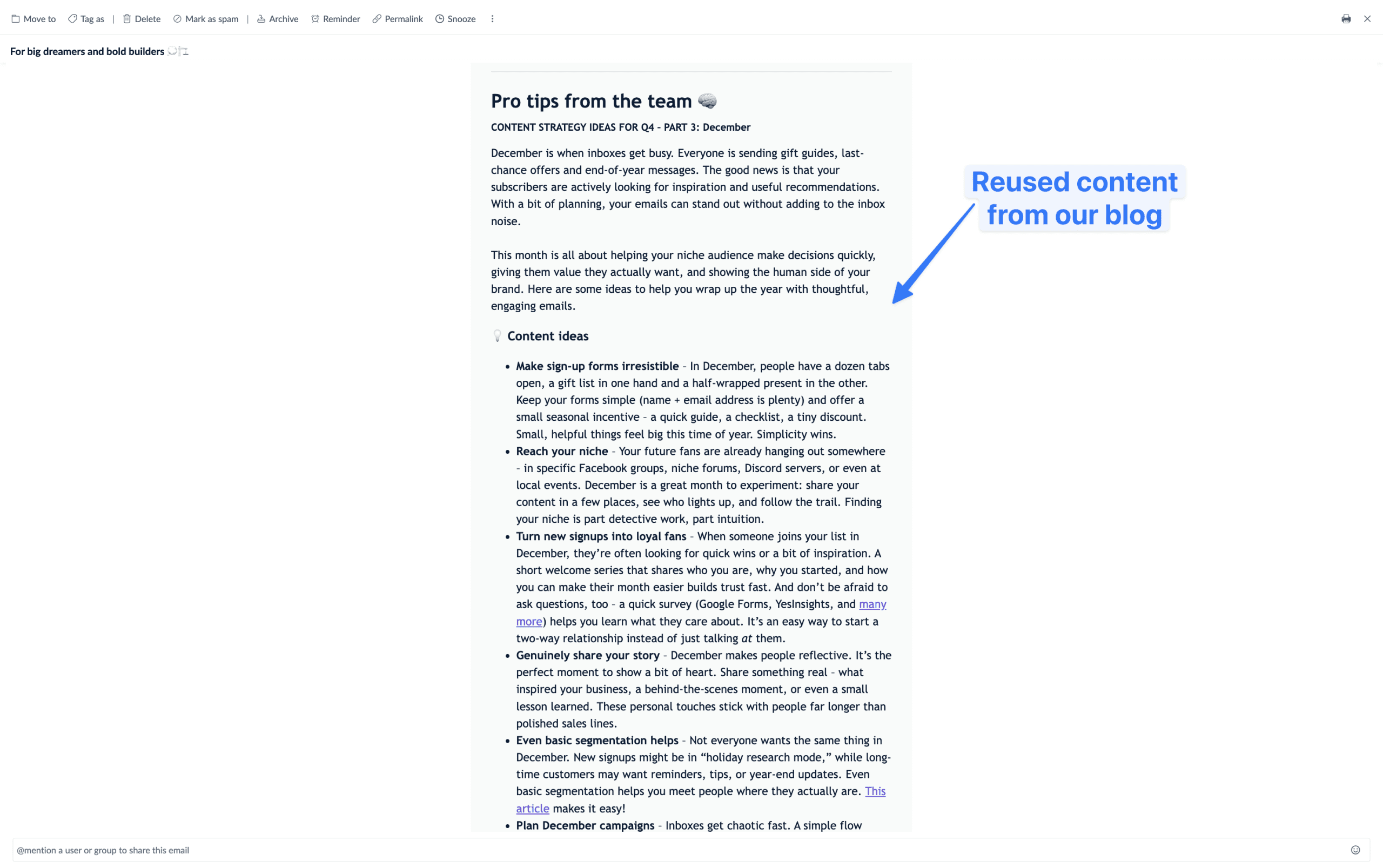
One of the easiest and most effective ways to generate newsletter content ideas is to repurpose content you have already created.
Many newsletter publishers mistakenly believe every issue needs completely original material. In reality, most audiences never see every piece of content you publish across all channels. A blog post, webinar, podcast episode, social media thread, presentation, or customer case study can often be transformed into multiple newsletter editions.
For example:
- Turn a long-form blog article into a concise newsletter summary.
- Extract key lessons from a webinar.
- Share highlights from a podcast interview.
- Convert a social media thread into a deeper newsletter discussion.
- Expand a frequently asked customer question into a helpful email.
- Break a comprehensive guide into a multi-part email series.
Suppose you publish a 3,000-word guide about digital marketing. Instead of sending readers the entire article, you can create several newsletter issues covering:
- The biggest takeaway from the guide
- Common mistakes readers make
- Practical implementation tips
- Real-world examples
- Industry trends related to the topic
This approach reduces content creation time while maximizing the value of your existing work.
You should also review:
- Popular blog posts
- Frequently visited website pages
- Support tickets
- Customer feedback
- Sales call notes
- Webinar questions
- Product documentation
- Case studies
- Internal reports
Each of these resources contains questions and challenges your audience already cares about, making them ideal sources for newsletter topics.
A useful habit is maintaining a content inventory spreadsheet where you list existing content assets and potential newsletter angles. This ensures valuable content is never used only once.
Scan Subreddits
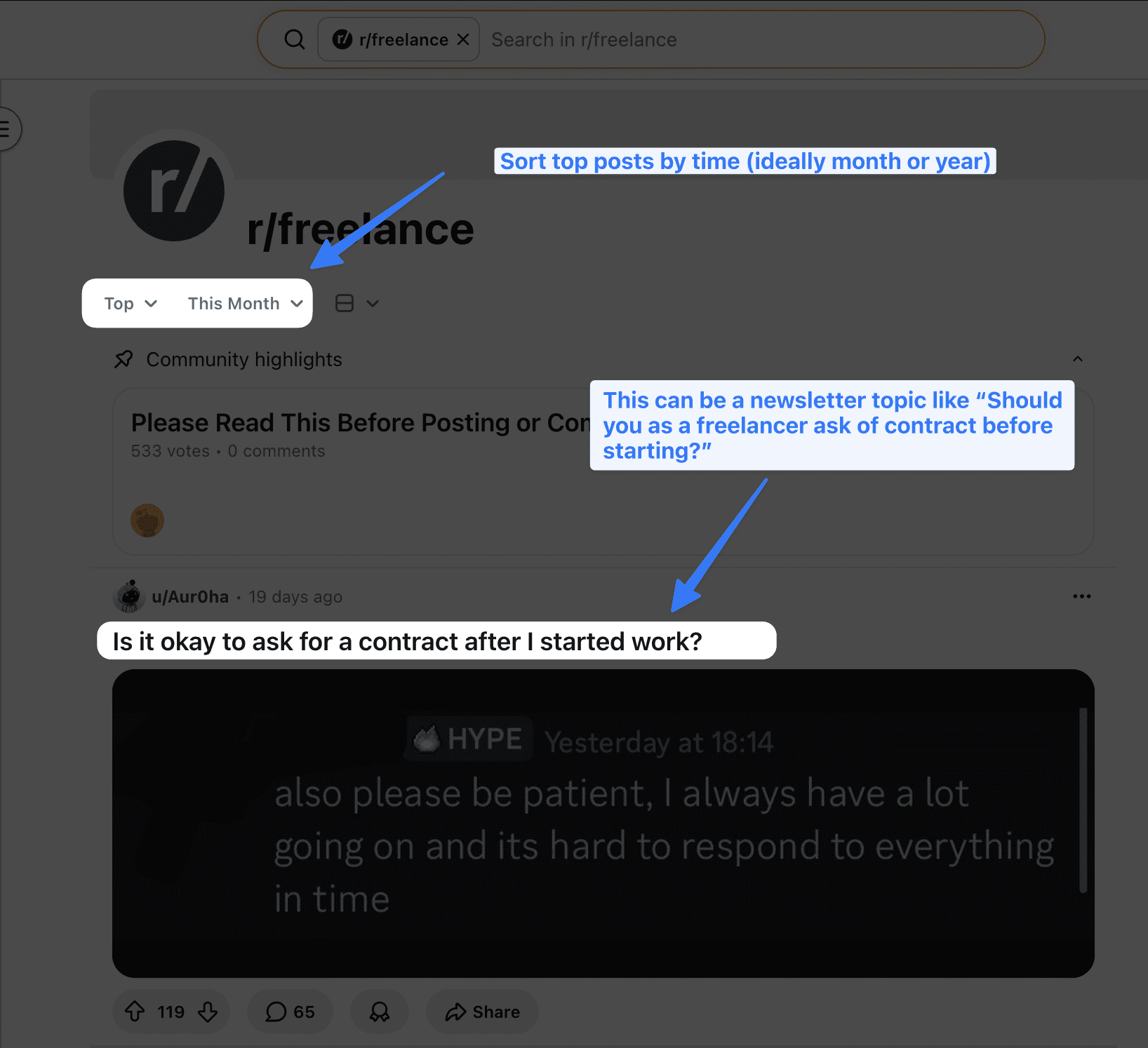
Online communities are among the richest sources of newsletter content ideas because they reveal real questions from real people.
Reddit, in particular, allows you to observe what your target audience discusses when they are not being marketed to.
By exploring niche-focused subreddits, you can identify:
- Common frustrations
- Frequently asked questions
- Emerging trends
- Industry debates
- Product recommendations
- Success stories
- Misconceptions
- Beginner challenges
For example:
A marketing newsletter could monitor communities related to SEO, PPC advertising, content marketing, email marketing, and entrepreneurship.
A software newsletter could follow discussions about development tools, programming languages, cybersecurity, cloud computing, and artificial intelligence.
An ecommerce newsletter could analyze conversations about conversion optimization, customer retention, product sourcing, and advertising performance.
When reviewing Reddit discussions, pay attention to:
- Posts with high engagement
- Frequently repeated questions
- Controversial discussions
- Requests for advice
- Poll results
- User-generated case studies
- Product comparisons
These discussions often reveal topics people genuinely want answered.
For example, if dozens of users ask how to improve email open rates, that question could become:
- A newsletter tutorial
- A case study breakdown
- A myth-busting article
- A list of best practices
- An industry benchmark analysis
Beyond Reddit, consider monitoring:
- Facebook groups
- LinkedIn groups
- Discord communities
- Slack communities
- Quora
- Industry forums
- Professional associations
The goal is simple: listen to audience conversations and transform recurring themes into newsletter content.
Use Google’s PAA
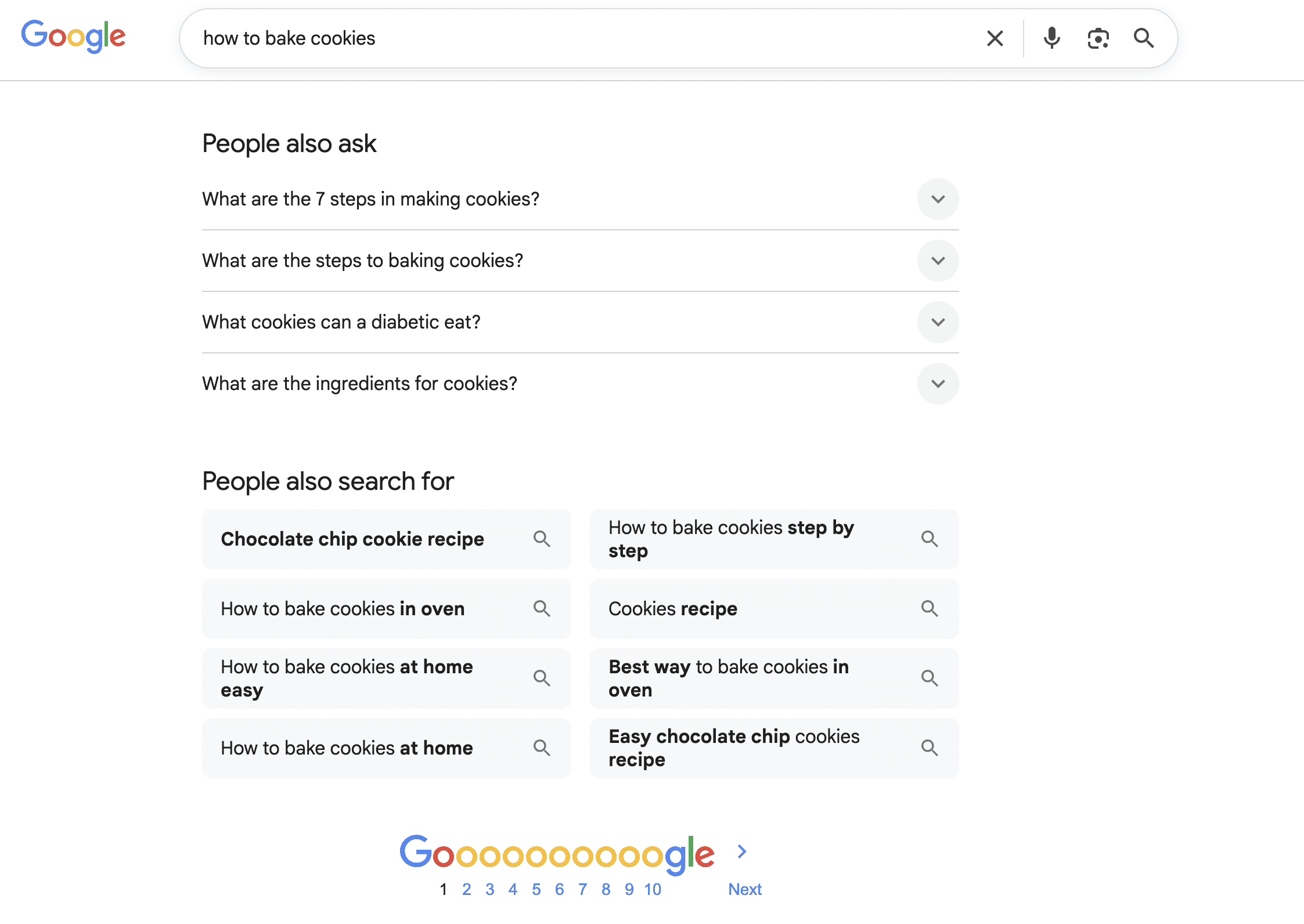
Google’s People Also Ask (PAA) feature is one of the most underused content research tools available.
Whenever someone searches for a topic, Google often displays related questions users commonly ask. These questions represent actual search demand and provide valuable insight into audience interests.
For example, if your newsletter focuses on email marketing, searching a broad keyword may reveal questions such as:
- How often should I send marketing emails?
- What is a good email open rate?
- How can I improve click-through rates?
- What content should I include in newsletters?
Each question can become a newsletter topic.
The advantage of using PAA is that the ideas originate from genuine user behavior rather than guesswork.
To use this method effectively:
- Search broad keywords related to your niche.
- Review the People Also Ask section.
- Open multiple questions to reveal additional related questions.
- Record interesting ideas in your content database.
- Group similar questions into newsletter themes.
You can also examine:
- Related searches at the bottom of search results
- Google autocomplete suggestions
- Trending search queries
- Industry-specific keywords
For example, a finance newsletter might discover questions about:
- Inflation
- Budgeting strategies
- Retirement planning
- Investment risks
- Tax-saving opportunities
A health newsletter might uncover questions about:
- Nutrition
- Sleep quality
- Exercise habits
- Mental wellness
- Healthy lifestyle routines
Because these topics are driven by actual search behavior, they often resonate strongly with readers.
Take help for ChatGPT/Gemini/Claude
Artificial intelligence tools can dramatically speed up newsletter idea generation when used correctly.
Many people ask AI for generic topic ideas and receive generic results. A better approach is providing detailed context about your audience, goals, industry, and previous content.
Instead of asking:
“Give me newsletter ideas.”
Try prompts like:
- Generate newsletter topics for SaaS founders struggling with customer retention.
- Suggest newsletter ideas based on common questions ecommerce brands ask about repeat purchases.
- Create 20 newsletter topics for freelance designers seeking more clients.
- Identify controversial industry opinions worth discussing in a marketing newsletter.
The more context you provide, the better the output becomes.
AI tools can assist with:
- Brainstorming content angles
- Creating newsletter series ideas
- Finding topic variations
- Identifying audience pain points
- Summarizing research
- Generating question-based content
- Exploring niche-specific trends
- Creating content calendars
Another useful technique is feeding AI your existing content.
For example, you can provide:
- Blog posts
- Podcast transcripts
- Customer interviews
- Webinar notes
- Survey responses
Then ask AI to identify:
- Repeated themes
- Content gaps
- Follow-up topics
- Newsletter opportunities
However, AI should be treated as an idea partner rather than the sole source of content. The strongest newsletter topics still come from direct audience research, customer interactions, and industry expertise.
Use AI to accelerate brainstorming, not replace audience understanding.
Other sources based on your newsletter type
Different types of newsletters require different content discovery strategies. Understanding where your audience gets information can help you find a steady stream of relevant ideas.
B2B or work newsletter
Business-focused newsletters should prioritize professional insights and practical solutions.
Strong content sources include:
- Customer support conversations
- Sales call recordings
- Industry reports
- Research publications
- Market trend analyses
- Conference presentations
- Executive interviews
- Product usage data
- Customer success stories
Useful newsletter topics may include:
- Industry trends
- Process improvements
- Operational challenges
- Leadership lessons
- Productivity strategies
- Technology adoption
- Regulatory changes
- Market opportunities
Pay close attention to questions prospects ask before purchasing. If multiple prospects ask the same question, it is probably worth covering in a newsletter.
Creator or solo newsletter
Creators often build newsletters around personal expertise, experiences, and audience relationships.
Excellent idea sources include:
- Audience emails
- Social media comments
- Direct messages
- Community discussions
- Personal experiments
- Behind-the-scenes stories
- Lessons learned
- Creator economy trends
- Productivity systems
Readers frequently enjoy content that feels personal and authentic.
Possible newsletter themes include:
- What worked this month
- Mistakes and lessons learned
- Tools and resources
- Creative process breakdowns
- Income experiments
- Business growth updates
- Audience questions and answers
Documenting your journey often generates more newsletter ideas than trying to invent new concepts from scratch.
Ecommerce newsletter
Ecommerce newsletters should focus on helping customers make better buying decisions while strengthening brand relationships.
Potential content sources include:
- Product reviews
- Customer testimonials
- Purchase behavior data
- Customer service inquiries
- Seasonal trends
- Industry developments
- Product launches
- Shopping habits
- User-generated content
Examples of newsletter topics:
- Product recommendations
- Buying guides
- Customer success stories
- Product comparisons
- Seasonal shopping advice
- Industry insights
- New arrivals
- Behind-the-scenes production updates
Monitoring customer questions before and after purchases can reveal valuable content opportunities.
Employee or internal newsletter
Internal newsletters help employees stay informed, aligned, and engaged.
Good idea sources include:
- Team achievements
- Company milestones
- Leadership updates
- Internal events
- Employee recognition
- Department highlights
- New initiatives
- Learning resources
- Workplace improvements
Possible newsletter content includes:
- Company news
- Project updates
- Employee spotlights
- Training opportunities
- Team accomplishments
- Upcoming events
- Culture initiatives
- Leadership messages
Regular communication strengthens transparency and helps employees feel connected to organizational goals.
Nonprofit or community newsletter
Nonprofit and community organizations thrive on engagement, storytelling, and shared purpose.
Useful content sources include:
- Volunteer stories
- Beneficiary experiences
- Community events
- Donation campaigns
- Impact reports
- Advocacy initiatives
- Local partnerships
- Program updates
- Member feedback
Strong newsletter topics may include:
- Success stories
- Community achievements
- Event recaps
- Volunteer opportunities
- Campaign progress
- Fundraising updates
- Educational resources
- Upcoming initiatives
Stories demonstrating real-world impact often perform exceptionally well because they help supporters understand how their involvement contributes to meaningful outcomes.
By combining audience research, existing content, community conversations, search data, AI-assisted brainstorming, and newsletter-specific sources, you can build a sustainable system for generating valuable content ideas year after year. Instead of wondering what to send next, you will always have a growing list of relevant topics ready for future newsletters.
Frequently asked questions
How often should I send a newsletter?
There is no universal newsletter frequency that works for every audience. The ideal schedule depends on your industry, content quality, audience expectations, and available resources.
For most businesses and creators, a weekly newsletter strikes the best balance between staying visible and avoiding subscriber fatigue. Weekly emails provide enough opportunities to build relationships, share insights, and maintain engagement without overwhelming readers.
However, different newsletter types often benefit from different schedules:
- Daily newsletters work well for news, finance, media, and trend-focused publications where information changes quickly.
- Weekly newsletters are ideal for B2B companies, creators, consultants, SaaS businesses, and professional audiences.
- Biweekly newsletters suit organizations that produce in-depth content but do not have enough material for weekly distribution.
- Monthly newsletters are common for nonprofits, community organizations, associations, and internal company communications.
The most important factor is consistency. Subscribers are more likely to engage when they know when to expect your emails.
For example, sending a high-quality newsletter every Tuesday morning is usually more effective than sending four emails one month and none the next.
When choosing your frequency, ask yourself:
- Can I consistently create valuable content at this pace?
- Will subscribers benefit from receiving updates this often?
- Does my industry generate enough news or insights to support this schedule?
- Do engagement metrics remain healthy at this frequency?
Start with a realistic schedule and increase frequency only when you can maintain quality. A valuable monthly newsletter will generally outperform a rushed weekly one.
How long should my newsletter be?
The ideal newsletter length depends on the purpose of the email and the preferences of your audience. There is no perfect word count that guarantees success.
Instead of focusing on length, focus on delivering value as efficiently as possible.
Generally:
- Short newsletters (200–500 words) work well for announcements, product updates, curated links, and quick industry insights.
- Medium-length newsletters (500–1,000 words) are effective for educational content, expert commentary, and audience engagement.
- Long-form newsletters (1,000+ words) can perform exceptionally well when readers expect deep analysis, detailed tutorials, case studies, or thought leadership content.
Many successful newsletters combine brevity with depth. They present a clear idea, provide useful information, and remove unnecessary filler.
When evaluating newsletter length, consider:
- Audience attention span
- Mobile readability
- Topic complexity
- Reading intent
- Content format
For example:
A weekly ecommerce newsletter may only need a few hundred words highlighting new products and promotions.
A B2B strategy newsletter might require a detailed 1,500-word breakdown of industry trends and implementation tactics.
A simple way to determine the right length is to monitor engagement data. If readers consistently scroll, click links, and spend time reading your content, your length is likely appropriate. If engagement drops significantly, consider simplifying the format or making the content more focused.
Ultimately, readers care less about word count and more about whether the information helps them solve a problem, learn something useful, or make a better decision.
How do I know if my newsletter ideas are working?
The effectiveness of newsletter ideas can be measured through audience engagement, subscriber behavior, and business outcomes.
A good newsletter topic does more than get opened—it encourages readers to engage with your content and take meaningful action.
Key metrics to monitor include:
Open rate
Open rate indicates how many subscribers opened your email.
While subject lines influence this metric, consistently strong open rates often suggest that readers find your newsletter relevant and worth reading.
A sudden decline may indicate that topics are becoming repetitive or less valuable to your audience.
Click-through rate (CTR)
CTR measures how many readers clicked links inside your newsletter.
High click-through rates often signal that your content resonates with subscribers and motivates them to learn more.
Track which topics generate the most clicks to identify themes your audience prefers.
Reply rate
Replies are one of the strongest indicators of engagement.
When subscribers respond with questions, feedback, or opinions, it shows that your content sparked interest and conversation.
Encouraging readers to reply can provide direct insight into what they want to see in future editions.
Forwarding and sharing
If readers forward your newsletter to colleagues, friends, or community members, your content is delivering enough value to recommend to others.
This is particularly important for creator, B2B, and educational newsletters.
Subscriber growth
Strong content ideas often contribute to organic growth.
When readers share your newsletter, recommend it publicly, or invite others to subscribe, it is a positive sign that your content is resonating with the target audience.
Unsubscribe rate
A small number of unsubscribes is normal. However, consistently high unsubscribe rates may indicate a mismatch between audience expectations and newsletter content.
Review recent topics and identify whether specific content categories coincide with increased subscriber loss.
Conversion metrics
If your newsletter supports business objectives, monitor actions such as:
- Product purchases
- Demo requests
- Consultation bookings
- Webinar registrations
- Event attendance
- Donations
- Membership signups
- Resource downloads
The most successful newsletter ideas often drive measurable business results alongside engagement.
Audience feedback
Numbers tell part of the story, but direct feedback provides deeper context.
Regularly ask subscribers questions such as:
- Which topics do you enjoy most?
- What challenges are you currently facing?
- What would you like us to cover next?
- Which newsletter issue was most helpful recently?
Surveys, polls, and subscriber interviews can reveal content opportunities that analytics alone may miss.
Over time, patterns will emerge. You will notice which subjects consistently generate opens, clicks, replies, and conversions. Use those insights to refine your content strategy and focus on the topics your audience values most.
The best newsletter ideas are not chosen based on assumptions—they are validated through audience engagement and real-world results.
Read More: 10 Onboarding Email Templates