
Email marketing A/B testing is a simple way to improve your campaigns using real data. It works by sending two versions of an email to small groups of subscribers. Each version has one small change, such as a subject line or a button. The version that performs better is then sent to the rest of your audience.
This method removes guesswork. Instead of relying on opinions, you use actual user behavior to guide decisions. Even small changes can lead to big results. For example, testing subject lines, timing, or call-to-action buttons can improve how people open, read, and click your emails.
Today, A/B testing is one of the most widely used tools in digital marketing. Around 60% of companies already use it, and many more plan to adopt it soon.
A/B testing helps you learn what works, fix what doesn’t, and grow your email performance over time.
The Role of Email Marketing Experiments
Better understanding of your audience:
Email experiments help you learn what your audience likes and dislikes. You can test different ideas and see how people react. For example, some users may prefer short emails, while others like detailed content.
These insights come from real actions, not guesses. A/B testing shows how people behave when they receive your emails. It reveals their interests, preferences, and habits.
Over time, this helps you create emails that feel more personal and relevant. When your message matches what people want, they are more likely to engage.
Higher engagement and conversion rates:
A/B testing helps improve key email metrics like open rates and click-through rates. Small changes can lead to strong results.
For example, businesses that test their emails often see up to 37% higher open rates and 49% more clicks.
Testing also improves conversions. When more people click your email, more people take action, such as making a purchase or signing up.
Even simple tests, like changing a subject line or button color, can increase engagement. Over time, these improvements add up and boost your overall performance.
Increased ROI:
Email marketing already offers a high return on investment. A/B testing makes it even stronger.
Companies that use testing regularly can see up to 23% more revenue per email.
Some reports show that consistent testing can increase ROI by over 80%.
This happens because you are always improving your emails. Better subject lines bring more opens. Better content brings more clicks. Better design leads to more conversions.
Each improvement may seem small, but together they create strong growth in revenue.
Data-driven strategy:
A/B testing turns email marketing into a data-driven process. Instead of guessing what might work, you rely on real numbers.
Every test gives you clear results. You can see which version performs better and why. This helps you make smarter decisions for future campaigns.
Over time, these insights build a strong strategy. You learn patterns, improve your approach, and avoid costly mistakes.
This also helps your team stay consistent. Decisions are based on data, not opinions. That means better planning, better results, and steady growth.
Email marketing experiments to try
A/B testing works best when you focus on the parts of an email that directly affect user actions. Some elements control whether people open your email, while others decide if they click or convert. Below are the most effective experiments you should try, along with practical ideas to get real results.
Subject lines
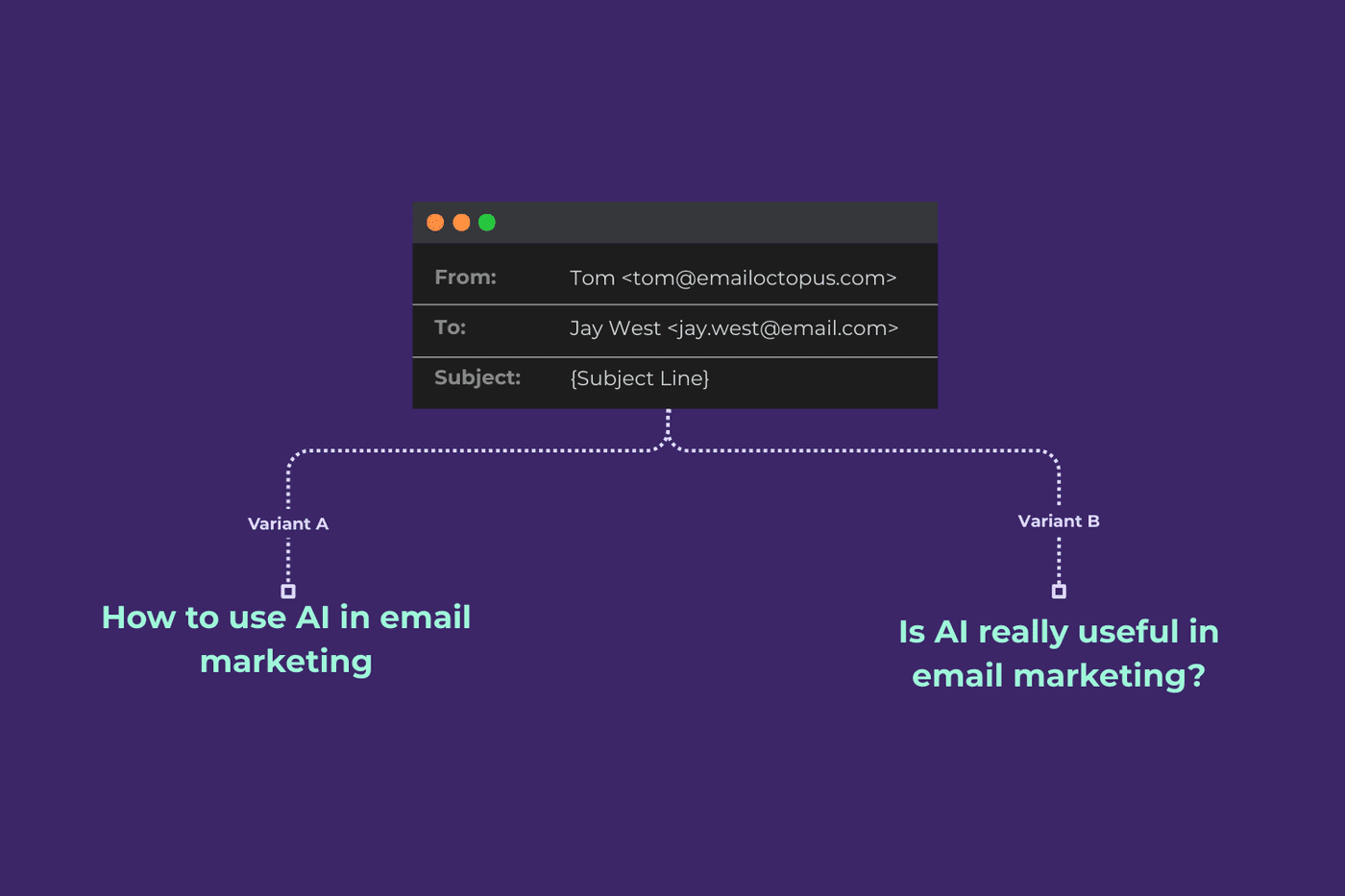
Subject lines are the first thing people see. They decide in seconds whether to open your email or ignore it. In fact, nearly half of users base their decision only on the subject line.
This makes it one of the highest-impact elements to test. Even a small change can increase opens across every campaign you send.
Here are key ideas to test:
- Length: Short vs longer subject lines
- Tone: Casual vs formal
- Personalization: Adding the subscriber’s name vs generic text
- Urgency: “Last chance” vs neutral messaging
- Emojis: With emojis vs without
- Numbers or offers: “50% off” vs “Big sale inside”
For example, testing curiosity-based lines against clear value-driven ones can show what your audience prefers. Keep your message clear and easy to scan.
Preview text
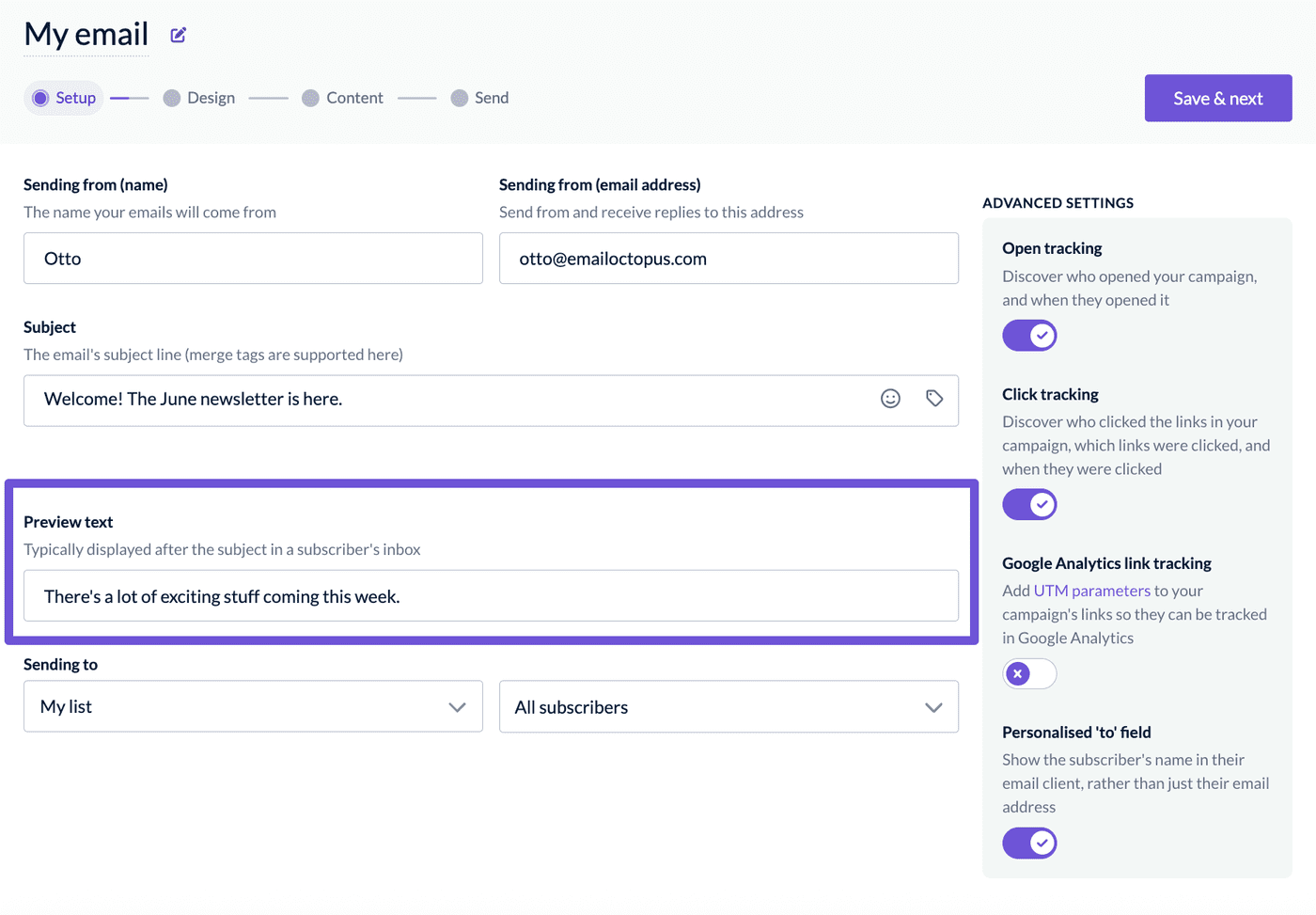
Preview text (also called preheader text) appears right next to the subject line in most inboxes. It acts like a second headline and can strongly influence open rates.
Many marketers ignore it, but testing this element can give quick wins.
What you can test:
- Support vs curiosity: Does it explain the subject or add mystery?
- Short vs long preview text
- Personalized vs generic wording
- Call-driven vs informative tone
For example:
- Version A: “Get early access to our new feature”
- Version B: “Something new is waiting for you inside”
A strong preview text should work together with the subject line, not repeat it.
Call-to-action (CTA)
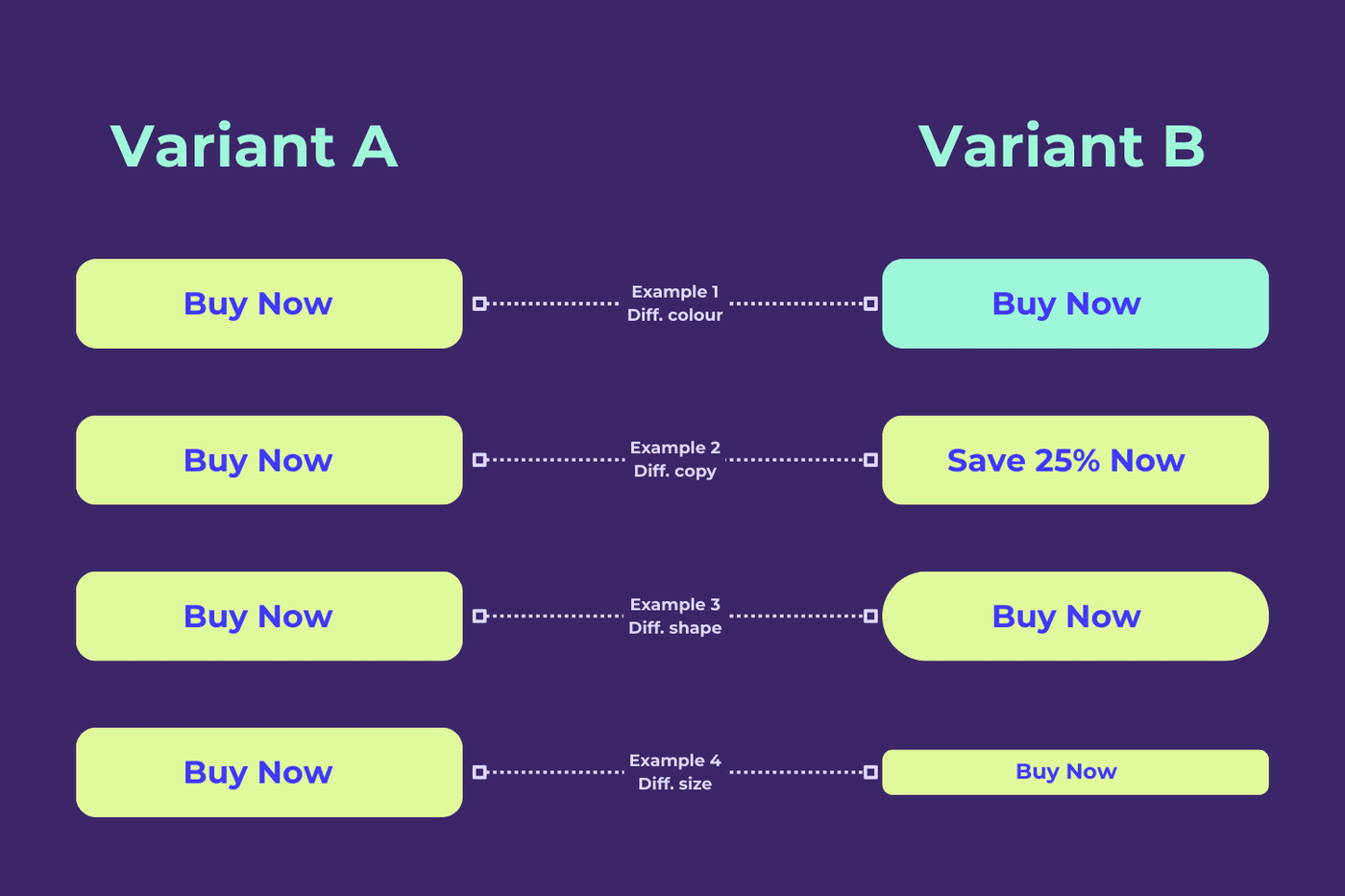
The CTA is where conversions happen. It tells readers what to do next. Testing this element can directly improve clicks and sales.
Focus on these areas:
- Button text: “Buy Now” vs “Get Started”
- Style: Button vs text link
- Placement: Top vs middle vs end
- Size and visibility: Large bold button vs small link
- Urgency words: “Limited offer” vs simple action
Clear and action-driven CTAs usually perform better. Small wording changes can shift user behavior in a big way.
Sender name
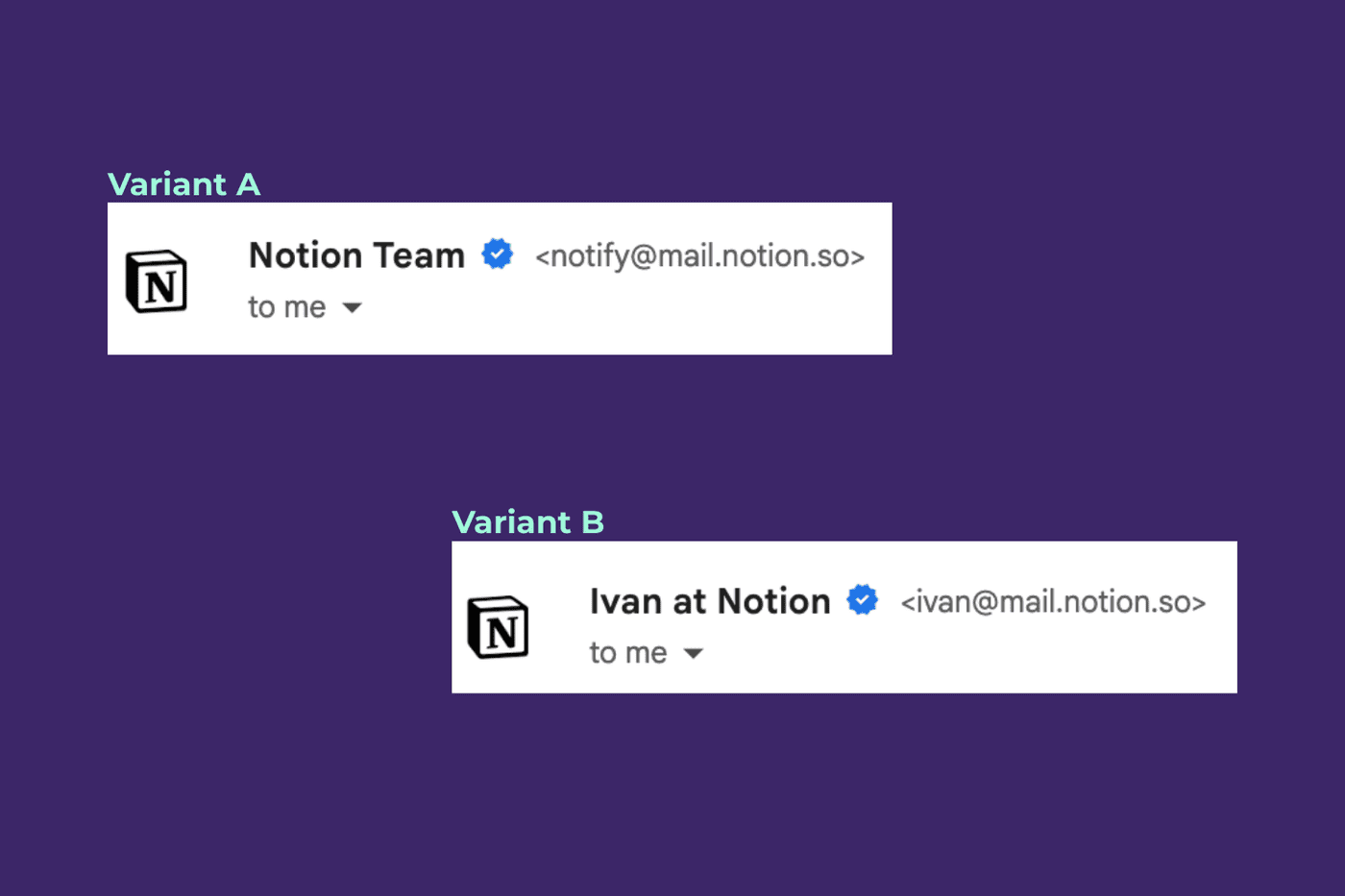
People don’t just look at subject lines. They also check who sent the email before opening it. In fact, sender name is one of the key trust signals in the inbox.
Here’s what to test:
- Brand name vs person name
- Person + brand combo (e.g., “Ali from Company”)
- Department name (e.g., “Support Team”)
Some audiences trust personal names more. Others respond better to strong brand identity. Testing helps you find what feels more trustworthy to your subscribers.
Send time
Timing plays a big role in email success. Even the best email can fail if sent at the wrong time.
Testing send time helps you discover when your audience is most active.
Things to experiment with:
- Morning vs evening sends
- Weekday vs weekend emails
- Specific hours (e.g., 8 AM vs 11 AM)
Research shows that certain time slots, like early morning, often perform well, but results can vary by audience.
The goal is to match your send time with your audience’s daily habits.
Design element testing
Once people open your email, design decides whether they stay and engage. A clean and clear layout improves readability and clicks.
You should test visual elements that guide user attention and make your message easy to understand.
Here are some design element ideas to experiment with:
Trying different headline sizes
Large headlines grab attention fast. Smaller ones feel less aggressive. Testing helps you find the right balance between visibility and readability.
Changing the email content font
Fonts affect how easy your email is to read. Test simple fonts vs stylish ones. Also try different font sizes to improve mobile readability.
Adjusting the image layout
Images can increase engagement, but too many can slow down loading or distract readers. Test:
- Image-first vs text-first layout
- Single image vs multiple images
- Image placement (top vs middle)
Experimenting with colours and contrast
Color plays a key role in guiding attention. High contrast makes buttons and headlines stand out.
Test ideas include:
- CTA button colors
- Background vs text contrast
- Bright vs soft color themes
Good design improves user flow. It helps readers move from headline to CTA without confusion.
Best Practices
A/B testing works best when it follows a clear and careful process. Without the right approach, results can be misleading or even useless. These best practices help you get accurate insights and make smarter decisions over time.
Create & randomise segments
Start by dividing your email list into smaller groups, called segments. Each group should receive a different version of your email.
The key here is randomization. Every subscriber should have an equal chance of being placed in any group. This prevents bias and ensures fair results.
For example, if one group has more active users than the other, the test will not be accurate. Random segments keep the comparison balanced.
Most email platforms offer automatic random splitting. Use this feature whenever possible. It saves time and improves accuracy.
Small lists might not be reliable
A/B testing needs enough data to produce reliable results. If your list is too small, the outcome may not reflect real user behavior.
For example, if only a few people open or click your email, one or two actions can change the results completely. This makes it hard to trust the outcome.
In general, larger sample sizes give more stable and meaningful insights. If your list is small, run tests over a longer period or combine results from multiple campaigns.
Always check if the difference between results is large enough to matter. Small changes in tiny lists can be misleading.
Documenting results
Every test gives you valuable data. If you do not record it, you lose that learning.
Keep a simple record of each experiment. Include:
- What you tested
- The versions you used
- The goal (opens, clicks, conversions)
- The final results
Over time, this creates a knowledge base. You will start to see patterns, such as what type of subject lines work best or which CTAs perform better.
This also helps your team stay consistent. Instead of repeating the same tests, you build on past insights.
Test one variable at a time
This is one of the most important rules in A/B testing. Only change one element in each test.
For example, if you change both the subject line and the CTA at the same time, you will not know which one caused the result.
Testing one variable keeps things clear. It helps you understand exactly what works and why.
Once you find a winning version, you can move on and test another element. This step-by-step method leads to stronger long-term improvements.
Test multiple times
One test is not enough to make a final decision. Results can change based on timing, audience behavior, or external factors.
For example, a subject line that works well one week may perform differently the next week.
That is why you should repeat tests. Run similar experiments across different campaigns and compare results.
When the same pattern appears multiple times, you can trust the outcome more. This builds confidence in your strategy and reduces risk.
Wrapping It Up
Email marketing A/B testing is a powerful way to improve your campaigns using real data. It helps you understand your audience, refine your message, and increase results over time. Instead of guessing what works, you rely on clear evidence from user behavior.
By testing key elements like subject lines, CTAs, timing, and design, you can find what truly connects with your audience. Each small improvement adds up and leads to better engagement and higher conversions.
Following best practices is just as important as running tests. Random segments, enough data, and clear tracking ensure your results are accurate. Testing one change at a time and repeating experiments helps you build a strong strategy.
In the end, success in email marketing comes from learning and adapting. A/B testing gives you the tools to grow with confidence and make smarter decisions every time you send an email.
Read More: How email marketing for automotive businesses drives leads and sales