Email marketing continues to be one of the most effective digital marketing strategies in 2026. Despite the rise of social media, chat apps, and AI-driven campaigns, email remains a direct line to your audience, offering personalization, engagement, and measurable results. With the right strategy, businesses can nurture leads, boost sales, and build long-term relationships with customers.
In this guide, we’ll explore how email marketing works, the benefits it offers, the types of campaigns you can run, and step-by-step instructions to get started — all tailored to the evolving digital landscape of 2026. Whether you’re a beginner or looking to optimize your current strategy, this guide will equip you with the knowledge to succeed.
What is Email Marketing?
Email marketing is a digital marketing strategy that uses email to communicate with an audience. Unlike social media posts or paid ads, email allows you to deliver personalized messages directly to subscribers who have opted in to hear from you.
At its core, email marketing serves three main purposes:
-
Inform – Share updates, news, or product information with your audience.
-
Engage – Build meaningful relationships by delivering relevant content that resonates.
-
Convert – Drive actions such as purchases, sign-ups, or downloads through targeted campaigns.
With proper segmentation and automation, email marketing enables businesses to reach the right people at the right time, making it a cost-effective and measurable channel for long-term growth.
How Does Email Marketing Work?
Email marketing is more than just sending messages — it’s a strategic process that ensures your emails reach the right audience, at the right time, with the right content. To make it effective, there are three key components:
An Email List
Your email list is the foundation of any successful campaign. It consists of subscribers who have opted in to receive emails from your business. Quality matters more than quantity — a smaller, engaged list will always outperform a large, unresponsive one. Growing your email list can be achieved through sign-up forms, gated content, contests, and other lead-generation strategies. Maintaining list hygiene by removing inactive subscribers also ensures higher deliverability and engagement rates.
An Email Service Provider (ESP)
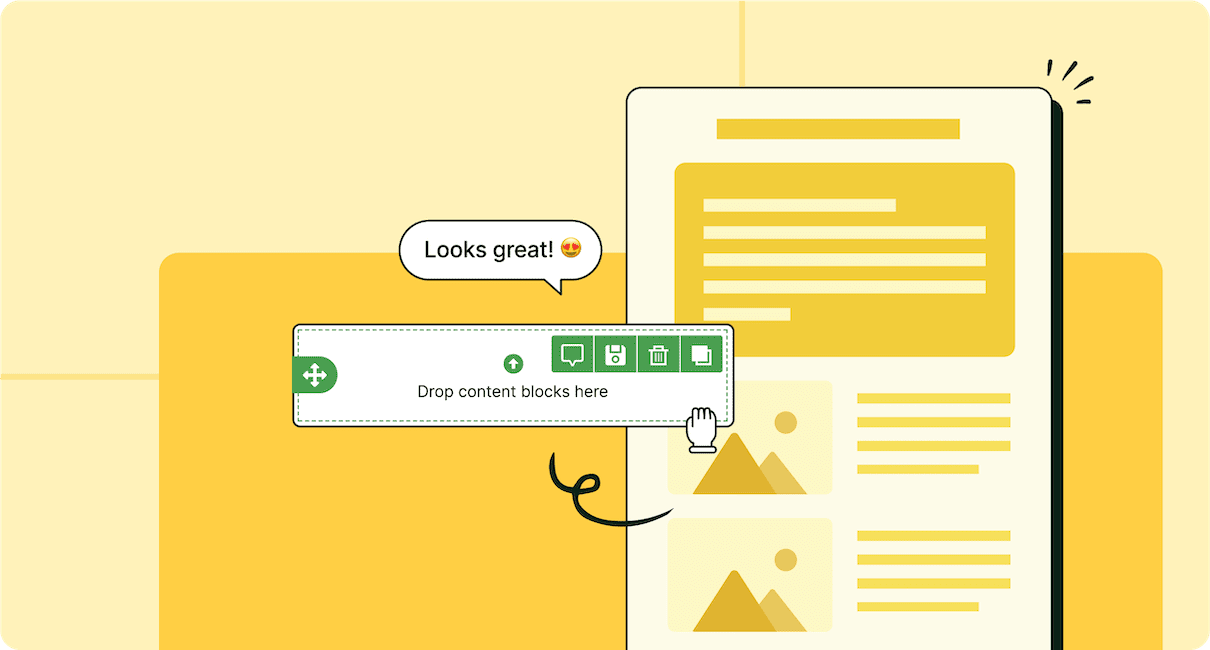
An Email Service Provider (ESP) is a platform that allows you to create, send, and manage your email campaigns efficiently. Modern ESPs offer tools like drag-and-drop editors, automated workflows, analytics, and segmentation features. Using an ESP ensures your emails comply with deliverability standards and regulations while providing insights into open rates, click-through rates, and conversions — essential for measuring campaign success.
A Specific Goal
Every email campaign should have a clear goal. Whether it’s driving sales, nurturing leads, educating your audience, or building brand loyalty, your goal shapes the content, design, and call-to-action (CTA) of your emails. Defining objectives also makes it easier to track performance and optimize future campaigns.
Benefits of Email Marketing
Email marketing remains one of the most powerful tools for businesses in 2026, offering a wide range of benefits that help drive growth, engagement, and revenue. Here’s why it continues to outperform many other marketing channels:
It Has Measurable Results
One of the biggest advantages of email marketing is its trackability. With metrics such as open rates, click-through rates, conversions, and bounce rates, businesses can clearly see which campaigns are effective and which need optimization. This data-driven approach allows marketers to continuously refine their strategy and achieve better results over time.
It’s One of the Best Communication Channels
Email remains a direct line to your audience, providing a personal touch that social media or paid ads cannot match. Unlike public platforms where your messages compete with endless noise, emails land in a subscriber’s inbox, making your communication more focused and intentional.
It Offers Increased Audience Reach
With billions of email users worldwide, email marketing enables businesses to reach a wide and diverse audience. By targeting subscribers based on demographics, behavior, and preferences, campaigns can deliver highly relevant content that resonates with each segment.
It Has a High Return on Investment (ROI)
Email marketing consistently delivers a high ROI, often outperforming other digital channels. Studies show that for every dollar spent on email marketing, businesses can earn upwards of $40 in return, making it a cost-effective strategy for both small and large enterprises.
It’s a Permission-Based Channel
Email marketing is opt-in, meaning subscribers have actively agreed to receive your communications. This ensures your audience is genuinely interested in your content or products, increasing the likelihood of engagement and conversion.
You Have an Engaged Contact List
Unlike social media followers or website visitors, your email subscribers are a controlled audience that you own. By nurturing this list with valuable content and personalized campaigns, you maintain a loyal and engaged audience, ready to take action when prompted.
Essential Types of Email Marketing Campaigns
In 2026, successful email marketing hinges on sending the right message at the right time to the right subscribers. Different campaigns serve unique purposes — from confirming a purchase to rekindling interest or driving repeat sales. Below is an in‑depth look at the key types of email marketing campaigns every marketer should understand and use strategically:
1. Transactional Emails
Transactional emails are automated messages triggered by a specific action taken by a subscriber or customer. These are expected and highly relevant, often resulting in extremely high open rates. They are not primarily promotional but functional, delivering critical information such as:
-
Order confirmations
-
Shipping updates
-
Account creation or password resets
-
Billing receipts
While their core function is informational, well‑designed transactional emails also offer opportunities to reinforce your brand message and include subtle upsells or helpful tips related to the purchase. These emails help build trust while providing immediate value to the recipient.
2. Promotional Campaigns
Promotional emails are designed to drive sales and conversions by presenting offers, discounts, or special opportunities. These campaigns often target a broad or segmented portion of your list and can include:
-
Limited‑time discounts
-
Seasonal sales
-
Product launches
-
Exclusive subscriber deals
The key to success with promotional emails is a clear call to action (CTA) that tells the reader exactly what to do next — whether it’s “Shop Now,” “Claim Your Discount,” or “Learn More.” Strong visuals and value propositions make these emails highly effective for boosting revenue.
3. Abandoned Cart Emails
Abandoned cart campaigns target e‑commerce shoppers who added items to their cart but didn’t complete the purchase. These emails are usually automated and sent within a short window after the abandonment event. They typically:
-
Remind the customer of the item they left behind
-
Highlight product details or images
-
Sometimes offer incentives like discounts or free shipping to encourage checkout
These messages are powerful because they reach users while their interest is still fresh, and can significantly recover lost sales.
4. Lead Nurturing Emails
Lead nurturing emails are part of strategic drip campaigns designed to move subscribers through the buyer journey. Instead of focusing on a single message, a series of emails guide readers from awareness to decision, often educational in tone. They may include:
-
Welcome sequences introducing your brand
-
Educational content that answers common questions
-
Case studies, testimonials, or value‑added resources
Lead nurturing builds trust and keeps your brand top‑of‑mind over time, making prospects more likely to convert when they are ready.
5. Re‑engagement Messages
Over time, some subscribers may become less active or stop engaging with your emails. Re‑engagement campaigns are designed to rekindle interest and determine whether someone remains interested in hearing from you. These emails can:
-
Ask if recipients still want to stay on the list
-
Offer incentives to re‑engage
-
Highlight what they’re missing by not opening your emails
If subscribers remain inactive after these messages, this is also an opportunity to clean your list and improve overall engagement metrics.
6. Upsell and Cross‑sell Emails
Once a customer has made a purchase, upsell and cross‑sell emails are used to increase customer lifetime value by suggesting additional or related products. For example:
-
After buying a laptop, recommending a laptop bag or accessories
-
Suggesting premium versions of the product customers just purchased
These emails work best when personalized based on purchase history and browsing behavior, making them feel relevant and helpful rather than pushy.
7. Customer Relationship‑Building Emails
Relationship‑building emails are focused on strengthening long‑term engagement, building brand loyalty, and maintaining a positive connection with your audience. These can include:
-
Newsletters with educational or industry insights
-
Content that adds value without hard selling
-
Reward or loyalty program updates
-
Personalized messages on birthdays or anniversaries
Unlike transactional or promotional emails, these don’t push for immediate sales; instead, they nurture trust and keep your brand relevant in subscribers’ minds.
Email Marketing Examples
Real-world examples can help illustrate how different types of email campaigns work effectively. Here are four standout campaigns that demonstrate best practices for 2026:
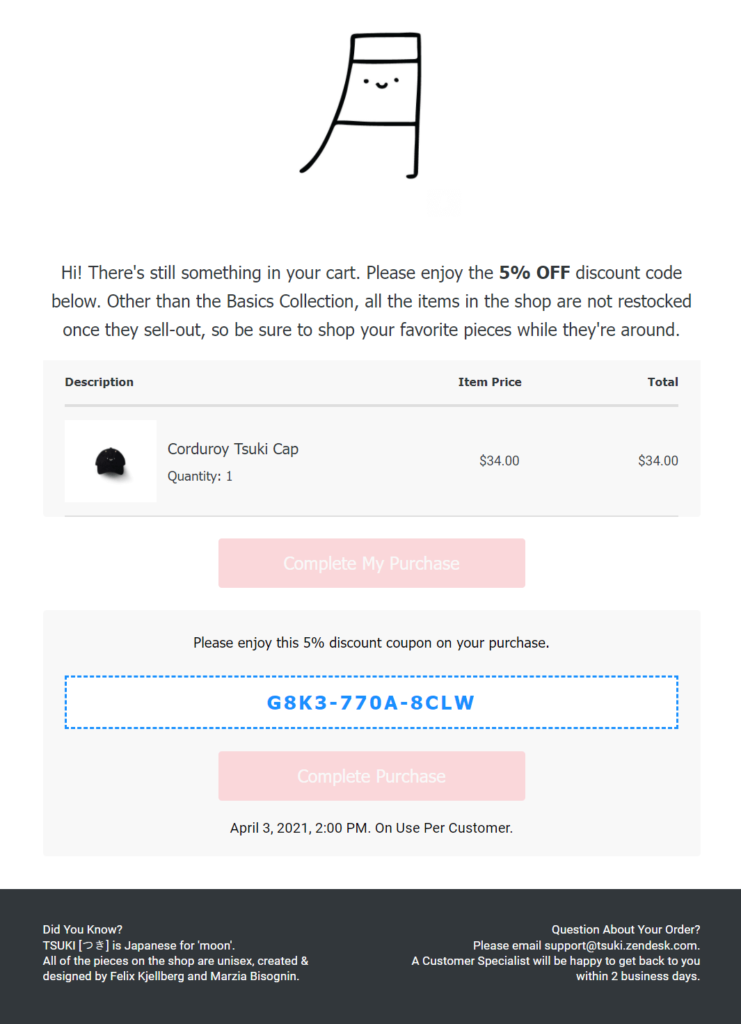
1. Tsuki – Abandoned Cart Email Campaign
Tsuki, an online jewelry retailer, excels at recovering potential lost sales through abandoned cart emails. Their approach includes:
-
Timely reminders sent within hours of cart abandonment
-
Personalized content, showing the exact items left in the cart
-
Incentives, such as free shipping or limited-time discounts
This combination encourages customers to complete their purchase while keeping the brand memorable and customer-friendly.
Subject line: Quick! Here’s a discount on your purchase…
2. Tomorrow People – Educational Newsletter Example
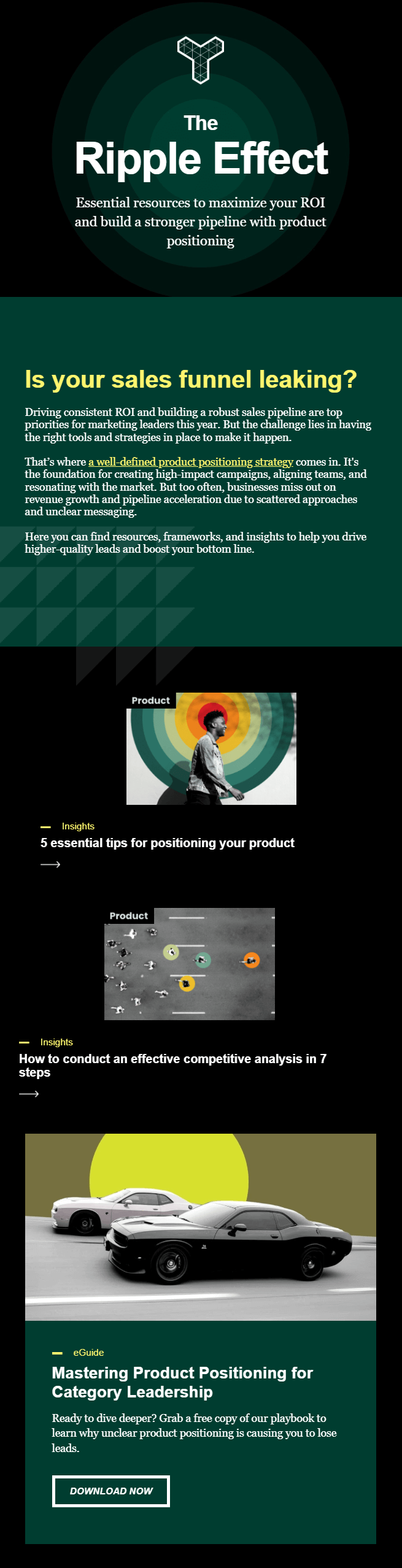
Tomorrow People, a digital marketing agency, uses educational newsletters to engage and nurture their subscribers. Their emails often include:
-
Valuable tips and insights on marketing and business growth
-
Clear, actionable guidance with practical takeaways
-
Visually clean layouts that make content easy to read
By providing consistent, high-quality educational content, they build trust and establish authority in their niche.
Subject line: Marilia, here’s your resource pack to achieve stronger sales pipelines
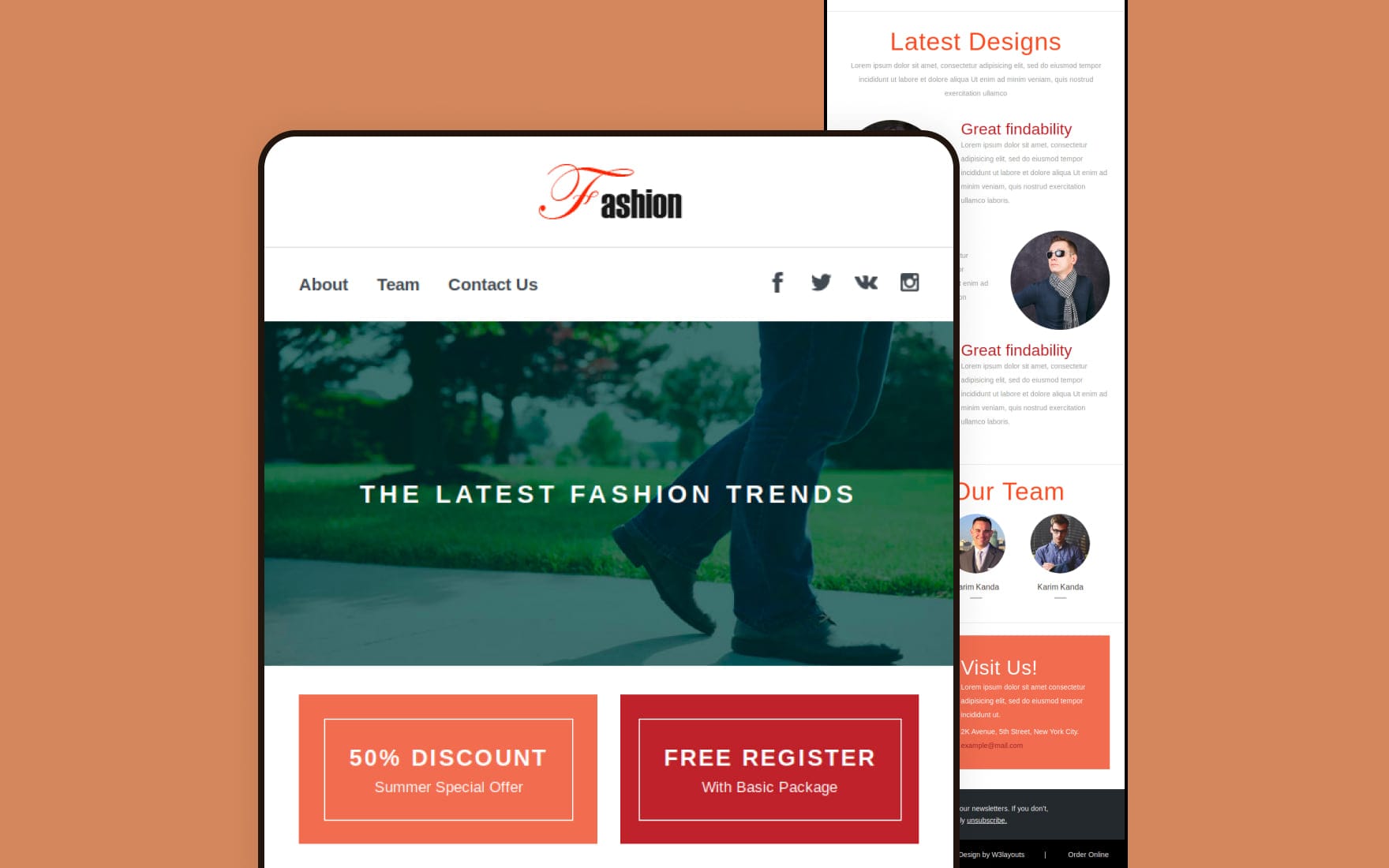
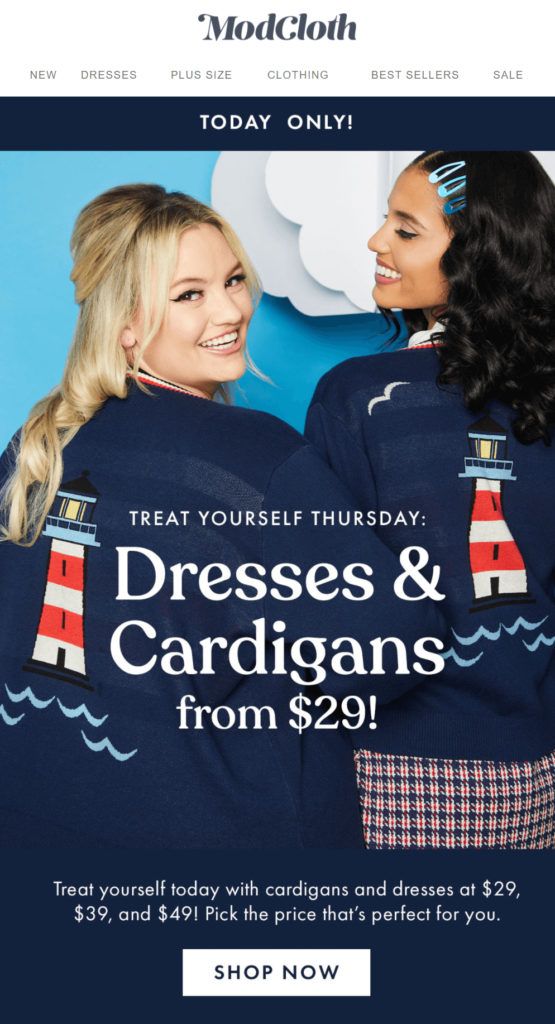
3. ModCloth – Promotional Email Campaign
ModCloth, a fashion retailer, is known for highly effective promotional emails. Their campaigns typically feature:
-
Eye-catching visuals that highlight products
-
Exclusive offers for email subscribers
-
Urgency triggers, such as limited-time deals or low-stock alerts
These promotional emails drive immediate sales while keeping subscribers excited about upcoming products and offers.
Subject line: Treat yourself this Thursday with $29 dresses!
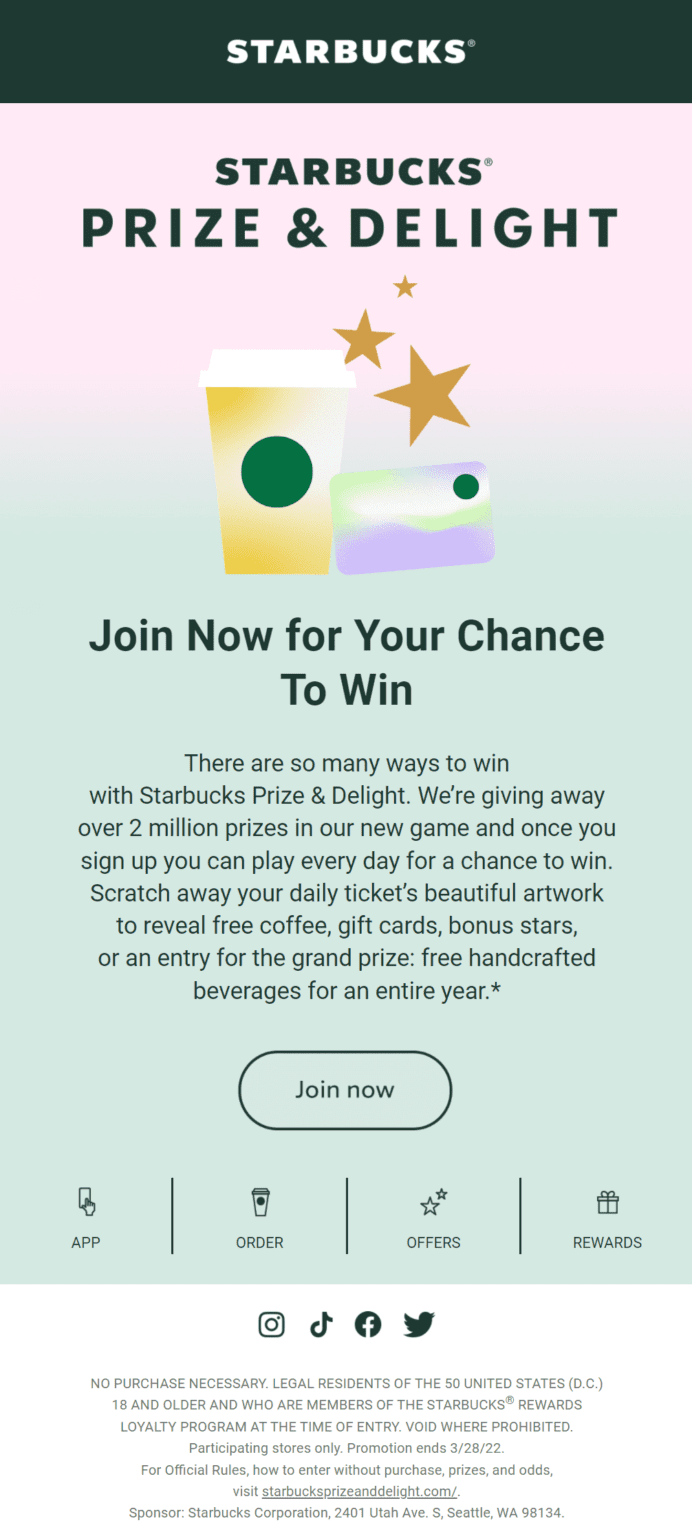
4. Starbucks – Customer Loyalty Campaign
Starbucks uses email marketing to strengthen relationships and reward loyal customers. Their campaigns often include:
-
Personalized offers based on purchase history
-
Updates on rewards points or special perks
-
Engaging storytelling about new drinks or seasonal promotions
By combining personalization with valuable incentives, Starbucks keeps their customers engaged, encourages repeat purchases, and strengthens brand loyalty.
Subject line: Your free plays are waiting
How to Get Started With Email Marketing in Easy Steps
Getting started with email marketing might feel overwhelming at first — especially with so many tools, strategies, and metrics to consider — but with a clear step‑by‑step plan, you can build a powerful, effective email program from scratch. Below is a complete guide covering everything from choosing the right tools to tracking your performance and optimizing your results, up‑to‑date for 2026.
Step #1. Select an Email Marketing Platform
Your email marketing platform (also called an Email Service Provider or ESP) is the foundation of your entire strategy. It’s the tool that lets you manage subscribers, design campaigns, automate sequences, and analyze performance.
When evaluating platforms, look for these essential features:
✅ Segmentation & personalization: Allows you to divide your list into meaningful groups and send tailored messages.
✅ Automation workflows: Enables triggered email sequences like welcome series or abandoned cart reminders without manual effort.
✅ Analytics & reporting: Tracks key metrics like open rates, click‑through rates, and conversions.
✅ Responsive design tools: Helps create emails that look great on mobile and desktop.
✅ Compliance tools: Ensures your messages meet laws like GDPR and CAN‑SPAM.
Popular choices in 2026 range from beginner‑friendly to enterprise‑grade:
-
Beginner & Small Business: Mailchimp, MailerLite, Brevo — easy setup and good free tiers for small lists.
-
Growth & Automation Focused: ActiveCampaign, HubSpot — advanced automation and CRM integration.
-
E‑commerce Focused: Platforms like Klaviyo specialize in behavior‑based triggers and purchase tracking.
Choosing the right platform early saves time and makes scaling your email program much simpler.
Step #2. Grow Your Email List
Your email list is your audience — the people who have invited you into their inboxes. But the quality of your list matters more than its size. Effective list growth focuses on high‑intent subscribers who are genuinely interested in your content or offers.
Here’s how to grow your list ethically and effectively:
📍 Create Valuable Lead Magnets
Offer something your audience finds genuinely useful — such as an ebook, checklist, discount, or exclusive video — in exchange for their email. Lead magnets work because they immediately provide value.
📍 Optimize Sign‑Up Forms
Place subscribe forms in multiple touchpoints:
-
Homepage popups or footer bars
-
Blog post end sections
-
Dedicated landing pages
These placements help capture users when their interest is highest.
📍 Use AI for Smart Segmentation
Modern ESPs use AI to analyze behavior data (like past purchases or browsing history) to suggest high‑value segments — making your list growth smarter, not just bigger.
📍 Social Media and Content Channels
Promote your sign‑up offers on social media, YouTube, or community forums. Providing consistent incentives increases visibility and attracts new subscribers.
💡 Pro Tip: Avoid buying email lists. Purchased lists often result in low engagement, higher spam complaints, and can hurt your deliverability.
Step #3. Segment Your Email List
Once your list starts growing, segmentation becomes one of the most powerful levers in your email strategy. Segmentation means dividing your audience into targeted groups so you can send specific content that resonates with each group’s needs or behavior.
Here are common and effective segmentation types:
🔹 Demographic Segmentation
Group subscribers by age, location, gender, or job role. For example, a fashion brand might send different offers to men and women.
🔹 Behavioral Segmentation
Segment based on how users interact with your site or emails — such as past purchases, click activity, or pages visited.
🔹 Lifecycle Stages
Classify users by where they are in the customer journey:
-
New subscribers
-
Active buyers
-
Lapsed or inactive customers
Lifecycle segmentation helps you tailor messages based on intent — for example, onboarding emails for new subscribers or re‑engagement messages for inactive users.
🔹 Interest & Preferences
If you collect preference data (e.g., topics they care about), you can send content that feels deeply personal. This boosts engagement significantly.
Segmented email campaigns historically generate higher open and click rates than generic broadcasts because the content feels more relevant to the recipient.
Step #4. Create Your First Email Campaign
With your list segmented and your audience groups defined, it’s time to build your first campaign. Here’s how to do it well:
🧠 Define the Campaign Goal
Before drafting anything, clearly outline what the email should achieve:
-
Drive sales?
-
Get readers to download a resource?
-
Increase app sign‑ups?
Every email should have a single primary goal so the message stays focused.
📝 Craft Effective Content
Good email content shares three core elements:
-
Subject Line: The first impression — compelling, concise, and relevant.
-
Body Copy: Clear, easy to read, and aligned with your goal.
-
Call to Action (CTA): One dominant CTA that tells the reader exactly what to do next.
💡 Example Subject Line Tips:
-
Personalize with the subscriber’s name.
-
Include a clear benefit or urgency.
-
Avoid spammy words like “FREE!!!”.
📱 Design for All Devices
Most email opens happen on smartphones. Ensure your email:
-
Uses a simple mobile‑friendly layout
-
Has large, tappable buttons
-
Keeps paragraphs short and scannable
🕐 Timing Matters
Sending at the right time can improve engagement. Business research suggests early mornings or mid‑day on weekdays often work well — though your audience may differ. Test different days and times to discover what works best for your list.
Step #5. Leverage Email Marketing Automation
Automation is one of the biggest advantages of email marketing. Once set up, automated workflows allow your emails to work around the clock, triggered by subscriber actions or events.
Here are powerful automation strategies to implement:
🔁 Welcome Series
Automatically send a sequence of messages to new subscribers:
-
Thank them for signing up.
-
Introduce your brand or mission.
-
Offer helpful content or your lead magnet.
This builds a strong first impression and nurtures interest from the start.
🛒 Cart Abandonment Flows
E‑commerce brands use automation to remind customers who added items to their cart but didn’t finish checkout — often increasing recovery rates.
🔔 Behavior‑Triggered Emails
Send messages based on actions like:
-
Browsing certain products
-
Clicking a specific link
-
Reaching a milestone (e.g., loyalty points)
These behavior‑based triggers feel personal and timely, driving higher engagement.
💌 Re‑engagement Automation
If subscribers haven’t opened emails in a while, automation can trigger messages asking if they want to stay subscribed — or move them to a win‑back sequence.
👉 Pro Tip: Avoid over‑automating. Too many messages can overwhelm your audience. Focus on value and relevance instead of sheer volume.
Step #6. Measure Your Performance & Optimize
Launch day isn’t the end of your email marketing journey — it’s just the beginning. The real power comes from tracking performance and improving over time.
📊 Key Metrics to Track
-
Deliverability Rate: Percentage of emails that reached inboxes.
-
Open Rate: How many subscribers opened your email.
-
Click‑Through Rate (CTR): How many clicked a link inside.
-
Conversion Rate: How many completed the desired action.
-
Unsubscribe & Spam Complaints: Signals of audience dissatisfaction.
💡 in 2026, open rate alone is not always reliable due to privacy updates in email clients. Instead, focus on clicks and conversions as better indicators of real engagement.
Continuous Optimization
Once you have performance data, the work isn’t done — it’s time to optimize:
🔹 A/B Testing
Test variations of:
-
Subject lines
-
CTAs
-
Images vs. text
-
Sending times
This helps you find the most effective version before rolling changes out broadly.
🔹 Clean Your List Regularly
Remove inactive contacts and bounced emails to improve deliverability and engagement. A healthy list performs better and keeps your sender reputation strong.
🔹 Refresh Content
Update templates, visuals, and messaging based on seasonal trends, new products, or audience feedback. Fresh content keeps your emails interesting and relevant.
Important Email Regulations
Email marketing is an incredibly effective way to grow your business, build relationships, and boost revenue — but it also operates within a complex global legal framework designed to protect individual privacy and prevent spam. In 2026, with privacy expectations and regulatory enforcement higher than ever, compliance isn’t optional — it’s essential. Violating email regulations can lead to heavy fines, damaged reputation, reduced deliverability, or even legal action. This comprehensive section explains the major email laws you need to know and detailed strategies for staying compliant.
General Data Protection Regulation (GDPR)
The General Data Protection Regulation (GDPR) is the most impactful data privacy law in the world, influencing email marketing practices even beyond the European Union. Though originally enacted in 2018, GDPR remains a cornerstone of email compliance in 2026 — especially for businesses that send emails to anyone in the EU/EEA.
1. What GDPR Regulates
GDPR governs how personal data — including email addresses — is collected, stored, and used. It requires businesses to justify every instance of data processing, including email marketing. Consent must be freely given, specific, informed, and unambiguous.
2. Key Requirements for Email Marketing
-
Explicit opt‑in consent: Before sending marketing emails to EU residents, you must have clear and explicit permission from the subscriber. Pre‑checked boxes or assumed consent are not valid.
-
Clear data purpose: Subscribers must be informed about exactly why their email is collected and how it will be used.
-
Transparent information: Your privacy notice must explain data use, retention period, and rights.
-
Easy withdrawal: Individuals must be able to withdraw consent as easily as they gave it.
-
Data subject rights: GDPR grants rights like access, rectification, erasure (“right to be forgotten”), and portability.
-
Security and breach reporting: Organizations must protect personal data appropriately and may need to report breaches to authorities within a strict timeframe.
3. Penalties and Enforcement
GDPR carries some of the highest fines in the world — up to €20 million or 4% of global annual turnover, whichever is higher. This applies not only to consent violations but also improper handling of personal data and failure to honor data rights.
CAN‑SPAM Act (United States)
The Controlling the Assault of Non‑Solicited Pornography and Marketing (CAN‑SPAM) Act is the primary federal law regulating commercial email in the United States. Unlike GDPR’s opt‑in focus, CAN‑SPAM takes an opt‑out approach, allowing businesses to send marketing emails without prior consent, provided they meet specific requirements.
1. Core Requirements of CAN‑SPAM
To comply with CAN‑SPAM, every commercial email must:
-
Use accurate header information: The “From,” “To,” and routing information must be truthful and not misleading.
-
Include a non‑deceptive subject line: The subject must reflect the email’s content.
-
Identify the message as advertising: It must be clear that the email is commercial in nature.
-
Provide a valid physical postal address: This can be a business address or P.O. Box.
-
Include a clear unsubscribe mechanism: Recipients must be able to unsubscribe easily, and requests must be processed within 10 business days.
2. Compliance Tips
-
Don’t hide or obscure marketing content behind redirects or vague language.
-
Use “one‑click” unsubscribe links that work without logging into an account.
3. Penalties
Violations of CAN‑SPAM can lead to fines up to approximately $46,000 per email — and each offending message may count as a separate violation. Enforcement actions can be taken by the FTC, state attorneys general, and even private lawsuits in some cases.
Canada’s Anti‑Spam Legislation (CASL)
Canada’s Anti‑Spam Legislation (CASL) is widely considered one of the strictest anti‑spam laws in the world. Unlike CAN‑SPAM’s opt‑out system, CASL requires consent before sending any Commercial Electronic Message (CEM) to Canadian residents.
1. Consent Under CASL
CASL recognizes two forms of consent:
-
Express consent: Explicit permission from the recipient, obtained through clear actions like checking an unchecked box on a form.
-
Implied consent: Based on certain existing business relationships (e.g., recent transactions), but it’s limited in duration and scope.
Importantly, pre‑checked boxes are not acceptable under CASL.
2. Specific Requirements
-
Identification: All CEMs must clearly identify the sender and, if applicable, the person on whose behalf the message is sent. Include a physical address and at least one other contact method (phone, email, or web).
-
Clear unsubscribe mechanism: Must work for at least 60 days after the message is sent, and requests must be honored within 10 business days.
-
Documentation: Marketers must retain proof of consent (who consented, when, and how).
3. Enforcement and Penalties
CASL’s penalties are significant — up to CAD $10 million for organizations and CAD $1 million for individuals. Because CASL applies to messages sent to Canadians regardless of where the sender is based, international marketers must be especially careful.
Australian Spam Act 2003
Australia’s Spam Act 2003 governs commercial electronic messages sent to Australian residents. It’s consent‑based, requiring marketers to have permission before sending commercial emails.
1. Consent Requirements
Under the Spam Act, consent may be either:
-
Express consent: A direct, explicit agreement to receive emails.
-
Inferred consent: Permission deduced from existing relationships or conduct (e.g., customer purchase), though this is more narrowly interpreted than express consent.
2. Message Content Rules
Every marketing email must include:
-
Accurate sender information: Clear identification of who authorized the message.
-
Valid contact details: Physical address and functional contact channels.
-
Unsubscribe option: Must be presented clearly and honored within five working days of the request.
-
Long‑term unsubscribe functionality: The unsubscribe mechanism must remain operational for at least 30 days after the email is sent.
3. Penalties and Enforcement
The Australian Communications and Media Authority (ACMA) actively enforces the law, and repeated violations can lead to fines up to AUD $2.1 million per day for organizations.
How to Stay Compliant in 2026
Compliance isn’t just about avoiding fines — it’s about building trust, protecting your brand, and ensuring deliverability. Below are practical, actionable best practices that align with multiple regulations globally:
1. Always Obtain Clear Consent
-
Use unambiguous opt‑in forms where subscribers knowingly agree to receive marketing emails. Avoid pre‑checked boxes, as many regulations (like GDPR and CASL) consider them invalid.
-
Consider double opt‑in confirmations where subscribers must confirm their subscription via a second email — this not only improves list quality but provides a stronger compliance record.
2. Be Transparent About Data Use
-
Clearly explain how email addresses will be used and stored.
-
Provide links to your privacy policy and inform subscribers of their rights related to their personal data.
3. Include Mandatory Information in Every Email
Make sure all commercial emails include:
-
Sender identity
-
Valid contact information (postal address)
-
A clear unsubscribe option that works as intended
These are requirements under most major global laws.
4. Honor Unsubscribe Requests Promptly
-
Remove unsubscribed contacts immediately and ensure they cannot be emailed again.
-
Different jurisdictions have different official deadlines, but processing unsubscribe requests left unfulfilled can be costly.
5. Keep Records of Consent and Compliance Efforts
Maintaining detailed records of consent (timestamps, source forms, IP addresses) protects you if regulatory authorities ever audit your practices.
6. Use Email Tools That Support Compliance
Modern ESPs offer built‑in compliance features such as:
-
Automatic unsubscribe handling
-
Consent logging
-
Geo‑based consent forms
These reduce the risk of manual mistakes.
Email marketing compliance in 2026 is more than a legal checkbox — it’s a strategic investment in trust, deliverability, and long‑term success. Understanding and following global regulations like GDPR, CAN‑SPAM, CASL, and the Australian Spam Act protects your business from steep fines and ensures you nurture subscribers ethically and responsibly. By obtaining proper consent, being transparent, honoring unsubscribe requests, and documenting consent, you not only stay out of legal trouble but also cultivate an audience that truly wants to hear from you — the cornerstone of effective email marketing.
Take Your First Email Marketing Step
If you’ve been overlooking email marketing, now is the time to take action and make it part of your growth strategy. To get started the right way, you need a powerful and easy-to-use email marketing tool that helps you manage subscribers, create campaigns, and track results efficiently.
That’s where Teno Mail comes in. You can try Teno Mail by signing up for a free account and start building, sending, and optimizing your email campaigns without complexity.
To succeed, always get permission before emailing, deliver content that matches your audience’s expectations, and send targeted messages to the right people at the right time. Master these fundamentals, and email marketing will quickly become one of your highest-performing channels.
Frequently Asked Questions on Email Marketing (FAQs)
Below are clear, up-to-date answers to the most common questions marketers ask about email marketing in 2026. These explanations reflect current industry practices, privacy changes, and evolving audience behavior.
1. When is the best time to send a marketing email?
There is no single “perfect” time that works for every audience, but data-driven testing shows consistent patterns. In 2026, the best time to send a marketing email depends heavily on your audience, industry, and email type.
-
B2B emails tend to perform best on weekdays, especially Tuesday to Thursday, between 9:00 AM and 11:00 AM, when professionals check their inbox at the start of the workday.
-
B2C emails often see higher engagement in the evening hours (6:00 PM–9:00 PM) or on weekends, when people have more personal time.
-
Transactional and time-sensitive emails (order confirmations, password resets, cart reminders) should be sent immediately, regardless of the time or day.
With modern email platforms, the most effective approach is send-time optimization, which uses past engagement data to automatically deliver emails when each subscriber is most likely to open them. Testing different days and times through A/B testing remains essential for finding what works best for your specific list.
2. What is email marketing automation?
Email marketing automation is the use of software and workflows to send automated, behavior-triggered emails to subscribers without manual intervention. Instead of sending one-off campaigns, automation allows emails to be delivered based on user actions, timing, or lifecycle stage.
Common examples of email automation include:
-
Welcome email series for new subscribers
-
Abandoned cart reminders for eCommerce users
-
Post-purchase follow-ups and product recommendations
-
Re-engagement emails for inactive subscribers
-
Birthday or anniversary messages
In 2026, automation goes beyond simple triggers. Many platforms now use AI and predictive analytics to personalize content, adjust sending frequency, and recommend the best next email for each subscriber. When used correctly, automation improves consistency, saves time, and significantly increases engagement and conversions.
3. How much does email marketing cost?
Email marketing is one of the most cost-effective digital marketing channels, but costs can vary based on your needs, tools, and list size.
Typical cost factors include:
-
Email marketing platform fees: Most tools charge based on the number of subscribers or emails sent per month. Entry-level plans may be free or low-cost, while advanced automation plans increase as your list grows.
-
Design and content creation: Costs may include copywriting, design templates, or internal team resources.
-
Integrations and add-ons: CRM integrations, advanced analytics, or AI features may add to the total cost.
For small businesses, email marketing can start at very low monthly costs, while larger organizations with complex automation and large lists may invest significantly more. Despite this, email marketing consistently delivers a strong return on investment, making it a scalable option for businesses of all sizes.
4. What is the average open rate for email marketing?
In 2026, the concept of “open rate” has evolved due to privacy changes in major email clients that automatically preload images, making open tracking less reliable. However, it’s still used as a directional metric.
On average:
-
General marketing emails: ~20%–30% open rate
-
Highly segmented or personalized campaigns: 30%–45% or higher
-
Transactional emails: Often exceed 50% open rates
Because open rates are no longer fully accurate, marketers now place more emphasis on click-through rates, conversions, and engagement actions. These metrics provide a clearer picture of how subscribers interact with your emails and whether campaigns are driving real business results.
5. What is the best email marketing service?
There is no single “best” email marketing service for everyone. The right choice depends on your business size, goals, budget, and technical needs.
-
For beginners and small businesses: Platforms with simple editors, basic automation, and affordable pricing are ideal for getting started quickly.
-
For growing businesses: Tools that offer advanced segmentation, behavioral automation, and CRM integrations provide more flexibility and scalability.
-
For eCommerce brands: Platforms with deep shopping data integration, product recommendations, and cart recovery features perform best.
-
For enterprises: Comprehensive solutions with advanced analytics, AI-driven personalization, and multi-channel capabilities are often required.
The best email marketing service is the one that aligns with your strategy, supports compliance requirements, and allows you to grow without constantly switching tools. Testing a platform’s usability, automation features, and reporting capabilities before committing is always recommended.
Read More: Cold Email Strategy 2026: What Works & What Doesn’t