Email marketing remains one of the most powerful digital channels—but only when it’s used strategically. While many businesses still rely on sending the same message to their entire list, that approach no longer aligns with how modern audiences engage with content.
Today’s subscribers expect relevance. They want emails that reflect their interests, behaviors, and stage in the customer journey. When every message feels generic, engagement drops—open rates flatten, clicks decline, and unsubscribes increase.
This is where email segmentation becomes essential.
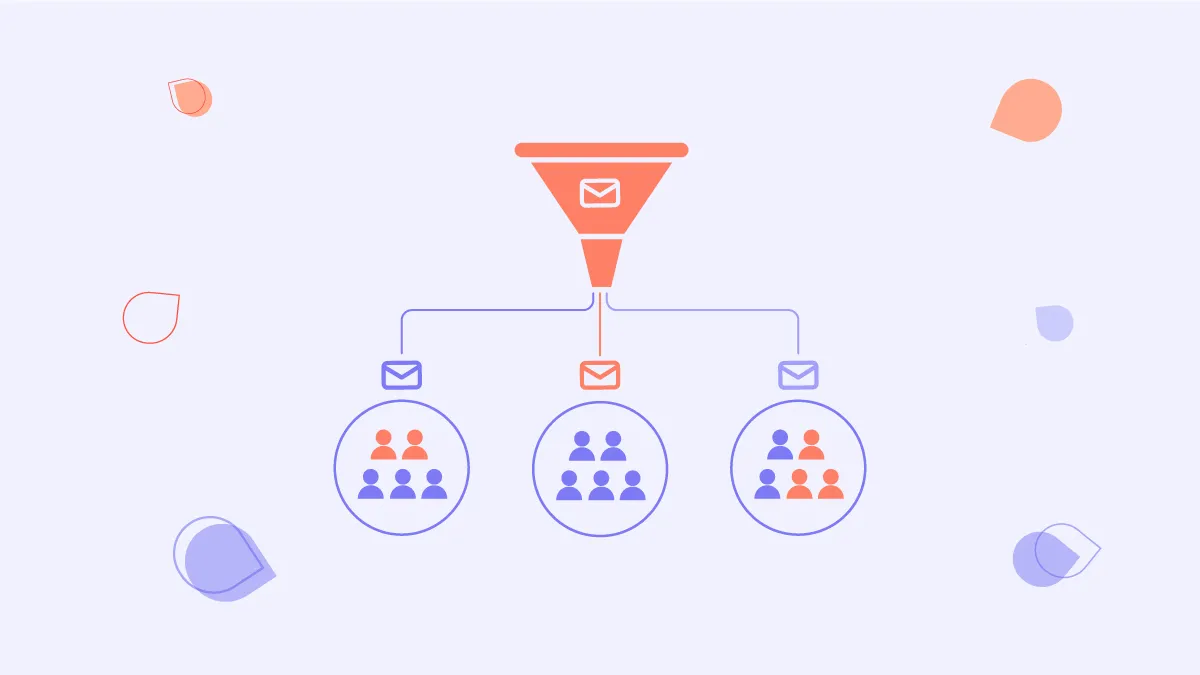
Email segmentation is the process of dividing your subscriber list into smaller, more targeted groups based on shared characteristics such as behavior, preferences, demographics, or purchase history. Instead of broadcasting one message to everyone, you send tailored content to specific groups—making each email feel intentional and valuable.
This shift from “batch-and-blast” to targeted communication transforms email from a basic marketing tool into a high-performing revenue channel. In fact, segmentation is now widely considered the foundation of effective email marketing, enabling brands to deliver the right message to the right audience at the right time.
More importantly, segmentation aligns your email strategy with how people actually make decisions—through relevance, timing, and personalization—not volume.
How segmentation improves email marketing ROI
Email segmentation directly impacts one of the most important metrics in marketing: return on investment (ROI). The reason is simple—relevance drives results.
When your emails are aligned with what subscribers actually care about, every key performance metric improves simultaneously. Opens increase, clicks rise, conversions grow, and unsubscribe rates decline. This cumulative effect is what makes segmentation such a powerful ROI driver.
1. Higher engagement leads to more conversions
Segmented emails consistently outperform generic campaigns because they feel more relevant. When subscribers receive content tailored to their interests or past behavior, they are far more likely to engage.
- Segmented campaigns generate 14% higher open rates and over 100% higher click-through rates compared to non-segmented emails
- Highly targeted emails can deliver 3x more revenue per recipient
This increase in engagement directly translates into more conversions and sales.
2. Significant revenue growth from targeted campaigns
Segmentation doesn’t just improve engagement—it drives measurable revenue growth.
- Segmented campaigns have been shown to increase revenue by up to 760%
- Around 77% of email marketing ROI comes from segmented, targeted, and triggered campaigns
- Automated and segmented emails can generate up to 320% more revenue than generic sends
These numbers highlight a clear reality: segmentation isn’t an optimization tactic—it’s a core revenue engine.
3. Reduced wasted spend and lower unsubscribe rates
Sending irrelevant emails doesn’t just underperform—it actively harms your results. It leads to higher unsubscribe rates, lower deliverability, and wasted marketing spend.
Segmentation helps prevent this by ensuring that each message is relevant to its audience.
- Segmented campaigns reduce unsubscribe rates and improve list health
- Businesses using segmentation see lower customer acquisition costs and more efficient spending
By focusing only on the right audience, you maximize the value of every email sent.
4. Stronger customer relationships and lifetime value
Beyond immediate conversions, segmentation improves long-term customer relationships. When subscribers consistently receive relevant content, trust increases—and so does lifetime value.
- Segmentation contributes to higher customer lifetime value and retention rates
Instead of treating your audience as a single group, segmentation allows you to nurture each segment differently—building deeper connections over time.
Segmentation improves ROI because it changes the entire dynamic of email marketing. It shifts your strategy from sending more emails to sending smarter emails.
Rather than relying on volume, you rely on relevance—and that’s what turns email into your highest-performing marketing channel.
Start with the subscriber data you already have
One of the biggest misconceptions about email segmentation is that it requires complex tools or massive datasets to get started. In reality, most businesses are already sitting on valuable subscriber data—they just aren’t using it strategically.
Every interaction your audience has with your emails, website, or product creates signals. These signals can be transformed into actionable segments that drive more relevant communication and better results.
Instead of waiting to “collect more data,” the most effective approach is to start with what you already have and organize it into meaningful segments.
Engagement-based segments
Engagement is one of the most powerful and accessible ways to segment your audience. It reflects how subscribers interact with your emails over time—giving you direct insight into their level of interest.
You can segment users based on:
- Email opens and click frequency
- Recent vs. inactive subscribers
- Highly engaged vs. disengaged audiences
- Specific content interactions (e.g., clicks on certain topics or offers)
Why it matters:
Highly engaged subscribers are more likely to convert, making them ideal for promotions, upsells, or early access campaigns. On the other hand, inactive users may need re-engagement campaigns or different messaging to win back attention.
By aligning your messaging with engagement levels, you avoid overloading disinterested users while maximizing opportunities with active ones.
Purchase or conversion history
If your business tracks purchases, sign-ups, downloads, or any form of conversion, you already have one of the most valuable segmentation datasets available.
You can create segments based on:
- First-time vs. repeat customers
- High-value customers (based on spend or frequency)
- Product or category preferences
- Abandoned carts or incomplete actions
- Time since last purchase or conversion
Why it matters:
Past behavior is one of the strongest predictors of future actions. When you tailor emails based on what someone has already done, your messaging becomes immediately more relevant.
For example:
- Recommend complementary products
- Send replenishment reminders
- Offer loyalty rewards or VIP incentives
This type of segmentation directly connects email campaigns to revenue generation.
Lifecycle stage
Not every subscriber is at the same point in their journey. Someone who just joined your list has very different expectations compared to a long-term customer.
Lifecycle segmentation helps you map your communication to where users are in their relationship with your brand.
Common lifecycle stages include:
- New subscribers (onboarding phase)
- Leads or prospects (consideration phase)
- First-time customers
- Active repeat customers
- At-risk or inactive users
- Loyal or VIP customers
Why it matters:
Each stage requires a different message. New subscribers may need education and trust-building, while repeat customers respond better to personalized offers and recognition.
Lifecycle-based segmentation ensures your emails feel timely rather than generic—guiding users naturally from one stage to the next.
Geography and time zone
Location-based segmentation is often overlooked, but it can significantly improve both relevance and timing.
You can segment subscribers based on:
- Country or region
- City-level targeting (for local businesses or events)
- Language preferences
- Time zone for send-time optimization
Why it matters:
Sending an email at the wrong time can reduce engagement—even if the content is highly relevant. By aligning your campaigns with local time zones, you increase the likelihood that your email is seen and acted upon.
Geographic segmentation also enables:
- Localized offers or promotions
- Region-specific content
- Compliance with regional regulations
This ensures your messaging feels personalized not just in content, but in context.
You don’t need more data—you need to use your existing data more effectively. Even simple segmentation based on engagement, behavior, lifecycle, and location can dramatically improve performance.
The goal is not complexity. The goal is relevance at scale.
Use AI to build segments faster
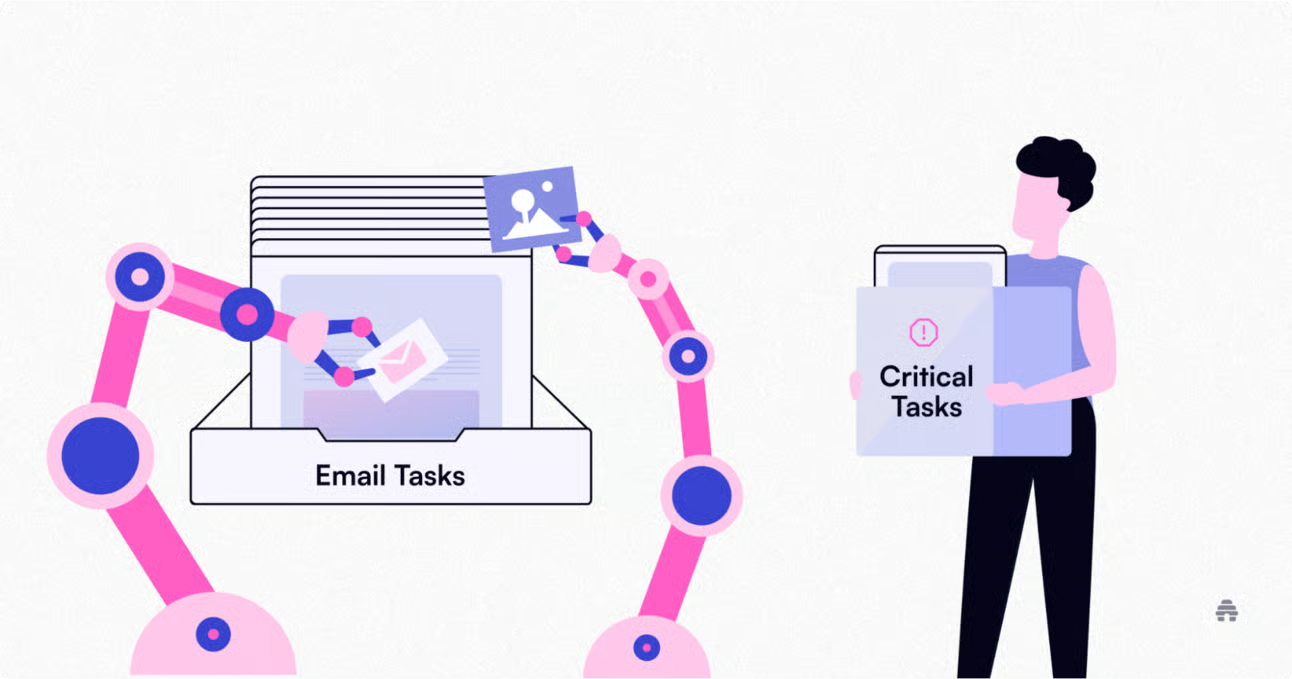
As your audience grows, manual segmentation becomes harder to manage. This is where AI transforms email marketing from a manual process into a scalable, intelligent system.
AI doesn’t just speed things up—it uncovers patterns and opportunities that would be difficult to identify manually.
1. Predictive segmentation
Modern AI tools can analyze historical data to predict future behavior. Instead of only reacting to what users have done, you can anticipate what they are likely to do next.
AI can identify:
- Subscribers most likely to convert
- Users at risk of churning
- High-value prospects
- Optimal timing for engagement
Impact:
This allows you to prioritize your efforts—focusing on the segments that will drive the most value.
2. Automated segment creation
Rather than manually defining rules, AI can dynamically group users based on patterns in behavior, preferences, and interactions.
For example:
- Clustering users with similar browsing or purchase behavior
- Automatically updating segments in real time
- Creating micro-segments for highly targeted campaigns
Impact:
You move from static lists to living, evolving segments that adapt as user behavior changes.
3. Real-time personalization at scale
AI-powered segmentation enables real-time decision-making within campaigns.
Instead of predefining every variation, AI can:
- Select content based on user behavior
- Adjust recommendations dynamically
- Personalize messaging at the moment of open
Impact:
Every subscriber receives a version of the email that feels tailored specifically to them—without requiring manual setup for each variation.
4. Smarter testing and optimization
AI enhances traditional A/B testing by going beyond simple comparisons.
It can:
- Continuously test multiple variables (subject lines, content, timing)
- Automatically shift traffic to top-performing variations
- Identify what works for different segments—not just overall
Impact:
You get faster insights and better results without running endless manual experiments.
5. Continuous learning and improvement
One of AI’s biggest advantages is that it improves over time. As more data is collected, segmentation becomes more accurate and more effective.
This creates a feedback loop:
- Better segmentation → better engagement
- Better engagement → more data
- More data → smarter segmentation
Impact:
Your email strategy becomes increasingly efficient and performance-driven with minimal manual intervention.
AI doesn’t replace segmentation—it amplifies it.
By combining your existing subscriber data with AI-driven insights, you can:
- Build smarter segments faster
- Deliver more relevant experiences
- Scale personalization without increasing workload
The result is a more adaptive, high-performing email channel that continuously improves over time.
How email personalization and segmentation work together
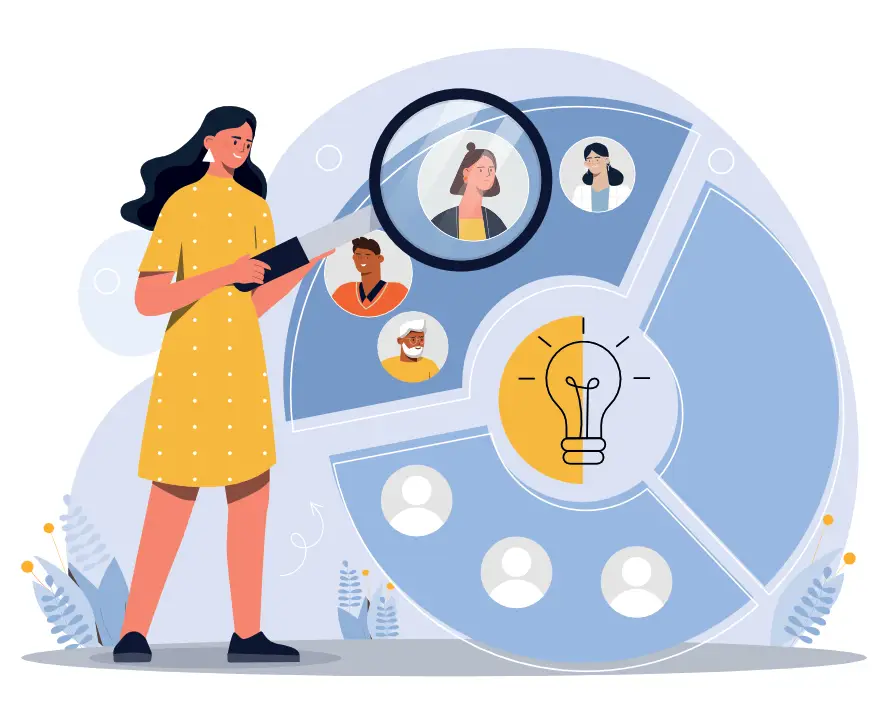
Email segmentation and personalization are often treated as separate tactics—but in reality, they are deeply interconnected. Segmentation defines who you are targeting, while personalization determines what experience each segment receives.
Without segmentation, personalization lacks direction. Without personalization, segmentation lacks impact.
When combined, they create highly relevant, context-aware email experiences that feel tailored to each subscriber—driving stronger engagement, higher conversions, and better customer relationships.
Dynamic content
Dynamic content is one of the most powerful ways to bring segmentation and personalization together inside a single email.
Instead of creating multiple emails for different segments, dynamic content allows you to change specific elements within one email based on subscriber data.
This can include:
- Personalized product recommendations
- Location-based offers
- Content blocks tailored to user interests
- Different CTAs based on lifecycle stage
- Images or messaging aligned with past behavior
How it works with segmentation:
Segmentation identifies the audience group (e.g., frequent buyers, inactive users), and dynamic content ensures each group sees content relevant to them within the same campaign.
Why it matters:
It allows you to scale personalization efficiently—delivering tailored experiences without duplicating campaigns for every segment.
Automated journeys
Automation is where segmentation and personalization truly become transformative. Instead of sending one-off campaigns, you create continuous, behavior-driven journeys that adapt to each subscriber.
These journeys are triggered by actions such as:
- Signing up for your email list
- Browsing specific products
- Making a purchase
- Abandoning a cart
- Becoming inactive
How it works with segmentation:
Segmentation determines entry points and paths within the journey, while personalization shapes the content at each step.
For example:
- A new subscriber enters an onboarding sequence with educational content
- A repeat customer enters a loyalty-focused journey
- An inactive user enters a re-engagement flow
Why it matters:
Automated journeys ensure that every subscriber receives timely, relevant communication—without requiring manual intervention for each interaction.
Campaign series
A campaign series is a structured set of emails designed to achieve a specific goal over time—such as nurturing leads, onboarding users, or promoting a product.
Unlike one-off campaigns, a series builds momentum through multiple touchpoints.
Examples include:
- Welcome series for new subscribers
- Product education series
- Seasonal or promotional campaigns
- Post-purchase follow-ups
How it works with segmentation:
Different segments receive different versions of the same series. For instance:
- New users receive introductory messaging
- Existing customers receive advanced or value-focused content
- High-intent users receive conversion-focused emails
Why it matters:
Segmentation ensures the series stays relevant, while personalization makes each message within the series feel intentional and aligned with user needs.
A/B testing
A/B testing is essential for optimizing both segmentation and personalization strategies. It allows you to experiment with different approaches and identify what resonates best with each audience.
You can test:
- Subject lines and preview text
- Email copy and tone
- Visual elements and layout
- CTAs and offers
- Send times and frequency
How it works with segmentation:
Instead of testing across your entire list, you can run tests within specific segments—uncovering insights that are more precise and actionable.
Why it matters:
What works for one segment may not work for another. Segment-level testing ensures your optimization efforts are aligned with audience behavior, not averages.
Segmentation and personalization are not standalone tactics—they are part of a unified strategy.
Segmentation organizes your audience into meaningful groups. Personalization brings those segments to life through relevant, engaging experiences.
Together, they transform email from a broadcast channel into a highly targeted, performance-driven system.
How to measure the impact of email segmentation

Implementing segmentation is only the first step. To truly understand its value, you need to measure how it affects performance across your email marketing efforts.
The goal is not just to track metrics—but to connect those metrics to business outcomes like revenue, retention, and customer lifetime value.
1. Engagement metrics
Engagement metrics provide the first indication that your segmentation strategy is working.
Key metrics to track include:
- Open rates
- Click-through rates (CTR)
- Click-to-open rates (CTOR)
- Time spent engaging with emails
What to look for:
Segmented campaigns should consistently outperform non-segmented ones. Higher engagement indicates that your content is more relevant to the audience.
2. Conversion metrics
Ultimately, the success of segmentation is measured by how well it drives action.
Track metrics such as:
- Conversion rates (purchases, sign-ups, downloads)
- Revenue per email or per subscriber
- Average order value (AOV)
- Cart recovery rates
What to look for:
Segments based on behavior or purchase history should show higher conversion rates compared to general campaigns.
3. Revenue attribution
To understand the full impact of segmentation, you need to connect email performance to revenue.
This includes:
- Revenue generated per campaign
- Revenue by segment
- Contribution of email to total sales
- Performance of automated vs. one-off campaigns
What to look for:
Highly targeted segments (e.g., repeat customers or high-intent users) often generate disproportionate revenue compared to their size.
4. List health metrics
Segmentation also plays a critical role in maintaining a healthy email list.
Track:
- Unsubscribe rates
- Spam complaints
- Bounce rates
- Active vs. inactive subscriber ratios
What to look for:
Effective segmentation should reduce negative signals like unsubscribes and complaints while increasing overall list engagement.
5. Lifecycle and retention metrics
Segmentation enables better lifecycle management, which directly impacts retention and long-term value.
Measure:
- Customer retention rates
- Repeat purchase frequency
- Customer lifetime value (CLV)
- Re-engagement success rates
What to look for:
Segments designed for retention (e.g., loyalty programs or win-back campaigns) should show measurable improvements over time.
6. Comparative performance analysis
To truly validate your segmentation strategy, compare segmented campaigns against non-segmented ones.
Ask questions like:
- How do segmented campaigns perform vs. bulk sends?
- Which segments generate the highest ROI?
- Which segments need refinement or redefinition?
What to look for:
Clear performance gaps that justify continued investment in segmentation.
Measuring the impact of email segmentation is about connecting data to decisions.
When done correctly, segmentation doesn’t just improve email metrics—it drives meaningful business outcomes:
- Higher revenue
- Stronger customer relationships
- More efficient marketing spend
By continuously analyzing performance and refining your segments, you turn email marketing into a system that learns, adapts, and improves over time.
Final Thoughts
Email segmentation is no longer a “nice-to-have”—it’s the foundation of modern email marketing performance. As inbox competition increases and customer expectations continue to rise, relevance has become the defining factor between ignored emails and high-converting campaigns.
The advantage of segmentation is not just in better targeting, but in better timing, messaging, and overall customer experience. When you organize your audience based on real behaviors and signals, every email becomes more intentional. Instead of pushing messages out, you’re aligning communication with what subscribers actually want and need.
What makes this strategy even more powerful today is the combination of data and AI. You no longer need complex manual processes to build effective segments. With the right approach, even simple segmentation can deliver measurable improvements—and as your data matures, your results compound over time.
The brands that win with email are not the ones sending the most emails. They are the ones sending the most relevant ones. When you commit to segmentation, you transform email from a basic communication tool into a scalable, high-performing growth channel.
FAQs
What is an email segmentation strategy?
An email segmentation strategy is the process of dividing your email subscribers into smaller groups based on shared characteristics such as behavior, preferences, demographics, or purchase history. This allows you to send more targeted and relevant messages instead of generic campaigns.
Why is email segmentation important for marketing?
Email segmentation improves engagement, conversions, and overall ROI by ensuring that each subscriber receives content that matches their interests and stage in the customer journey. It also reduces unsubscribe rates and enhances customer experience.
What are the most effective types of email segments?
Some of the most effective segmentation types include:
- Engagement-based segments (active vs. inactive users)
- Purchase or conversion history
- Lifecycle stage (new, active, loyal, at-risk)
- Geography and time zone
- Behavioral data such as browsing or click activity
How does segmentation differ from personalization?
Segmentation defines the audience groups, while personalization customizes the content within those groups. Segmentation answers “who you’re targeting,” and personalization determines “what each person sees.”
Can small businesses benefit from email segmentation?
Yes. Even with a small list, segmentation can significantly improve results. Simple segments—like new subscribers vs. returning customers—can make emails more relevant and increase engagement without requiring advanced tools.
How often should you update your email segments?
Email segments should be updated continuously or in real time if possible. Subscriber behavior changes over time, so dynamic segmentation ensures your campaigns remain accurate and effective.
What role does AI play in email segmentation today?
AI helps automate segment creation, predict customer behavior, and optimize targeting. It enables marketers to build more accurate and dynamic segments, making personalization scalable and more effective.
How do you know if your segmentation strategy is working?
You can measure success by tracking improvements in key metrics such as open rates, click-through rates, conversion rates, revenue per email, and unsubscribe rates. Stronger performance across these indicators typically signals effective segmentation.
Read More: 5 Appointment Reminders Templates to Increase Engagement