Email marketing remains one of the most effective digital channels for driving engagement, nurturing leads, and increasing conversions. However, success doesn’t come from simply sending emails—it comes from sending the right message to the right audience at the right time. That’s where market research becomes essential.
Without a clear understanding of your audience, even the most visually appealing or well-written emails can fall flat. Market research helps you move beyond assumptions and base your email strategy on real data, behaviors, and trends. It enables you to craft personalized campaigns, improve targeting, and ultimately build stronger relationships with your subscribers.
In today’s digital landscape, inboxes are crowded, and attention spans are short. Businesses that invest in market research gain a significant advantage by delivering relevant, timely, and valuable content that resonates with their audience. Whether you’re launching a new campaign or optimizing an existing one, integrating market research into your email marketing strategy can dramatically improve your results.
What is Market Research?
Market research is the process of collecting, analyzing, and interpreting information about your target audience, competitors, and industry environment. Its primary goal is to help businesses make informed decisions based on data rather than guesswork.
In the context of email marketing, market research focuses on understanding who your subscribers are, what they need, how they behave, and what influences their decisions. This includes gathering insights such as demographics, preferences, purchase behavior, engagement patterns, and pain points.
Market research can be conducted using both primary methods (like surveys, interviews, and feedback forms) and secondary methods (such as industry reports, competitor analysis, and existing customer data). Together, these approaches provide a comprehensive view of your market.
By leveraging market research, marketers can:
- Segment their email lists more effectively
- Create personalized and relevant content
- Optimize send times and frequency
- Identify new opportunities and trends
- Improve overall campaign performance
Market research acts as the foundation of a successful email marketing strategy, ensuring that every message you send is backed by insight and purpose.
Why Conduct Market Research Before an Email Campaign
Launching an email campaign without market research is like sending messages into the dark—you might reach someone, but you won’t know if it’s the right person, the right message, or the right time. Market research transforms email marketing from guesswork into a strategic, data-driven process that improves targeting, engagement, and conversions.
Below are the key reasons why conducting market research before an email campaign is not just helpful—but essential.
Helps You Uncover Gaps in the Market
One of the most valuable outcomes of market research is its ability to reveal untapped opportunities. These gaps represent areas where customer needs are not fully met or where competitors are underperforming.
By analyzing your market before launching an email campaign, you can:
- Identify underserved audience segments
- Discover unmet needs or expectations
- Spot missing content topics competitors aren’t addressing
- Find opportunities to position your offer differently
Market research enables businesses to uncover unmet customer demands and hidden opportunities, allowing them to develop strategies that better align with real market needs . For email marketing, this means you can craft campaigns that stand out in crowded inboxes instead of blending in with generic messaging.
For example, if competitors are sending broad promotional emails, your research might reveal a demand for more educational or personalized content. Acting on that gap allows your campaign to capture attention and build trust faster.
In practical terms, identifying market gaps helps you:
- Create unique email angles and hooks
- Offer solutions competitors overlook
- Increase open and click-through rates through differentiation
Without this step, your email campaigns risk repeating what everyone else is doing—resulting in low engagement and missed opportunities.
Reveals Insights Into Your Target Market’s Needs, Preferences, and Pain Points
Understanding your audience is the foundation of successful email marketing. Market research provides deep insights into what your subscribers actually care about, rather than what you assume they care about.
Through research, you can uncover:
- Customer preferences (content type, tone, format)
- Pain points and challenges
- Buying motivations and triggers
- Behavioral patterns and engagement habits
Market research helps businesses gain clarity on customer expectations and tailor communication strategies accordingly . It also enables marketers to learn about customer likes and dislikes, ensuring that messaging resonates rather than being ignored .
In the context of email marketing, this translates into:
- Better segmentation (sending relevant emails to specific groups)
- Personalized messaging that feels meaningful
- Higher engagement and lower unsubscribe rates
For instance, if research shows that a segment of your audience prefers quick tips over long-form content, you can design shorter, value-packed emails tailored to their preferences.
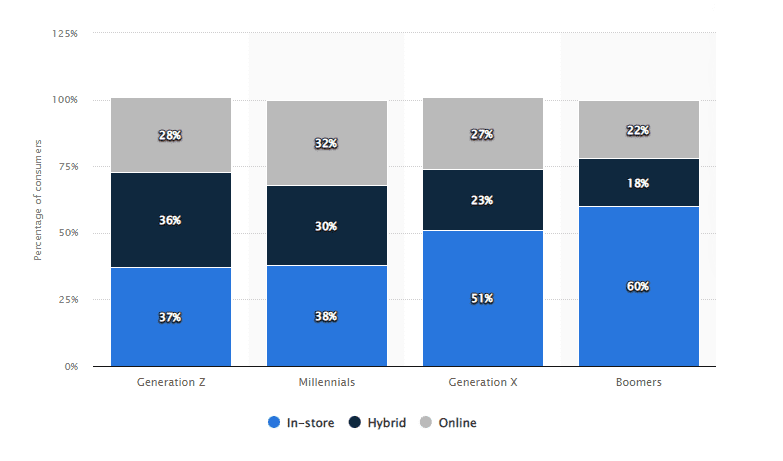
Additionally, understanding pain points allows you to position your emails as solutions, not just promotions. Instead of saying “Buy our product,” your messaging becomes:
- “Here’s how to solve your problem”
- “Here’s something that makes your life easier”
That shift significantly improves both engagement and conversions.
Lets You In on Warnings and Important Industry Updates
Markets evolve constantly. Consumer behavior shifts, new competitors emerge, technologies change, and regulations are updated. Market research helps you stay informed about these changes before they impact your campaigns negatively.
By conducting research, you can:
- Identify emerging threats or disruptions
- Stay updated on industry regulations and compliance requirements
- Monitor changes in consumer expectations
- Detect declining trends before they affect performance
Market research plays a critical role in identifying potential risks and preparing businesses for changes in the market environment . It allows companies to anticipate challenges and adjust strategies proactively instead of reacting too late.
For email marketing, this is especially important because:
- Privacy regulations (like data protection laws) directly affect how you collect and use subscriber data
- Changes in email deliverability rules can impact inbox placement
- Audience expectations for personalization and relevance continue to rise
For example, failing to adapt to new privacy standards or audience preferences can result in:
- Lower deliverability rates
- Increased spam complaints
- Loss of subscriber trust
On the other hand, staying ahead of industry updates allows you to:
- Maintain compliance
- Protect your sender reputation
- Build credibility with your audience
Market research acts as an early warning system, helping you avoid costly mistakes and stay competitive.
Helps You Discover the Latest Buying and Marketing Trends
Consumer behavior is constantly changing, and what worked last year—or even last month—may not work today. Market research helps you identify current trends so your email campaigns stay relevant and effective.
This includes insights into:
- Changing buying habits
- Preferred communication channels
- Content consumption patterns
- Emerging technologies and tools
Market research enables businesses to monitor trends and stay aligned with evolving customer behaviors and industry dynamics . It helps marketers understand what is gaining traction and what is losing relevance.
In email marketing, trend awareness allows you to:
- Adapt your messaging style (e.g., more conversational or interactive emails)
- Use modern formats (such as dynamic content or personalization)
- Align campaigns with current customer expectations
For example:
- If research shows increasing demand for personalization, you can implement dynamic email content
- If customers are engaging more with mobile devices, you can prioritize mobile-friendly email design
- If certain topics or products are trending, you can tailor campaigns to match those interests
Ignoring trends can make your emails feel outdated and irrelevant, while leveraging them ensures your campaigns feel timely and engaging.
Ultimately, staying on top of trends helps you:
- Increase relevance
- Improve engagement rates
- Maintain a competitive edge
Provides a Strong ROI
Perhaps the most compelling reason to conduct market research before an email campaign is its direct impact on return on investment (ROI).
Email marketing is already known for delivering high returns, but its effectiveness depends heavily on how well campaigns are targeted and optimized. Data shows that businesses measuring email ROI often see returns exceeding $10 for every $1 spent, with some achieving even higher returns .
Market research contributes to stronger ROI by:
- Improving targeting accuracy
- Reducing wasted marketing spend
- Increasing conversion rates
- Enhancing customer retention
It also helps businesses allocate resources more efficiently by focusing on strategies that actually work, rather than relying on trial and error. Research-driven decisions enable companies to reduce costs, improve efficiency, and maximize marketing impact .
For email campaigns, this means:
- Sending fewer but more effective emails
- Reaching the right audience segments
- Delivering content that drives action
For example, instead of sending a mass email to your entire list, research allows you to:
- Segment your audience
- Personalize your messaging
- Optimize send times
This targeted approach leads to:
- Higher open rates
- Better click-through rates
- Increased conversions
In contrast, skipping market research often results in:
- Poor targeting
- Low engagement
- Wasted budget
Market research ensures that every email you send is backed by insight—making your campaigns not only more effective but also more profitable.
Market Research Best Practices to Boost Your Email Marketing
Effective email marketing doesn’t happen by chance—it’s built on a strong foundation of research, insights, and continuous optimization. By applying proven market research practices, you can create campaigns that resonate with your audience, outperform competitors, and deliver measurable results.
Below are eight essential best practices to help you turn market research into a powerful advantage for your email marketing strategy.
1. Understand Your Target Audience
Everything in email marketing starts with knowing who you’re talking to. Without a deep understanding of your target audience, even the most polished campaigns can miss the mark.
Market research helps you go beyond basic demographics and uncover meaningful insights such as:
- Interests, values, and motivations
- Challenges and pain points
- Buying behavior and decision-making triggers
- Preferred communication styles and channels
To truly understand your audience, combine multiple data sources:
- Surveys and feedback forms
- Customer interviews
- Website analytics
- Email engagement metrics
Segmenting your audience is equally important. Instead of treating your email list as a single group, divide it into smaller segments based on behavior, preferences, or lifecycle stage. This allows you to send highly relevant and personalized emails.
For example, new subscribers may need educational content, while repeat customers may respond better to loyalty offers or product recommendations.
When you understand your audience at this level, your emails feel less like marketing and more like meaningful communication—leading to higher engagement and stronger relationships.
2. Analyze Recent Customer Data
Your existing customer data is one of the most valuable resources for market research. It provides real, actionable insights into how your audience interacts with your brand.
Key data points to analyze include:
- Open rates and click-through rates
- Conversion and purchase history
- Email engagement trends
- Website behavior (pages visited, time spent, etc.)
Analyzing this data helps you identify patterns such as:
- Which types of emails perform best
- What content drives the most engagement
- When your audience is most active
It also reveals areas for improvement. For instance, if certain emails have low open rates, you may need to adjust your subject lines or timing. If click-through rates are low, your content or call-to-action may need refinement.
Importantly, focus on recent data rather than outdated metrics. Customer behavior evolves quickly, and relying on old data can lead to inaccurate conclusions.
By continuously analyzing fresh data, you can:
- Optimize your campaigns in real time
- Personalize content more effectively
- Make data-driven decisions with confidence
3. Research Your Competitors
Understanding your competitors is a crucial part of market research. It helps you identify what’s working in your industry—and where you can do better.
Start by analyzing your competitors’ email marketing strategies:
- What type of emails do they send?
- How frequently do they communicate?
- What tone and messaging do they use?
- What offers or incentives do they promote?
You can subscribe to their email lists to observe their campaigns firsthand. This gives you valuable insights into their approach and helps you benchmark your own efforts.
Competitor research allows you to:
- Identify strengths and weaknesses in their strategy
- Discover content gaps you can fill
- Avoid repeating common mistakes
However, the goal is not to copy competitors—it’s to differentiate yourself. Use your findings to create a unique value proposition that sets your emails apart.
For example, if competitors focus heavily on promotions, you might stand out by offering more educational or value-driven content.
Let’s look at an example.

By understanding the competitive landscape, you can position your email campaigns more strategically and capture greater attention.
4. Gather Market Insights
Market insights go beyond your immediate audience and competitors—they involve understanding the broader industry environment.
This includes:
- Industry reports and research studies
- Customer trends and preferences
- Economic and technological developments
- Changes in consumer behavior
Gathering these insights helps you see the bigger picture and align your email strategy with current market conditions.
For example:
- If sustainability is becoming a major concern for your audience, you can highlight eco-friendly aspects of your products
- If customers are becoming more price-sensitive, you can adjust your messaging to emphasize value
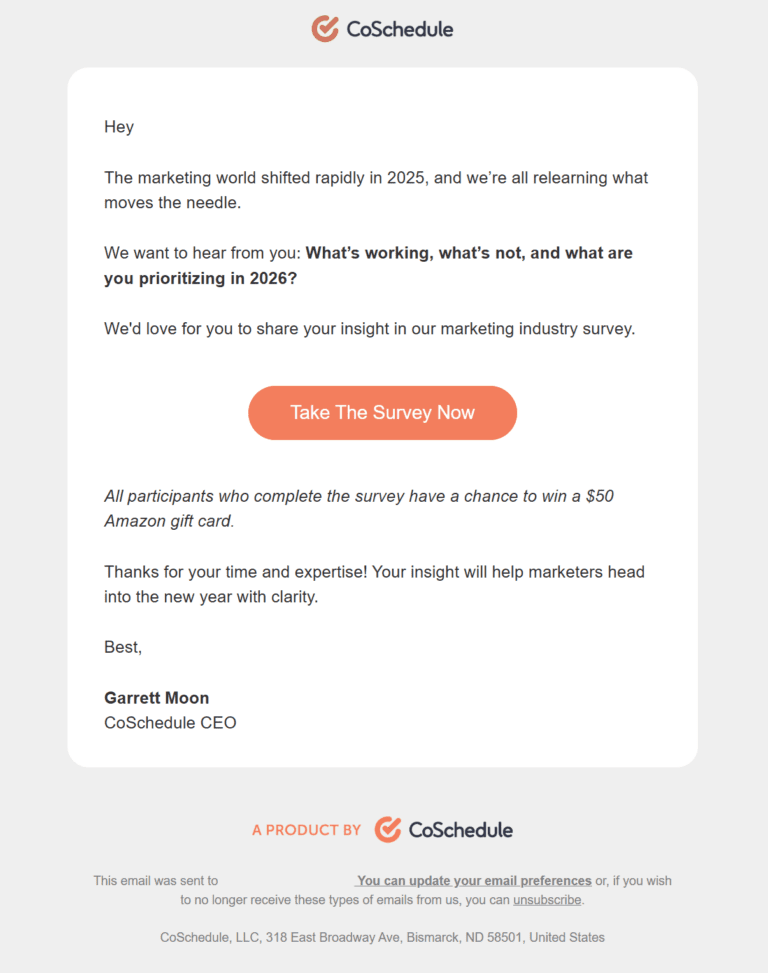
Take CoSchedule’s recent marketing industry survey email as an example:
Market insights also help you identify emerging opportunities. By staying informed, you can adapt your campaigns before trends become mainstream—giving you a competitive edge.
To gather insights effectively:
- Follow industry publications and reports
- Monitor analytics platforms
- Stay updated with marketing trends and best practices
The more informed you are, the better equipped you’ll be to create relevant and impactful email campaigns.
5. Use Social Listening Tools
Social listening is a powerful way to understand what your audience is saying about your brand, your competitors, and your industry in real time.
By monitoring conversations on social media platforms, forums, and online communities, you can gain insights into:
- Customer opinions and sentiment
- Common questions and concerns
- Trending topics and discussions
- Feedback on products or services
Social listening tools help you collect and analyze this information efficiently, allowing you to identify patterns and trends.
In email marketing, these insights can be used to:
- Create content that addresses real customer concerns
- Respond to trending topics with timely campaigns
- Improve messaging based on audience sentiment
For example, if customers frequently complain about a specific issue, you can address it directly in your emails by offering solutions or clarifications.
Social listening also helps you stay connected with your audience’s evolving needs, ensuring your campaigns remain relevant and engaging.
6. Test and Experiment
Market research is not a one-time activity—it’s an ongoing process. Testing and experimentation are essential for refining your email marketing strategy.
A/B testing (or split testing) allows you to compare different versions of an email to see which performs better. You can test elements such as:
- Subject lines
- Email content
- Call-to-action (CTA)
- Design and layout
- Send times
Experimentation helps you validate assumptions and make data-driven decisions. Instead of guessing what works, you rely on actual performance data.
For example:
- Testing two subject lines can reveal which one drives higher open rates
- Testing different CTAs can show which encourages more clicks
It’s important to test one variable at a time to get accurate results. Over time, these small improvements can lead to significant performance gains.
Additionally, don’t be afraid to try new approaches. Consumer preferences evolve, and experimentation helps you stay ahead of the curve.
7. Integrate Market Research into Email Design
Market research should influence not just what you say in your emails—but also how your emails look and feel.
Your design choices should reflect your audience’s preferences and behaviors. This includes:
- Layout and structure
- Visual elements (images, colors, fonts)
- Content format (short vs. long, text vs. visual)
- Mobile responsiveness
For example:
- If your audience primarily uses mobile devices, your emails should be optimized for smaller screens
- If your audience prefers quick, digestible content, use concise messaging and clear visuals
Market research can also guide personalization. Dynamic content allows you to tailor different parts of your email based on user data, such as:
- Product recommendations
- Location-based offers
- Personalized greetings
Integrating research into design ensures your emails are not only visually appealing but also highly relevant and user-friendly.
The result is a better user experience, which leads to higher engagement and conversions.
8. Measure the Impact of Market Research
Finally, it’s essential to measure how your market research efforts are impacting your email marketing performance.
Key metrics to track include:
- Open rates
- Click-through rates
- Conversion rates
- Bounce rates
- Unsubscribe rates
- Return on investment (ROI)
By analyzing these metrics, you can determine:
- Which strategies are working
- Where improvements are needed
- How research-driven changes affect performance
It’s also important to establish clear goals before launching a campaign. This allows you to measure success more effectively and align your research efforts with business objectives.
For example:
- If your goal is to increase engagement, focus on open and click rates
- If your goal is to drive sales, track conversions and revenue
Regular reporting and analysis help you refine your strategy over time. The more you measure, the more you learn—and the better your campaigns become.
Market Research for Better Email Campaigns
Market research might seem like an extra step, but in reality, it’s what transforms scattered email efforts into a focused, strategic system. It replaces guesswork with real insight, helping you refine your targeting and craft messages that genuinely connect with your audience.
When you truly understand your subscribers, every email serves a clear purpose. Your content feels relevant, your timing becomes more precise, and your offers align naturally with what your audience is looking for—leading to stronger engagement and higher conversions.
While research does require time and effort, it’s far more efficient than trying to fix campaigns that underperform due to lack of insight.
Once you have the right data, Teno Mail makes it easy to put those insights into action. With powerful segmentation, automation, and performance optimization features, you can turn your research into highly targeted email campaigns that not only reach your audience—but resonate and convert.
FAQs
1. How often should you conduct market research for email marketing?
Market research isn’t a one-time task—it should be an ongoing process that evolves alongside your audience and industry. At a minimum, you should conduct in-depth market research quarterly or biannually, but certain elements should be monitored much more frequently.
Here’s a practical breakdown:
- Continuous monitoring: Track email performance metrics (open rates, clicks, conversions) weekly or monthly
- Campaign-based research: Before launching major campaigns or new product promotions
- Quarterly reviews: Reassess audience segments, behaviors, and preferences
- Annual deep research: Conduct comprehensive research including surveys, competitor analysis, and market trends
Consumer behavior, technology, and industry trends change rapidly. What worked six months ago may no longer be effective today. Regular research ensures your email strategy stays aligned with current expectations.
Additionally, certain triggers should prompt immediate research, such as:
- A sudden drop in engagement rates
- Increased unsubscribe or spam complaints
- Entry of new competitors into your market
- Changes in industry regulations or trends
2. What tools can help with market research for email marketing?
There are many tools available to support market research, and the best results often come from combining multiple platforms to gather different types of insights.
Email Marketing Platforms
Tools like your email service provider are essential for analyzing campaign performance. They provide data on:
- Open rates and click-through rates
- Subscriber behavior
- Segmentation performance
Platforms like Teno Mail help you turn research into action by offering advanced segmentation, automation, and performance tracking.
Analytics Tools
Website analytics tools (like Google Analytics) help you understand how users interact with your site after clicking your emails. You can track:
- User journeys
- Conversion paths
- Behavior patterns
Survey and Feedback Tools
Collecting direct feedback from your audience is invaluable. Tools like:
- Online surveys
- Feedback forms
- Customer polls
These help you understand customer preferences, satisfaction levels, and pain points.
Social Listening Tools
These tools monitor conversations on social media and online platforms. They help you identify:
- Customer sentiment
- Trending topics
- Common complaints or questions
Competitor Analysis Tools
These tools allow you to analyze competitor strategies, including:
- Email campaigns
- Content strategies
- Market positioning
Trend and Market Insight Platforms
Industry reports and trend analysis tools help you stay updated on:
- Consumer behavior shifts
- Emerging marketing trends
- Industry developments
3. What happens if you skip market research in email marketing?
Skipping market research can significantly reduce the effectiveness of your email marketing efforts and lead to wasted time, budget, and opportunities.
Poor Targeting
Without understanding your audience, your emails are likely to be too generic. This results in:
- Low open rates
- Minimal engagement
- Weak conversions
Irrelevant Messaging
If you don’t know your audience’s needs or pain points, your content won’t resonate. Emails may feel disconnected or unhelpful, causing subscribers to lose interest.
Missed Opportunities
Without market insights, you may overlook:
- Emerging trends
- Untapped audience segments
- New content ideas
This means your competitors may capture opportunities before you do.
Increased Unsubscribes and Spam Complaints
Irrelevant or poorly targeted emails can frustrate subscribers, leading to:
- Higher unsubscribe rates
- Increased spam reports
- Damage to your sender reputation
Wasted Marketing Budget
Sending ineffective campaigns means you’re investing time and resources without seeing meaningful returns.
Lack of Strategic Direction
Without research, your email marketing becomes reactive rather than strategic. You rely on guesswork instead of data, making it difficult to scale or improve results.
Read More: Why AI belongs inside the email creation process, not just the analytics dashboard