Email marketing has changed fast in the last few years. What once worked well now feels slow and outdated. Many teams still treat email as a simple process. They write the message, send it, and then check the results later. This old method depends too much on reports and dashboards. It focuses on what already happened, not what should happen next.
Today, this approach is no longer enough. The inbox is crowded. People receive many emails every day, and most of them are ignored. At the same time, filters are smarter, and users are more selective. This means every email must be relevant, timely, and useful from the start.
This is where artificial intelligence is changing the game. AI is no longer just a tool for analyzing open rates or click data after a campaign ends. It now plays a direct role in shaping the message before it is even sent. It helps write better subject lines, choose the right tone, and adjust content for each reader.
More importantly, AI works in real time. It uses past behavior, preferences, and patterns to guide decisions during the creation process. Instead of guessing what might work, marketers can now build emails that are already optimized. This shift moves email marketing from reactive to proactive.
As more businesses adopt AI, the focus is moving from simple reporting to smarter creation. In fact, over half of marketers now use AI in their email workflows, and they see better results in engagement and revenue.
The real value of AI is not just in dashboards. It is in the moment when the email is being created. That is where better decisions can make the biggest impact.
Email performance is no longer a post-send exercise

For a long time, email success was measured after the campaign ended. Marketers would look at open rates, click rates, and conversions. Then they would try to learn from those numbers. This method still has value, but it is no longer enough on its own.
The problem is simple. Once an email is sent, you cannot change it. If the subject line fails or the message feels weak, the opportunity is already lost. Waiting for results means reacting too late.
Modern email marketing works in a different way. Performance now starts before the email is sent. Every choice during creation affects the final outcome. This includes the wording, timing, layout, and audience targeting. AI helps improve all of these areas at once.
AI systems study large amounts of data from past campaigns. They learn what works and what does not. Then they apply these insights during the creation phase. For example, AI can suggest subject lines that match what users are more likely to open. It can also recommend the best time to send an email based on user behavior.
This changes the role of performance data. Instead of being used only for reports, it becomes a guide for action. AI turns past results into real-time decisions.
Another key point is engagement. Emails that feel personal and relevant are more likely to be opened and clicked. AI makes this possible by using data like browsing habits and purchase history. It creates messages that match each person’s interests.
This level of personalization improves both engagement and deliverability. When users interact with emails, it sends positive signals to email providers. This helps more emails reach the inbox instead of the spam folder.
Email performance is no longer something you review after sending. It is something you build into the email from the very beginning. AI makes this shift possible by connecting data, content, and timing in one process.
Moving AI from insight to intervention
Many teams already use AI, but often in a limited way. They rely on it for reports, predictions, and dashboards. While this is helpful, it only shows what is happening. It does not change the outcome directly.
The real power of AI comes when it moves from insight to intervention. This means AI does not just provide information. It takes action during the creation process.
For example, instead of showing that a certain subject line performed well in the past, AI can suggest a better subject line before the email is sent. Instead of pointing out low engagement, it can adjust the message to improve it.
This shift saves time and reduces guesswork. Marketers no longer need to test everything manually. AI can run continuous testing in the background and apply the best options automatically.
AI also helps with content creation. It can generate email copy that fits the audience and the goal of the campaign. This does not mean replacing human input. It means giving writers a strong starting point. They can then refine the message and add a human touch.
Another important area is audience targeting. Traditional methods rely on fixed segments. AI, on the other hand, uses dynamic segmentation. It updates audience groups based on real-time behavior. This ensures that each message stays relevant.
Timing is also a key factor. AI can predict when each person is most likely to open an email. This improves engagement and reduces the chance of emails being ignored.
Moving AI into action also helps with speed. Campaigns can be created and adjusted much faster. This is important in a fast-changing market where user behavior can shift quickly.
Insight tells you what happened. Intervention helps you change what will happen. AI becomes far more valuable when it is part of the decision-making process, not just the reporting stage.
Embedding intelligence at the point of creation

The biggest change in email marketing is where intelligence is applied. Instead of sitting in a dashboard, AI is now built into the tools used to create emails. This is known as embedding intelligence at the point of creation.
This approach brings several benefits. First, it helps teams make better decisions instantly. When writing an email, AI can suggest improvements in real time. It can adjust tone, structure, and wording to match what works best.
Second, it improves consistency. AI can ensure that every email follows best practices. This includes avoiding spam triggers, using clear language, and maintaining brand voice.
Third, it allows for deeper personalization. AI can generate different versions of the same email for different users. Each version can match the user’s behavior and preferences. This creates a more relevant experience for each reader.
Another key advantage is efficiency. Creating high-quality emails takes time. AI reduces this effort by automating many steps. It can write drafts, suggest edits, and even design layouts. This allows teams to focus on strategy instead of repetitive tasks.
Embedding intelligence also supports real-time optimization. Instead of waiting for results, AI can adjust elements during the creation process. This includes testing different versions of content and selecting the best one before sending.
This approach is especially important as email becomes more complex. Users expect messages that feel personal and relevant. At the same time, marketers need to manage large audiences and multiple campaigns. AI helps balance these demands.
It is also worth noting that email is becoming more automated overall. A large share of emails today are generated by systems rather than written manually. This makes it even more important to ensure quality and relevance at the creation stage.
When intelligence is built into the creation process, it changes how teams work. Instead of relying on trial and error, they can create better emails from the start. This leads to stronger performance, better user experience, and more efficient workflows.
The value of AI is not just in what it can analyze. It is in what it can help create.
From editorial feedback to performance guardrails

In the past, email creation depended heavily on human judgment. Writers would draft emails, review them, and make edits based on experience or brand guidelines. This process is often called editorial feedback. It focuses on improving clarity, tone, and structure before sending the message. While this method still matters, it has clear limits. It depends on individual skill, and it does not always connect directly to performance outcomes.
Today, AI is changing this process by turning simple feedback into performance guardrails. Instead of just suggesting improvements, AI sets clear boundaries and rules that guide the entire creation process. These guardrails are built using real data from past campaigns, user behavior, and engagement patterns.
For example, AI can detect if a subject line is too long, too vague, or likely to trigger spam filters. It can suggest changes instantly, before the email is finalized. It can also analyze tone and readability to ensure the message is clear and easy to understand. This helps maintain consistency across all emails, even when multiple team members are involved.
More importantly, these guardrails are tied to performance metrics. AI does not just say “this sounds better.” It says “this version is more likely to get clicks” or “this phrasing may reduce engagement.” This shift connects creative decisions directly to results.
AI also helps with structural elements. It can recommend the best placement for calls-to-action, adjust content length, and ensure the email follows proven formats. These decisions are based on patterns found in high-performing campaigns. Over time, the system learns what works best for each audience and applies those lessons automatically.
Another key role of AI is in testing and optimization. Traditional A/B testing takes time and requires manual effort. AI can run continuous tests in the background. It can generate multiple versions of an email and select the best-performing one before sending. This reduces the risk of sending weak content.
Guardrails also play a role in personalization. AI ensures that each version of an email matches the user’s preferences and behavior. It avoids irrelevant content and improves the overall experience. Personalized emails have been shown to drive higher engagement and revenue, making this step critical for success.
At the same time, AI helps maintain brand voice. It can be trained on existing content to ensure that every email sounds consistent. This is important for building trust and recognition. Without this control, large-scale personalization can lead to mixed messaging.
Editorial feedback looks at the email after it is written. Performance guardrails guide the email while it is being created. This shift makes the process faster, more reliable, and more aligned with business goals.
Reducing risk in a high-stakes channel
Email is one of the most powerful marketing channels, but it is also one of the most sensitive. A single mistake can lead to lost trust, poor engagement, or even deliverability issues. This makes risk management a key part of email marketing.
Today, the risks are higher than ever. Inbox providers have become stricter. They use advanced filters to block spam and protect users. If an email does not meet their standards, it may never reach the inbox. In fact, a significant portion of emails fails to reach users due to filtering and compliance issues.
AI helps reduce these risks by acting early in the creation process. Instead of fixing problems after they happen, it prevents them from happening in the first place.
One major risk is deliverability. AI monitors factors like spam triggers, sending patterns, and user engagement. It ensures that emails follow best practices, such as proper formatting and balanced content. It also helps maintain low complaint rates, which are critical for staying in the inbox.
Another risk is relevance. Sending irrelevant emails can lead to unsubscribes or user frustration. AI reduces this risk by using data to match content with user interests. It ensures that each email feels useful and timely. This improves engagement and strengthens long-term relationships.
Compliance is another important area. Email marketing involves handling user data and following strict rules. AI can help manage consent, track user preferences, and ensure that emails meet legal requirements. This reduces the chance of penalties or reputation damage.
AI also helps avoid content-related mistakes. It can detect unclear messaging, repetitive phrasing, or overly promotional language. These issues can harm performance and reduce trust. By catching them early, AI improves both quality and credibility.
Another key risk is over-automation. While AI can handle many tasks, relying on it too much can lead to generic or impersonal emails. This can weaken the connection with the audience. The best approach is to use AI as a support system, not a replacement for human creativity.
Security is also a growing concern. Email systems handle large amounts of sensitive data. AI tools must be designed to protect this data and prevent misuse. This includes secure storage, proper access control, and responsible data usage.
In a high-stakes channel like email, small issues can have large consequences. AI reduces risk by adding structure, consistency, and intelligence to the process. It ensures that every email meets both technical and creative standards before it is sent.
Supporting scalable growth without expanding headcount

As businesses grow, their email marketing needs become more complex. They need to send more campaigns, target more segments, and deliver more personalized content. Traditionally, this required hiring more people. But today, AI offers a different path.
AI allows teams to scale their efforts without increasing headcount. It does this by automating many of the time-consuming tasks involved in email marketing.
One of the biggest time savings comes from content creation. Writing emails, testing variations, and making edits can take hours. AI can generate drafts, suggest improvements, and create multiple versions quickly. This reduces the workload for writers and speeds up the entire process.
Studies show that AI can save a significant amount of time in email production, with some teams reporting up to 90% reduction in content creation effort.
Another area is segmentation. Instead of manually creating audience groups, AI can analyze user data and build dynamic segments. These segments update automatically based on behavior. This ensures that campaigns stay relevant without constant manual work.
AI also improves campaign management. It can schedule emails, optimize send times, and adjust frequency based on user engagement. This level of automation allows teams to manage large campaigns with less effort.
Personalization at scale is another key benefit. Without AI, creating personalized emails for thousands of users is not practical. AI makes this possible by generating unique content for each user. This improves engagement and drives better results.
AI also supports continuous optimization. It tracks performance in real time and makes adjustments as needed. This reduces the need for manual analysis and testing. Teams can focus on strategy instead of routine tasks.
The financial impact is also important. Hiring and training new team members can be expensive and time-consuming. AI reduces this need by increasing the productivity of existing teams. It allows small teams to achieve results that were once only possible for larger organizations.
At the same time, AI helps maintain quality as scale increases. It ensures that every email meets the same standards, regardless of volume. This consistency is important for building trust and maintaining brand reputation.
It is also worth noting that email marketing continues to deliver strong returns. AI enhances this by improving efficiency and performance at the same time. Businesses can grow their email programs without a matching increase in costs.
AI acts as a force multiplier. It helps teams do more work in less time, without sacrificing quality. This makes it a key tool for scaling email marketing in a sustainable way.
As competition increases and user expectations rise, this ability to scale efficiently becomes even more important. AI provides the support needed to meet these demands while keeping teams lean and focused.
AI as reinforcement, not a replacement
As AI becomes more common in email marketing, one concern keeps coming up. Will AI replace human marketers? The short answer is no. AI is not here to replace people. It is here to support them and make their work stronger.
Email marketing is not just about writing words. It is about understanding people, building trust, and shaping messages that connect. These are deeply human skills. AI can assist with them, but it cannot fully replace them.
What AI does best is handle repetitive and data-heavy tasks. It can analyze patterns, generate variations, and test ideas at a speed no human can match. This allows marketers to focus on what truly matters—strategy, creativity, and decision-making.
For example, AI can generate multiple subject lines in seconds. It can suggest different versions of an email based on audience segments. But choosing the right direction still requires human judgment. Marketers decide the message, the tone, and the purpose behind the campaign.
This balance is becoming more important as AI adoption grows. In fact, a large share of marketers already use AI for tasks like content creation and segmentation, and this number is expected to rise significantly in the coming years . This shows that AI is becoming a standard part of the workflow, not a replacement for it.
Another key role of AI is speed. Marketing today moves very fast. Trends change quickly, and user attention is limited. AI helps teams keep up with this pace by reducing the time needed to create and optimize campaigns. But speed alone is not enough. Without strong ideas and clear goals, faster execution does not lead to better results.
This is where human input remains critical. People bring context, emotion, and creativity into the process. They understand brand identity and customer needs in ways that data alone cannot capture. AI supports this by providing insights and suggestions, but it does not replace the thinking behind them.
There is also the question of quality. When AI is used without guidance, it can produce generic or repetitive content. This can weaken brand identity and reduce engagement. Human oversight ensures that content stays unique, meaningful, and aligned with the brand voice.
The best results come from collaboration between humans and AI. AI handles the heavy lifting, while humans guide the direction. This creates a more efficient and effective workflow.
Another important point is learning. AI systems improve over time, but they depend on the data and inputs they receive. Marketers play a key role in shaping these inputs. They decide what data to use, what goals to set, and how to interpret the results.
AI is a tool, not a decision-maker. It enhances human capability rather than replacing it. Businesses that understand this balance are more likely to succeed.
The future of email marketing is not about choosing between humans and AI. It is about combining both in a smart and practical way.
The broader implication for martech
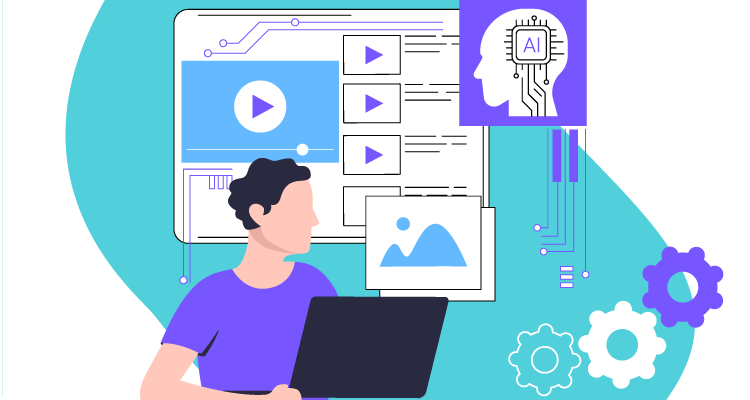
The shift of AI into the email creation process is part of a much larger change. It is not just about email marketing. It reflects a broader transformation across the entire marketing technology landscape.
Martech has grown rapidly over the years. Companies now use many tools for analytics, automation, content creation, and customer management. However, these tools often work in separate systems. This creates complexity and slows down decision-making.
AI is helping solve this problem by connecting different parts of the marketing stack. Instead of working in silos, systems can now share data and act together in real time. This creates a more unified and efficient workflow.
One major change is the move toward AI-first platforms. These systems are designed with AI at their core, not as an add-on feature. They combine data, content, and automation in one place. This allows marketers to move faster and make better decisions.
AI is also changing how marketers think about data. In the past, data was mainly used for reporting. Now, it is used to guide actions in real time. AI can analyze large amounts of data instantly and turn it into useful insights. This helps marketers understand customer behavior and respond quickly.
Another key trend is personalization at scale. AI makes it possible to deliver tailored experiences to large audiences. It can adjust content, timing, and messaging for each user. This level of personalization was not possible before. It is now becoming a standard expectation.
At the same time, AI is pushing martech toward automation. Tasks that once required manual effort can now be handled automatically. This includes content creation, audience segmentation, and campaign optimization. As a result, marketing teams can focus more on strategy and less on routine work.
The role of marketers is also evolving. Instead of managing tools, they are now managing systems. They need to understand how different technologies work together and how to guide AI-driven processes. This requires new skills, such as data analysis, strategic thinking, and system design.
Another important implication is integration. Many companies struggle with complex and disconnected martech stacks. AI helps simplify this by acting as a central layer that connects different tools. This improves efficiency and reduces duplication of work.
AI is also changing how success is measured. Traditional metrics like open rates and clicks are still useful, but they are no longer enough. Businesses are now focusing more on long-term outcomes, such as customer lifetime value and engagement quality. AI helps track and optimize these deeper metrics.
However, this transformation also brings challenges. Privacy and data protection are becoming more important. As AI relies on data, companies must ensure they use it responsibly. They need to follow regulations and maintain user trust.
There is also the challenge of adoption. Many organizations are still learning how to use AI effectively. Some tools are complex, and teams may lack the skills needed to use them fully. This creates a gap between potential and actual results.
Despite these challenges, the direction is clear. AI is becoming a core part of martech. It is not just improving existing tools. It is changing how marketing works at a fundamental level.
In the coming years, we will see more integrated, intelligent, and automated marketing systems. Companies that adapt to this change will gain a strong advantage. Those that do not may struggle to keep up.
Closing thought
Email marketing is at a turning point. The old way of working—create, send, and analyze—no longer fits the speed and complexity of today’s digital world. AI is driving a new approach, where intelligence is built into every step of the process.
The biggest shift is not in technology, but in mindset. Marketers are moving from reactive thinking to proactive creation. Instead of waiting for results, they are using AI to shape outcomes from the start.
This change brings many benefits. Emails become more relevant, more timely, and more effective. Teams work faster and more efficiently. At the same time, risks are reduced, and quality is improved.
AI is also helping businesses scale their efforts. It allows small teams to handle large campaigns and deliver personalized experiences. This creates new opportunities for growth without adding more complexity.
However, success with AI is not automatic. It requires a clear strategy and the right balance between automation and human input. AI works best when it supports strong ideas and thoughtful decisions.
The future of email marketing will not be defined by tools alone. It will be shaped by how those tools are used. Companies that embed AI into the creation process will be better prepared to meet user expectations and stay competitive.
At the same time, the role of marketers will continue to evolve. They will spend less time on repetitive tasks and more time on strategy, creativity, and understanding their audience. This shift will make marketing both more efficient and more meaningful.
AI belongs inside the email creation process because that is where the real impact happens. It is not just about measuring performance. It is about building it from the very beginning.
Read More: Responsive HTML Email Template Development: A Step-by-Step Guide for Email Developers