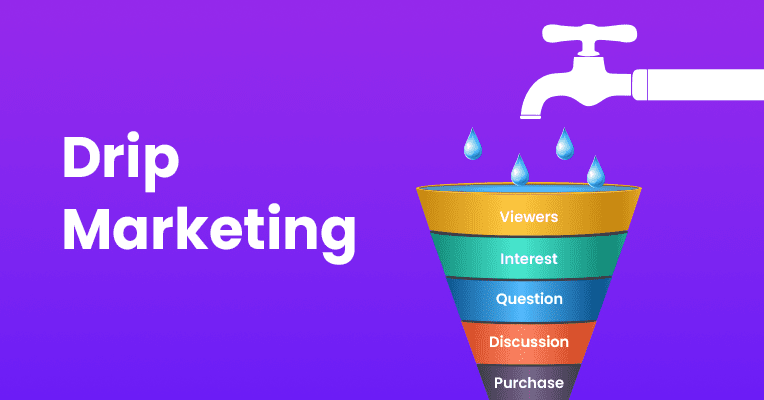
In today’s digital landscape, businesses are constantly seeking smarter ways to connect with their audience, guide them through the buying journey, and turn interest into long-term loyalty. One of the most effective tactics for doing this is drip marketing — a strategic approach that uses automated, behavior-triggered communications to deliver relevant messages over time.
Unlike broad broadcast marketing, which sends the same message to an entire audience at once, drip marketing delivers a sequence of messages tailored to a person’s interactions, actions, and stage in the customer lifecycle. This makes it one of the most powerful tools for nurturing leads, increasing engagement, improving conversion rates, and strengthening relationships with both prospects and existing customers.
As automation and personalization continue to shape the future of digital marketing, drip marketing remains a cornerstone strategy for companies looking to scale meaningful interactions without overwhelming their teams or their audience.
What Is Drip Marketing?
Drip marketing is a form of automated communication where a series of pre-written messages are sent to contacts over a period of time, triggered by specific actions or events. These messages can be delivered via various channels such as email, SMS, or even social messaging, but email is the most commonly used medium.
The term “drip” comes from the idea of steadily “dripping” small amounts of information to your audience — much like an irrigation system delivers water slowly and consistently. The goal is to provide timely, relevant content that guides individuals through the awareness, consideration, and decision stages of the customer journey.
Key Characteristics of Drip Marketing
-
Automated: Once set up, campaigns run on their own based on predefined conditions.
-
Behavior-Triggered: Messages are often activated by actions like signing up for a newsletter, abandoning a cart, downloading a resource, or making a purchase.
-
Personalized: Content is tailored based on user data such as preferences, past interactions, or buying behavior.
-
Sequenced: Messages are scheduled strategically to deliver the right information at the right time, keeping customers engaged without overwhelming them.
For example, a new subscriber might receive a welcome email immediately after signing up, a second message with helpful tips a day later, and a third one with a special offer after a week — all without any manual effort from a marketer.
This sequence helps build familiarity, trust, and momentum, gradually moving the audience toward conversion.
Why Is Drip Marketing Important For Businesses?
Drip marketing has become an essential strategy for businesses of all sizes because it directly addresses key challenges in digital communication such as relevance, timing, personalization, and efficiency. Below are some of the most important benefits it offers.
Increase Engagement
One of the biggest advantages of drip marketing is its ability to significantly boost audience engagement. Because the messages are tailored to specific actions and interests, recipients are far more likely to open, read, and interact with them. For example, behavior-triggered messages can deliver content that feels timely and helpful rather than generic and intrusive, leading to higher open and click-through rates.
By providing ongoing, valuable communication — rather than a single marketing blast — drip campaigns keep your audience connected to your brand over time, helping maintain interest and build stronger customer relationships.
Generate Revenue
Drip marketing is not just about communication — it’s about driving conversions and sales. Because each message can be tailored to move a contact closer to a purchase, drip strategies are highly effective at nurturing leads and closing sales.
For example:
-
A welcome series can introduce new subscribers to your best-selling products or services.
-
Cart abandonment messages can recover lost sales by reminding customers of what they left behind.
-
Follow-up messages after a purchase can encourage repeat purchases or upsells.
This targeted and automated approach makes drip marketing a revenue-generating machine that works around the clock.
Boost Brand Awareness
Consistent communication builds familiarity. When customers receive regular messaging that adds value — whether educational content, friendly reminders, or exclusive offers — your brand stays top-of-mind.
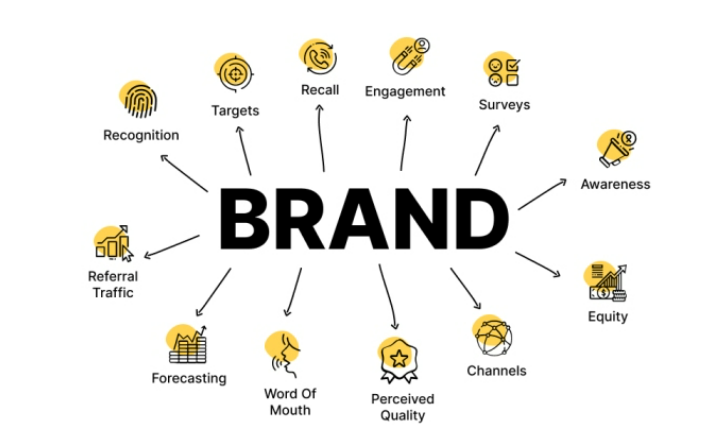
This continuous presence in the customer’s inbox (or messaging app) helps reinforce your brand identity and increases the likelihood that customers will choose your products or services when they are ready to buy. Over time, these repeated touchpoints strengthen brand awareness and recognition, which are key components of long-term customer loyalty.
Reduce Costs
Drip marketing is highly cost-effective because it is built on automation. Once the campaign workflows are created and optimized, they run on their own, freeing up your marketing team’s time to focus on strategy and creativity rather than repetitive tasks.
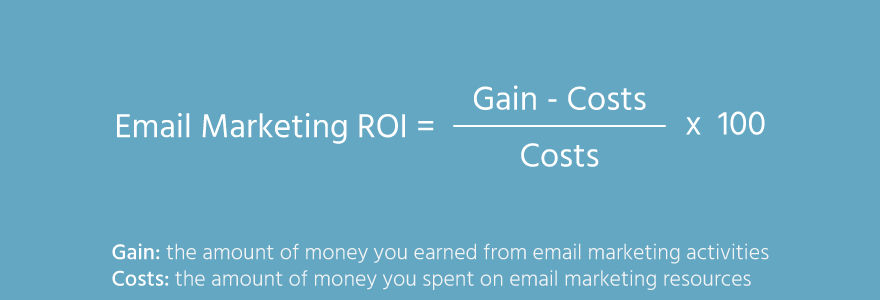
Compared to traditional marketing campaigns that require continuous manual effort, drip campaigns save resources while delivering personalized experiences at scale. This efficiency not only reduces operational costs but also improves return on investment (ROI) by consistently delivering relevant messaging that drives engagement and conversions.
How To Set Up Drip Marketing Campaigns
Setting up a successful drip marketing campaign requires more than just automation. It’s about choosing the right tools, defining clear goals, delivering relevant messages at the right time, and continuously improving performance. Below is a step-by-step breakdown to help you build effective drip campaigns that actually drive results.
1. Pick An Email Marketing Software
The foundation of any drip marketing campaign is a reliable email marketing platform with strong automation capabilities. Your chosen software should allow you to create workflows that trigger messages based on time, user behavior, or specific events.
When evaluating email marketing software, look for features such as:
-
Automation workflows: Ability to set up multi-step email sequences triggered by actions like sign-ups, clicks, purchases, or inactivity.
-
Segmentation and personalization: Tools that let you segment users based on demographics, behavior, or lifecycle stage, and personalize emails using dynamic fields.
-
Analytics and reporting: Built-in dashboards to track opens, clicks, conversions, and overall campaign performance.
-
Scalability: A platform that can grow with your audience and handle increasing data and automation complexity.
-
Compliance and deliverability tools: Support for opt-ins, unsubscribe management, and authentication to maintain inbox placement.
Choosing the right software ensures your drip campaigns run smoothly, stay compliant, and deliver messages reliably without constant manual intervention.
2. Set Your Goals Using the SMART Framework
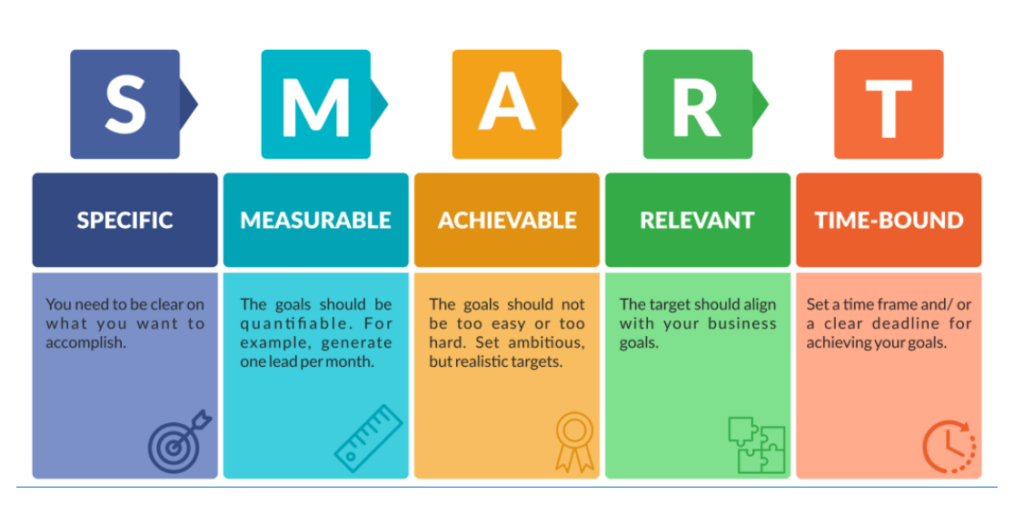
Before creating any emails, clearly define what you want your drip campaign to achieve. Vague goals like “increase engagement” or “get more sales” are difficult to measure and optimize. This is where the SMART framework becomes essential.
Your goals should be:
-
Specific: Clearly define what you want to accomplish (e.g., increase trial sign-ups or reduce cart abandonment).
-
Measurable: Attach metrics such as open rates, click-through rates, conversions, or revenue generated.
-
Achievable: Ensure the goal is realistic based on your audience size, industry, and resources.
-
Relevant: Align the campaign goal with your broader business and marketing objectives.
-
Time-bound: Set a clear timeframe to evaluate success, such as 30, 60, or 90 days.
For example, instead of saying “improve onboarding,” a SMART goal would be: Increase product activation rates by 20% within 60 days through an onboarding drip campaign.
Clear goals guide your messaging, timing, and performance analysis, making your campaign easier to optimize.
3. Craft Your Automated Sequences
Once your goals are defined, it’s time to design the actual drip sequence. This step focuses on creating emails that feel helpful, timely, and relevant rather than robotic or repetitive.
Key elements to consider when crafting your sequences:
-
Define triggers: Decide what action or event starts the campaign, such as subscribing, downloading content, or abandoning a cart.
-
Map the customer journey: Align each email with the user’s stage — awareness, consideration, decision, or retention.
-
Set timing and frequency: Space emails appropriately to stay top-of-mind without overwhelming recipients.
-
Focus on value: Each message should serve a clear purpose — educating, solving a problem, addressing objections, or encouraging action.
-
Maintain consistency: Keep your tone, branding, and messaging aligned across the entire sequence.
A well-structured drip sequence builds momentum over time, gradually guiding users toward the desired action while strengthening trust and engagement.
4. Analyze Your Campaign Performance
Launching a drip campaign is not the final step — ongoing analysis is what turns a good campaign into a high-performing one. Regularly reviewing your performance data helps you understand what’s working and what needs improvement.
Important metrics to monitor include:
-
Open rate: Indicates how compelling your subject lines and send timing are.
-
Click-through rate: Shows how engaging and relevant your content is.
-
Conversion rate: Measures how effectively the campaign drives the intended action.
-
Unsubscribe and bounce rates: Help identify issues with content relevance or email frequency.
-
Revenue and ROI: Assesses the overall financial impact of the campaign.
Use these insights to test and refine subject lines, content, timing, and calls-to-action. Continuous optimization ensures your drip campaigns remain effective, relevant, and aligned with evolving audience behavior.
8 Drip Campaign Examples To Get Inspired
Real-world drip campaigns show how automation, timing, and relevance work together to move people from first touch to long-term loyalty. Below are eight detailed examples that illustrate different goals across the customer lifecycle—welcome, onboarding, nurturing, re-engagement, conversion, retention, and education. Each example highlights what makes the campaign effective and how you can adapt the approach for your own strategy.
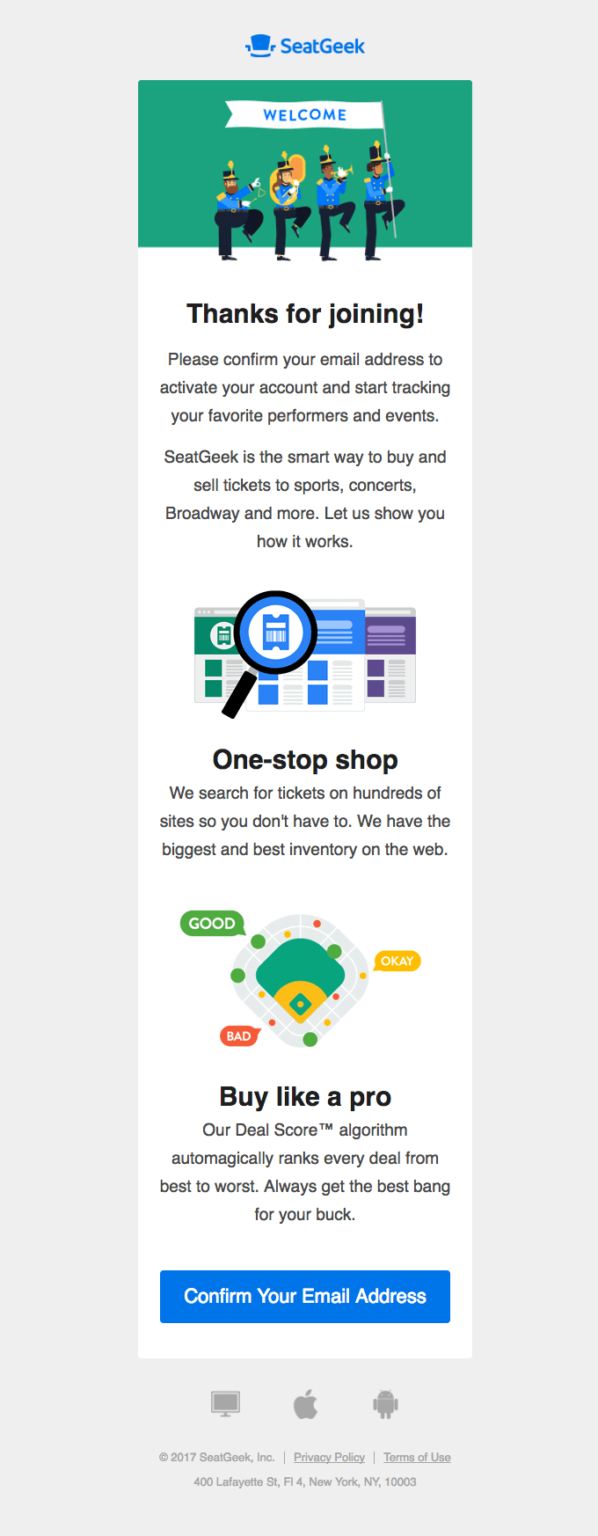
1. Seatgeek’s Welcome Email Campaign
Seatgeek’s welcome drip campaign is designed to make a strong first impression while quickly guiding new users toward value. The sequence typically begins immediately after signup, when user interest is at its peak. The first email focuses on a warm introduction—setting expectations, reinforcing the brand’s value proposition, and clearly explaining what users can do next.
Follow-up emails gradually introduce features like event alerts, price tracking, and personalized recommendations. Instead of overwhelming users with everything at once, the campaign spaces out information in digestible pieces. Each message has a single, focused call-to-action, such as browsing events, setting alerts, or downloading the app.
What makes this campaign effective is its progressive disclosure approach. Users learn just enough at each step to stay engaged, while personalization based on location or browsing behavior makes the experience feel relevant from day one.
Subject Line: Welcome to SeatGeek! Please Verify Your Email Address
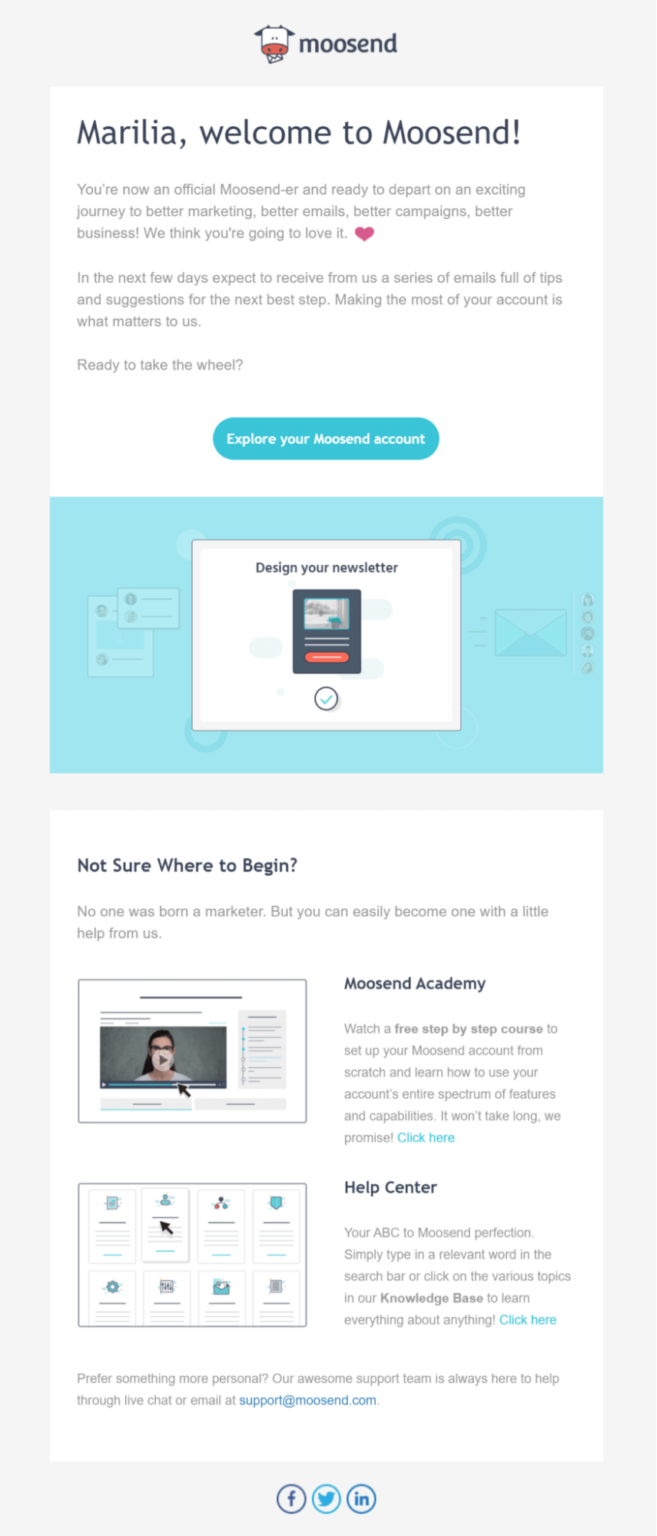
2. Moosend’s Onboarding Email Series
Moosend’s onboarding drip campaign is built to reduce friction and accelerate time-to-value for new users. The goal isn’t just to welcome users, but to help them successfully use the product as quickly as possible.
The series usually starts with a confirmation and welcome message that highlights the first essential action—such as creating a campaign or setting up automation. Subsequent emails act as guided steps, each focusing on a single feature or use case. These messages often include short explanations, visual cues, and links to resources that help users complete tasks without feeling lost.
As the sequence progresses, emails shift from basic setup to more advanced features, encouraging experimentation and deeper product adoption. The timing of each message is carefully planned to align with the user’s learning curve.
This onboarding drip works well because it’s educational, action-driven, and behavior-aware, helping users build confidence while reducing churn early in the lifecycle.
Subject Line: You’re officially a part of the Moosend family!
3. Surreal’s Lead-Nurturing Campaign
Surreal’s lead-nurturing drip campaign focuses on building trust and educating potential customers before pushing for a sale. Instead of leading with discounts or aggressive promotions, the campaign delivers value-driven content that aligns with the audience’s interests.
The sequence often starts after a lead downloads content, subscribes to a newsletter, or shows interest in the brand. Early emails focus on storytelling—introducing the brand’s mission, values, and unique perspective. Later messages dive deeper into product benefits, social proof, and customer stories.
Each email is crafted to answer common questions and objections, gradually moving the lead closer to a buying decision. Calls-to-action are subtle at first and become more conversion-focused as engagement increases.
This campaign stands out because it treats nurturing as a relationship-building process, not a sales funnel shortcut. By the time the offer appears, recipients already understand the brand and trust its message.
Subject Line: The rumours ARE NOT true

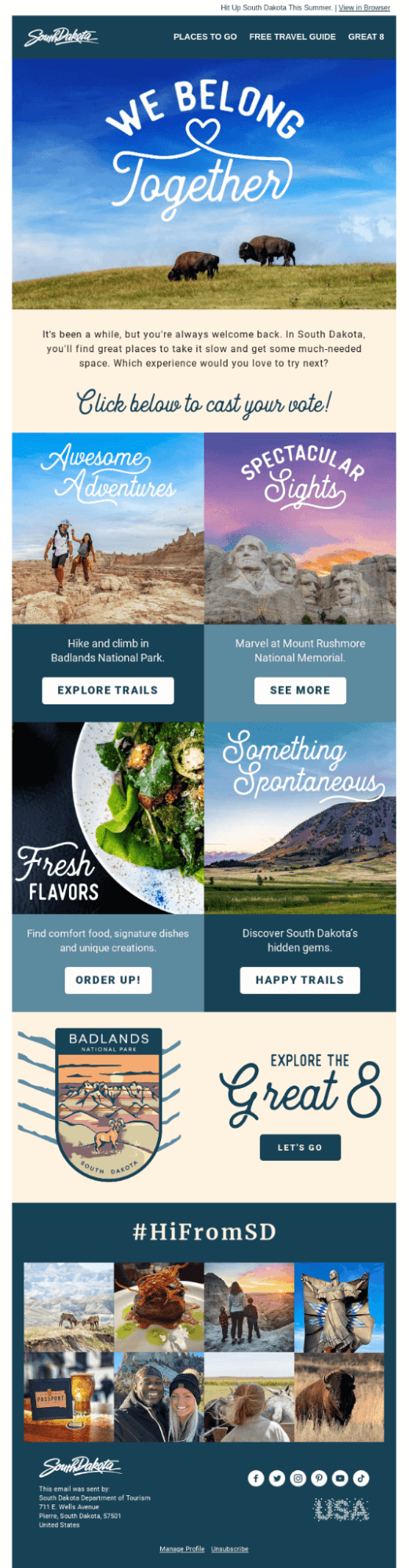
4. South Dakota’s Re-engagement Campaign
South Dakota’s re-engagement drip campaign targets inactive subscribers who haven’t interacted with emails or content for a certain period. Rather than immediately trying to sell, the campaign focuses on reconnecting and reminding users why they signed up in the first place.
The first email often acknowledges the silence in a friendly, non-judgmental tone. It may highlight new updates, fresh content, or changes that happened since the user last engaged. Follow-up emails add urgency by emphasizing time-sensitive information, seasonal relevance, or exclusive opportunities.
If engagement remains low, later messages may offer a preference update or a simple opt-out option, ensuring the list stays healthy. This approach respects the user’s inbox while giving them multiple chances to re-engage.
The success of this campaign lies in its empathetic messaging and clear intent—it seeks to rekindle interest without pressure, which helps recover engagement while protecting deliverability.
Subject Line: Let’s Reconnect ❤️
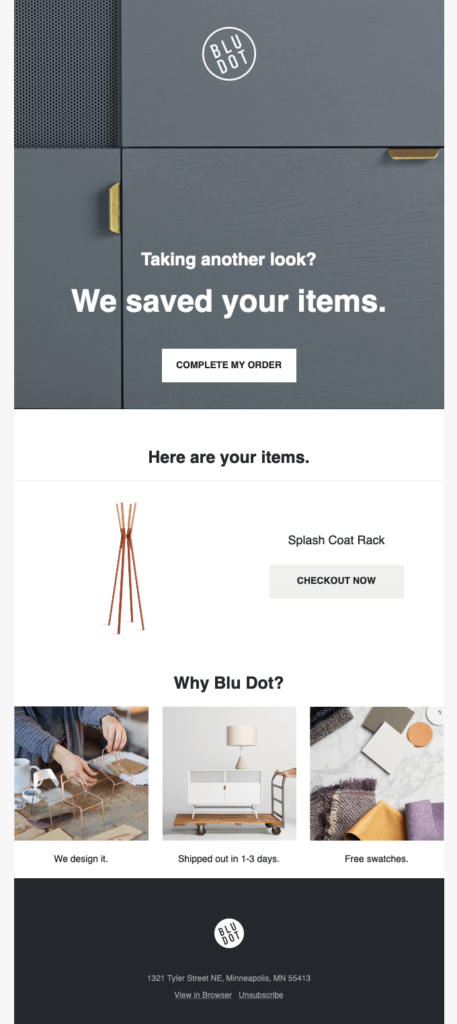
5. Blu Dot’s Abandoned Cart Email
Blu Dot’s abandoned cart drip campaign is a classic example of using timing and relevance to recover lost revenue. When a user adds items to their cart but doesn’t complete the purchase, the drip sequence is triggered automatically.
The first email typically serves as a gentle reminder, featuring the exact products left behind with clean visuals and minimal copy. If the user doesn’t act, a second email may highlight product benefits, reviews, or design details to reinforce value. A final message might introduce a limited-time incentive or free shipping to encourage conversion.
What makes this campaign effective is its contextual precision. The content is directly tied to user behavior, the timing feels natural rather than intrusive, and each follow-up adds a new layer of motivation without repeating the same message.
Subject Line: Wait up. Your order is not complete.
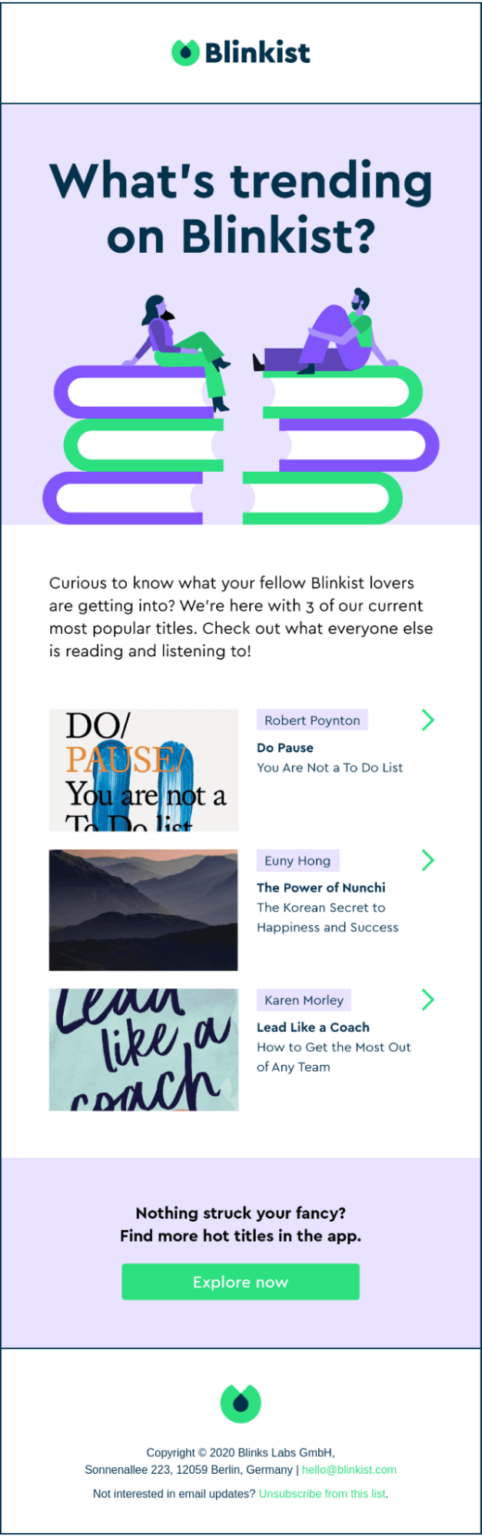
6. Blinklist’s Recommendation Email
Blinklist’s recommendation drip campaign focuses on personalization and content discovery. Instead of sending generic promotions, the campaign uses user behavior—such as reading history, preferences, or engagement patterns—to recommend relevant content.
The sequence often begins after a user completes a book summary or shows interest in a specific topic. Emails suggest similar titles, curated collections, or trending reads aligned with those interests. The messaging emphasizes how the recommendation fits into the user’s goals, such as learning faster or exploring new ideas.
Over time, the campaign adapts based on engagement. If a user clicks on certain topics, future emails lean more heavily into those areas. This creates a feedback loop where recommendations become increasingly accurate.
This drip campaign works because it delivers continuous, personalized value, making emails feel like helpful suggestions rather than marketing messages.
Subject Line: Top 3 Blinkist titles that everyone’s loving
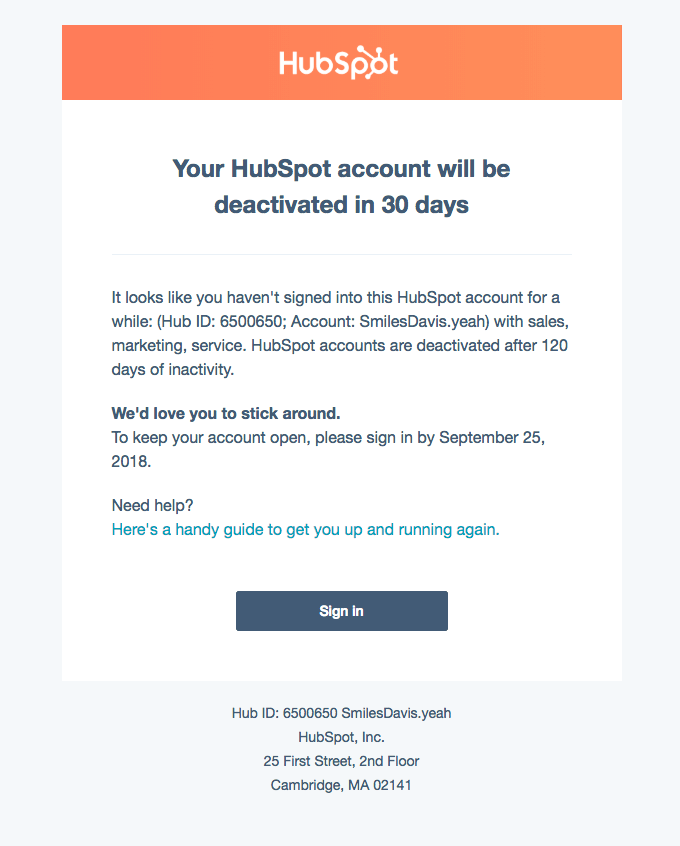
7. Hubspot’s Renewal Drip Campaign
HubSpot’s renewal drip campaign is designed to retain customers and reduce churn as subscription renewal dates approach. Instead of waiting until the last moment, the campaign starts weeks in advance to prepare users.
Early emails focus on reminding customers of the value they’ve received—highlighting usage stats, achievements, or key features they’ve benefited from. Mid-sequence messages may introduce new features, updates, or resources that users might not be fully utilizing. As the renewal date gets closer, emails become more direct, clearly outlining next steps and renewal options.
By the time the final reminder arrives, users have already been reassured of the product’s value and relevance to their goals.
The strength of this campaign lies in its proactive value reinforcement, which shifts renewals from a transactional reminder to a relationship-driven decision.
Subject Line: Your HubSpot account will be deactivated in 30 days
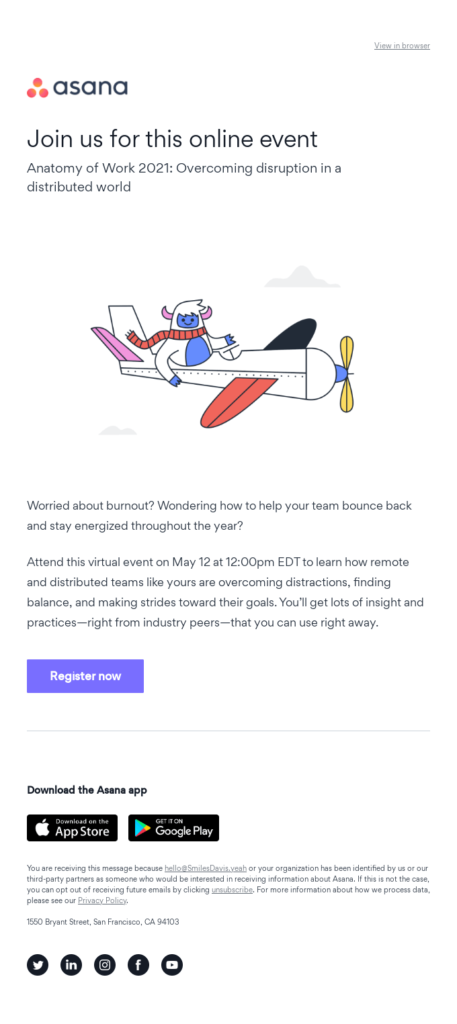
8. Asana’s Webinar Drip Campaign
Asana’s webinar drip campaign supports event registration, attendance, and post-event engagement through a well-timed email sequence. The campaign begins when a user signs up for a webinar.
Initial emails confirm registration and clearly communicate the event’s value and agenda. As the event date approaches, reminder emails help ensure attendance, often including calendar links and concise summaries of what attendees will learn.
After the webinar, the drip continues with follow-up emails that share recordings, key takeaways, and related resources. In some cases, the sequence transitions into a product-focused nurture campaign based on attendee behavior.
This campaign succeeds because it extends the value of a single event across multiple touchpoints, maximizing attendance, engagement, and long-term impact.
Subject Line: How can your team overcome disruption in our distributed world?
The Takeaways
In essence, drip marketing plays a strategic role in strengthening your promotional efforts by nurturing relationships, increasing brand visibility, and driving revenue over time. To see real results, it’s essential to build a well-aligned email automation strategy that supports and enhances your existing campaigns.
If you’re looking for a powerful yet easy-to-use email automation platform with advanced features, creating a Teno Mail account is a great place to start—no cost required.
Drip Marketing FAQs
Drip marketing often raises practical questions around effectiveness, timing, and real-world usage. Below are clear, experience-based answers to some of the most common questions marketers and business owners ask.
1. What Are the Benefits of a Drip Campaign?
Drip campaigns offer a wide range of benefits because they combine automation with personalization. Instead of relying on one-off messages, businesses can build long-term relationships through timely, relevant communication.
One of the biggest advantages is consistent engagement. Drip campaigns keep your brand present throughout the customer journey by delivering messages that align with user behavior and intent. This leads to higher open rates, stronger interaction, and better audience retention over time.
Another major benefit is improved conversions. Because messages are tailored to specific actions—such as signing up, browsing products, or abandoning a cart—drip campaigns naturally guide users toward the next step. This makes them highly effective for lead nurturing, onboarding, and driving repeat purchases.
Drip campaigns also help save time and resources. Once the workflow is set up, emails are sent automatically without ongoing manual effort. This allows marketing teams to scale communication while maintaining relevance and consistency.
Additionally, drip marketing supports better audience segmentation and personalization. Businesses can send different messages to different groups based on interests, behavior, or lifecycle stage, creating a more meaningful experience for each recipient.
2. What Is the Best Time to Send a Drip Campaign?
There is no single “perfect” time to send a drip campaign, because timing depends heavily on your audience, industry, and campaign goal. The most effective drip campaigns are triggered by user actions, not just the clock.
For example, welcome emails perform best when sent immediately after someone signs up, while onboarding or educational emails are often more effective when spaced over several days. Re-engagement campaigns may work better after a defined period of inactivity, such as 30 or 60 days.
That said, many businesses find that emails sent during typical working hours—especially mid-morning or early afternoon—tend to perform well. However, these are general patterns, not rules.
The key is testing and optimization. By monitoring open rates, click-through rates, and conversions, you can adjust send times and delays to match your audience’s behavior and preferences. Over time, data-driven timing decisions will outperform any generic best practice.
3. What Is an Example of a Drip Campaign?
A common and highly effective example of a drip campaign is a welcome email series. When a new user subscribes or creates an account, the campaign is automatically triggered.
The first email welcomes the user and sets expectations. The second email may introduce key features or resources. A third message could share helpful tips, use cases, or social proof. Finally, a follow-up email might encourage a specific action, such as completing a profile or making a first purchase.
Other popular examples include onboarding sequences, abandoned cart reminders, lead-nurturing campaigns, renewal reminders, and re-engagement workflows. Each of these uses automation and timing to deliver relevant messages that guide users toward a desired outcome.
Read More: 15 Email Marketing Benefits For Businesses [2026]