In the highly competitive landscape of insurance, where trust, communication, and relationship building are everything, email marketing has emerged as one of the most indispensable tools for modern insurance businesses. Unlike broad-based advertising channels that push messages to the masses with little personalization or control, email marketing empowers insurers to engage directly with customers and prospects in a highly tailored, measurable, and timely way. In 2026, as consumer expectations continue to evolve and digital behaviors become more entrenched, email marketing is not just an optional channel — it’s foundational to building lasting connections, nurturing leads, retaining existing clients, and driving measurable business outcomes.
Insurance products are inherently complex and often involve long decision cycles. A potential policyholder may spend weeks or months researching coverage options, comparing premiums, and weighing the credibility of carriers before finally deciding to buy. This extended journey means that any communication touchpoint must both educate and reassure prospects, guiding them without overwhelming them. Email serves precisely this role — it helps insurance brands become trusted advisors rather than faceless sellers, offering information, answers, and reassurance right in a customer’s inbox.
At the same time, email marketing is incredibly versatile. It supports the entire customer lifecycle: from welcoming a new subscriber and educating them about insurance basics, to reminding a policyholder about renewal dates, notifying them of claim status changes, and even soliciting feedback after critical interactions. With the right strategy, email campaigns can serve transactional purposes, deliver rich educational content, reinforce brand values, and even prompt action through offers and promotions. Thanks to advanced automation tools, segmentation strategies, and real-time analytics, insurance email marketing in 2026 is smarter, more personalized, and far more effective than ever before.
In the sections that follow, we’ll explore why email marketing is essential for insurance businesses, the types of email campaigns that yield results, and the best practices that will help you leverage this channel to its fullest potential. Whether you’re a seasoned marketer in an established agency, a digital strategist at a growing carrier, or an independent insurance agent looking to scale your client outreach, understanding the role of email marketing will be key to your success.
Why Do Insurance Businesses Need Email Marketing?
Insurance is not a typical consumer purchase — it’s a commitment. Clients are buying protection, peace of mind, and long-term financial security. Because of this, the way insurance companies communicate with their audience must be thoughtful, consistent, and compliance-driven. Email marketing delivers exactly that: a structured, controlled, and scalable communication channel that allows insurers to speak with customers in relevant, meaningful ways.
Below, we explore five key reasons insurance businesses must invest in email marketing in 2026 — from building trust to ensuring privacy and compliance — and why this channel remains central in modern insurance marketing strategies.
Building Trust With Your Clients
Trust is fundamental in the insurance industry. Customers are not making impulse purchases; they are making decisions that impact their financial well-being and that of their families or businesses. This makes trust not just desirable — it’s essential. A personal recommendation from a friend or a face-to-face conversation with an agent may establish initial confidence, but sustained trust over time requires consistent reassurance and value delivery.
Email marketing excels at building and maintaining trust in several ways.
First, insurance is complex. Policies, riders, exclusions, and terms are often difficult for the average consumer to understand. Emails provide a direct line to educate your audience about these details in a digestible way. Whether it’s a series explaining the basics of life insurance or a monthly newsletter that demystifies common policy questions, educational emails position your brand as an expert and a guide. This helps transform prospects and clients from passive recipients of information into informed participants in their own insurance choices.
Second, regular communication helps keep your brand top of mind. A potential policyholder may be undecided for weeks; a lapse in communication can lead them to forget your name or explore competitors who engage them more frequently. Timely emails — whether they cover policy benefits, seasonal tips, or claim guidance — ensure your business remains relevant throughout the decision process.
Third, showing up in someone’s inbox with helpful, non-spammy content fosters a sense of reliability. Over time, this consistent presence builds familiarity and reduces the psychological distance between your company and your customers. They begin to see you as a trusted partner invested in their long-term security rather than just another vendor seeking a sale.
Controlling the Channel
One of the most powerful advantages of email marketing is channel ownership. When you build an email list, you own that list. This means you’re not dependent on algorithms, platform updates, or third-party policies that can suddenly change how — or even whether — your messages reach your audience.
Social media platforms, search results, and paid advertising campaigns operate under the rules of algorithms that can fluctuate without notice. A change in a social platform’s feed prioritization or a sudden rise in ad costs can dramatically affect visibility and performance. Email, by contrast, lands directly in a subscriber’s inbox — a personal and dedicated communication space that consumers check multiple times per day.
Owning your email list gives you unparalleled control and predictability. You decide the message, the frequency, the segment of users, and the timing. This degree of autonomy allows insurers to orchestrate highly targeted campaigns that align with business goals. For example, you can send segmented reminders to clients whose policies are about to expire, follow up with leads who have shown interest in specific coverage types, or notify certain segments of new products tailored to their needs.
What’s more, matured email lists often become conversion engines in their own right. People who are already in your funnel — whether as subscribers, leads, or existing policyholders — are more likely to engage with your emails because they’ve already shown interest by opting in. This level of control over an owned channel is a major strategic advantage that can’t be replicated by rented or shared media.
Saving Time and Effort
Insurance professionals are typically stretched thin. Between managing client interactions, handling claims, staying current with regulatory changes, and servicing existing policies, there’s little time left to manually engage thousands of prospects or clients individually. Email marketing revolutionizes this process by automating many repetitive tasks and making it possible to send the right message at the right time without manual intervention.
Automation tools allow you to build email sequences for various touchpoints across the customer journey. Drip campaigns, for example, can automatically nurture leads who have shown interest but haven’t yet converted. Renewal reminders can be scheduled weeks or months ahead of policy expiration. Onboarding sequences can walk a new customer through the steps they need to understand their coverage and how to make the most of it.
This kind of automation saves time and ensures consistent quality in communication. No prospect is forgotten, no renewal window is missed, and no key lifecycle event goes unacknowledged. In addition, customizing automated campaigns based on behavior or demographic data makes these interactions feel personal, even when they are delivered at scale.
Furthermore, analytics tools built into email platforms let you track engagement metrics like open rates, click-through rates, and conversions. Instead of guessing what works and what doesn’t, you can make data-informed decisions and refine your messaging over time. In this way, email marketing helps your team work smarter, not harder.
Keeping Your Company Top of Mind
Insurance is not an everyday need; it’s periodic. Your clients and prospects are not thinking about policies every day, yet you want your brand to be the first one they recall when a decision becomes imminent — like a policy renewal, a new purchase, or a claim event. Email marketing helps you stay visible without being intrusive.
Newsletter campaigns, educational series, seasonal safety tips, and proactive policy alerts are all ways to maintain relevance in your customers’ lives. For instance, sending storm preparedness tips before hurricane season shows foresight and concern, which enhances your brand image. Similarly, a message about tips to reduce premiums as a new year begins provides tangible value that goes beyond simple self-interest.
Keeping your brand top of mind also improves retention. Studies indicate that lack of communication is a key reason clients switch insurance providers. Regular, value-driven emails reassure clients that you are actively supporting them and not just sending promotional content. This ongoing visibility strengthens the emotional connection between your customers and your brand, making them more likely to stay loyal and less likely to shop around.
Ensuring Privacy and Compliance
Insurance companies operate in one of the most regulated sectors of the economy. Data privacy, communication laws, and industry-specific regulations mean that any outbound messaging must be handled carefully. Email marketing, when done correctly, provides a platform that supports compliance while still delivering impactful communication.
Unlike cold calls or unsolicited messages through third-party channels, email campaigns are typically sent to subscribers who have opted in. This opt-in model aligns with key privacy laws and best practices, reducing the risk of complaints or legal issues. In addition, most email service providers come equipped with built-in compliance features, such as unsubscribe management, consent tracking, and secure data storage.
Incorporating clear privacy notices, honoring unsubscribe requests immediately, and ensuring transparent data usage help safeguard your company and build credibility with your audience. Customers are increasingly aware of data privacy issues, and seeing a business respect their privacy choices can strengthen their trust and willingness to engage.
By using email marketing responsibly and transparently, insurance businesses satisfy legal requirements while respecting customer autonomy. This boosts brand reputation and differentiates your company as one that values integrity.
Best Insurance Email Examples and Why You Need Them
Insurance customers expect timely, relevant, and reassuring communication throughout their relationship with a provider. From the moment someone subscribes to your mailing list to years into holding a policy, emails play a crucial role in shaping how your brand is perceived. The most effective insurance email strategies are not built around one-off campaigns, but around a structured set of email types that address specific customer needs at different stages of the lifecycle.
Below are the most important insurance email examples you should be using in 2026, along with clear explanations of why each one matters and how it contributes to trust, retention, and conversions.
1. Welcome Emails
Welcome emails are often the very first direct interaction a subscriber or new policyholder has with your insurance brand. This makes them one of the most important emails you will ever send. A well-crafted welcome email sets expectations, establishes credibility, and reassures the recipient that they made the right decision by engaging with your company.
For insurance businesses, welcome emails serve multiple purposes. They introduce your brand voice, outline what types of emails the subscriber can expect to receive, and explain how your services work at a high level. For new policyholders, this email can also include practical next steps, such as how to access their policy documents, where to log in to their account, or how to contact support.
What makes welcome emails especially powerful is timing. They are sent immediately after sign-up or purchase, when interest and attention are at their peak. This creates a unique opportunity to build trust early, clarify your value proposition, and reduce confusion around complex insurance products.
Just like Better does in this straightforward welcome email:
Subject line: Welcome to Better Settlement Services
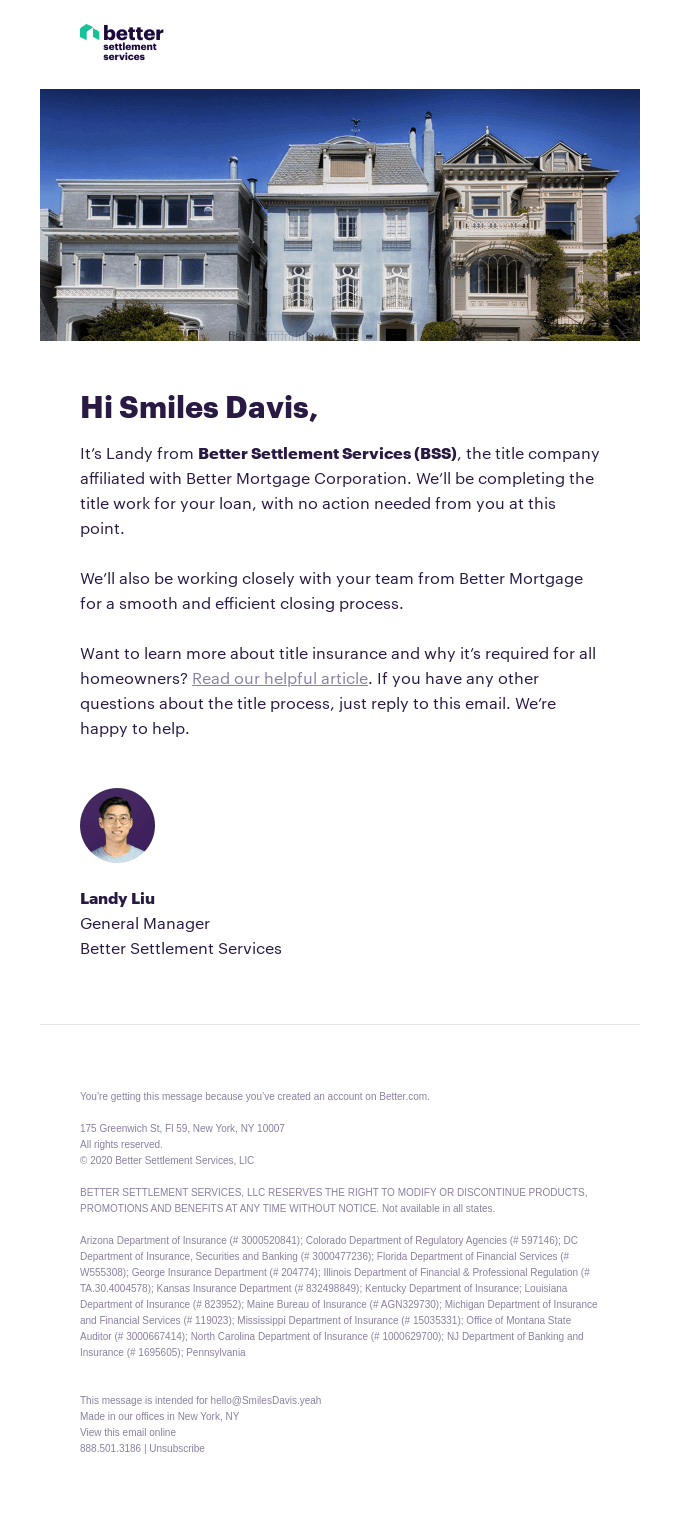
In 2026, the most effective welcome emails are concise, reassuring, and customer-centric. Instead of overwhelming recipients with legal language or sales messaging, successful insurers use this email to emphasize support, transparency, and accessibility. When done right, welcome emails lay the foundation for long-term engagement and higher retention.
2. Educational Emails
Educational emails are essential in an industry where products are often misunderstood or perceived as intimidating. Insurance policies are full of terminology, conditions, and exclusions that the average customer may not fully grasp. Educational emails help bridge this gap by delivering helpful, easy-to-understand information over time.
These emails can cover a wide range of topics, such as explaining coverage types, clarifying common misconceptions, outlining how claims work, or offering tips to reduce risk and premiums. Rather than pushing sales, educational emails focus on empowerment. They help customers feel informed and confident, which in turn strengthens trust in your brand.
Another key advantage of educational emails is their role in the decision-making process. Prospective customers often hesitate because they are unsure which policy is right for them. By providing relevant educational content tailored to their interests or life stage, you position your company as a knowledgeable advisor rather than a salesperson.
Below, you have a timely newsletter by Farmers Insurance that kept recipients up to date with new service options during the pandemic:
Subject line: Your Safety is Important
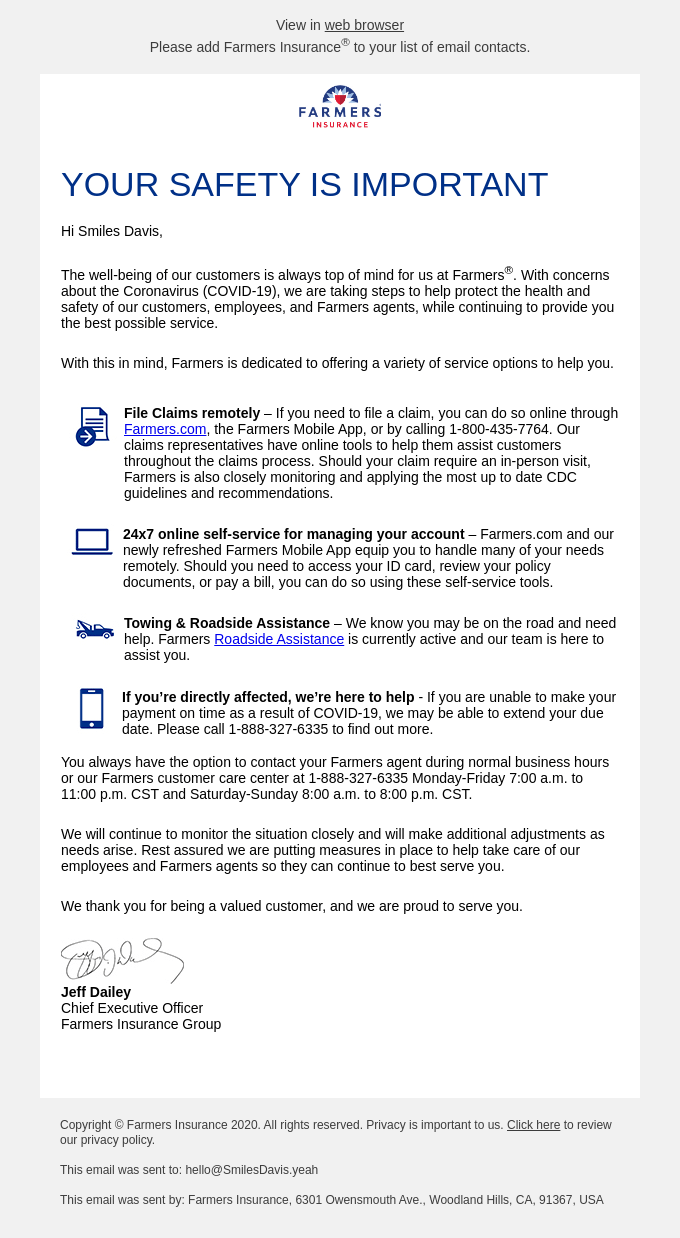
In 2026, educational email campaigns are increasingly personalized and behavior-driven. Content is adjusted based on what users have shown interest in, the policies they hold, or where they are in the customer journey. This ensures that education feels relevant, not generic, and reinforces your value with every interaction.
3. Renewal Reminders
Renewal reminder emails are among the most critical transactional messages insurance companies send. They directly impact retention, revenue stability, and customer satisfaction. Missing a renewal date can have serious consequences for policyholders, so timely and clear reminders are both a service and a responsibility.
Effective renewal emails do more than simply state that a policy is expiring. They explain what the renewal means, outline any changes in coverage or pricing, and provide clear instructions on how to renew. The goal is to make the process as frictionless as possible while reassuring the customer that continuity of coverage is in their best interest.
Sending multiple reminders at strategic intervals helps ensure that the message is seen and acted upon. In 2026, automation allows insurers to schedule renewal sequences weeks or even months in advance, adjusting messaging based on customer behavior. For example, a follow-up reminder can be triggered if the first email goes unopened.
Well-executed renewal emails reduce churn and prevent last-minute confusion. They also demonstrate professionalism and reliability, reinforcing the idea that your company is proactive and attentive to customer needs.
4. Claim Updates
Claim-related emails are some of the most emotionally sensitive messages an insurance company sends. When a customer files a claim, they are often experiencing stress, uncertainty, or financial strain. Clear, timely communication during this period is crucial.
Claim update emails keep policyholders informed about the status of their claim, what steps have been completed, and what actions are required next. Even when there is no major update, a simple message acknowledging progress can provide reassurance and reduce anxiety.
These emails play a significant role in shaping customer perception. A lack of communication during the claims process is one of the most common sources of dissatisfaction in the insurance industry. Conversely, consistent and transparent updates can turn a potentially negative experience into a trust-building moment.
In 2026, claim update emails are increasingly integrated with automated workflows and customer portals. They are concise, informative, and written in plain language. By keeping customers informed and setting clear expectations, claim emails strengthen confidence in your processes and reinforce long-term loyalty.
5. Promotional Emails
While insurance marketing is often focused on education and service, promotional emails still have an important place. These emails are designed to highlight special offers, new products, discounts, or limited-time incentives that encourage action.
Promotional emails are particularly effective when they are relevant and well-timed. For example, offering a bundled policy discount to existing customers or promoting a new coverage option that aligns with a customer’s life stage can feel helpful rather than pushy.
The key to successful promotional insurance emails in 2026 is balance. Overuse can lead to fatigue or distrust, especially in a sector where credibility matters. However, when promotions are positioned as value-driven opportunities rather than aggressive sales pitches, they can drive conversions without damaging trust.
The following insurance email example by Money that targets pet owners to suggest insurance cover for their best friend.
Subject line: Is pet insurance worth it?
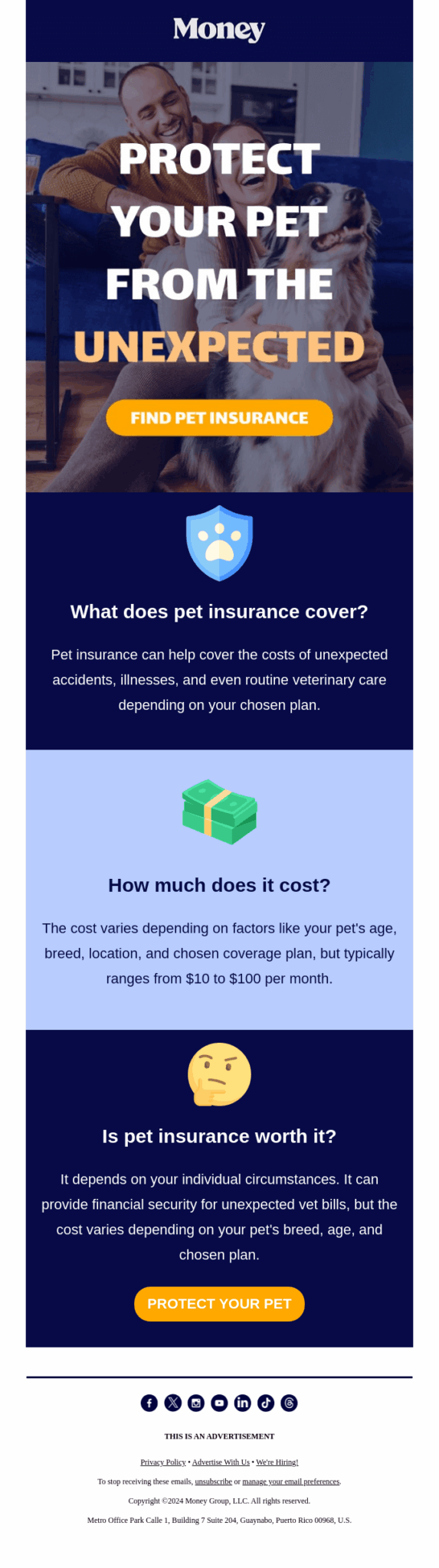
Modern promotional emails are often segmented and personalized, ensuring that offers align with the recipient’s needs and history. This increases engagement and reduces the risk of unsubscribes.
6. Seasonal Campaigns
Seasonal email campaigns allow insurance companies to align their messaging with real-world events and predictable risk periods. These emails demonstrate awareness, relevance, and proactive care, all of which strengthen brand perception.
Seasonal campaigns might focus on weather-related risks, travel periods, tax seasons, or lifestyle changes that typically occur at certain times of year. For instance, emails about storm preparedness, travel insurance, or year-end policy reviews provide timely value.
What makes seasonal campaigns particularly effective is their contextual relevance. Customers are more likely to engage with content that feels immediately applicable to their lives. These emails also offer opportunities to subtly introduce policy updates or coverage options without overt selling.
SoFi sent the following insurance email marketing example a few days before National Insurance Awareness Day. It doesn’t get more relevant than that.
Subject line: NIAD is coming up! (IYKYK…)

In 2026, successful seasonal campaigns are planned well in advance and supported by data. Messaging is adapted to geographic location, customer profile, and historical behavior, making seasonal emails both timely and personalized.
7. Survey Emails
Survey emails are a powerful yet often underutilized tool in insurance email marketing. They provide direct insight into customer satisfaction, expectations, and pain points, helping insurers improve both communication and service quality.
By asking customers for feedback after key interactions — such as onboarding, claims resolution, or renewal — insurers show that they value customer opinions. This alone can improve brand perception, even before changes are implemented.
Survey emails should be short, focused, and easy to complete. The goal is to reduce friction and increase response rates. In 2026, many insurers use quick rating scales or single-question surveys, followed by optional open-ended feedback.
In this insurance email marketing example by Insurify, the feedback request is as easy as it gets:
Subject line: Thank you + quick question
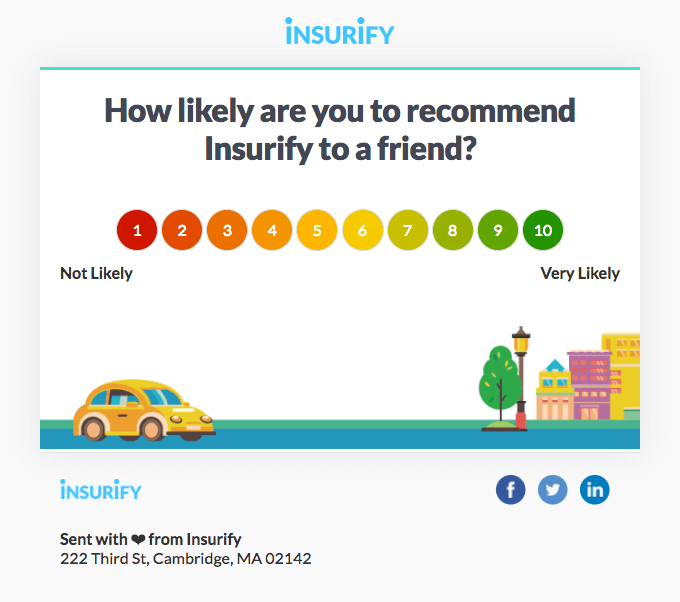
Beyond insights, survey emails also support retention. Customers who feel heard are more likely to remain loyal, even if they encounter occasional issues. When feedback is acknowledged or acted upon, survey emails become a trust-building touchpoint rather than a data collection exercise.
8. Milestone Emails
Milestone emails recognize important moments in a customer’s relationship with your insurance company. These can include policy anniversaries, long-term loyalty milestones, birthdays, or coverage achievements. While subtle, these emails play a powerful emotional role.
Insurance relationships are often transactional by nature, which can make them feel impersonal. Milestone emails humanize your brand by acknowledging the customer as an individual, not just a policy number.
These emails don’t need to be promotional to be effective. A simple message thanking a customer for their continued trust or acknowledging a year of coverage can strengthen emotional connection. In some cases, pairing milestone emails with small perks or exclusive offers can further enhance goodwill.
Moosend’s newsletter template library offers a range of designs for different use cases:
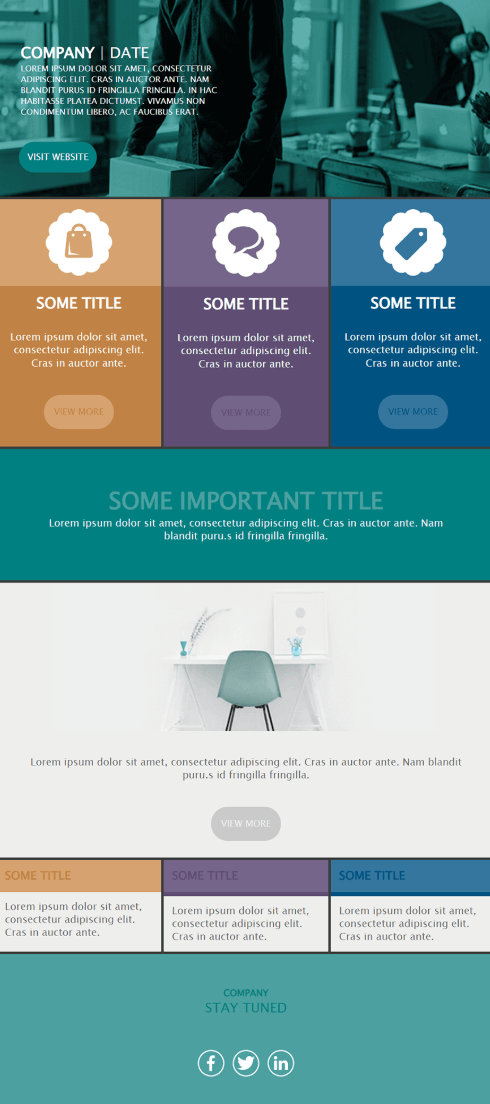
In 2026, milestone emails are increasingly automated and personalized, ensuring timely delivery without additional workload. They contribute to long-term retention by reinforcing positive sentiment and brand loyalty over time.
Why These Email Types Matter Together
Each of these insurance email examples serves a distinct purpose, but their true power lies in how they work together as part of a cohesive strategy. Welcome emails initiate the relationship, educational emails nurture understanding, transactional emails support critical moments, and milestone or survey emails deepen engagement.
When thoughtfully combined, these email types create a seamless communication experience that supports customers throughout their journey. This not only improves satisfaction and trust but also drives measurable business outcomes such as higher retention, better engagement, and increased lifetime value.
In 2026, insurance companies that succeed with email marketing are those that view emails not as isolated campaigns, but as an ongoing conversation built around customer needs, timing, and relevance.
Insurance Email Best Practices
Insurance email marketing succeeds when it balances trust, clarity, relevance, and compliance. Because insurance is a regulated, high-consideration industry, email campaigns must do more than look good or generate clicks—they must communicate responsibly, protect customer data, and deliver genuine value at every touchpoint. In 2026, rising customer expectations, stricter privacy awareness, and more advanced marketing technology mean that best practices are no longer optional; they are essential.
Below are the most important insurance email best practices you should follow to build credibility, improve engagement, and drive long-term results.
1. Make Compliance Your Top Priority
Compliance is the foundation of insurance email marketing. Before focusing on creativity, automation, or conversions, insurers must ensure that every email meets regulatory, privacy, and consent standards. Insurance customers entrust companies with sensitive personal and financial data, and any misuse or mishandling of that data can result in reputational damage, legal penalties, and loss of trust.
In practice, this means only emailing individuals who have explicitly opted in to receive communications. Consent must be clear, documented, and easy to withdraw. Every email should include transparent sender information, a legitimate business identity, and a straightforward way for recipients to unsubscribe.
Beyond consent, compliance also affects content. Insurance emails must avoid misleading claims, exaggerated promises, or vague policy language that could confuse recipients. Disclosures should be clear, and coverage descriptions should accurately reflect policy terms. In 2026, customers are more informed and more cautious about how their data is used, so respecting privacy and being transparent is not just a legal requirement—it is a trust-building strategy.
2. Craft Clear and Engaging Email Subject Lines
The subject line determines whether your email gets opened or ignored. In crowded inboxes, insurance emails must compete for attention without resorting to clickbait or misleading tactics. The most effective subject lines are clear, relevant, and aligned with the content inside the email.
Insurance subject lines should quickly communicate value or urgency. This might include reminders about policy renewals, updates on claims, or educational insights that solve a common problem. Vague or generic subject lines often fail because they do not give recipients a compelling reason to open the message.
In 2026, subject lines that perform best tend to be concise, personalized, and straightforward. Including context—such as referencing a policy type, timeline, or customer action—helps recipients immediately understand why the email matters to them. Above all, subject lines should set accurate expectations. When the subject line matches the content inside, trust and engagement increase over time.
3. Use Pre-Built Email Templates
Consistency is critical in insurance communications. Pre-built email templates help maintain a professional appearance while ensuring that branding, layout, and compliance elements remain consistent across all campaigns. They also save time and reduce the risk of errors.
Templates are especially valuable for transactional emails such as welcome messages, renewal reminders, and claim updates. These emails often include required information, disclaimers, and structured content that should not change dramatically from one send to another. Templates ensure that nothing essential is accidentally omitted.
In 2026, modern email templates are mobile-responsive, accessible, and designed with readability in mind. They use clear headings, short paragraphs, and ample white space to make complex insurance information easier to digest. By standardizing design and structure, insurers can focus more on message quality and relevance rather than rebuilding emails from scratch.
4. Opt for Simple and Customer-Centric Messages
Insurance topics can be complex, but your emails should not be. One of the most important best practices is to prioritize simplicity and clarity in every message you send. Customers do not want to decode legal jargon or navigate dense paragraphs to understand what an email is asking of them.
Customer-centric messaging focuses on what the recipient needs to know and what action, if any, they should take. This means using plain language, explaining concepts clearly, and organizing content in a logical flow. Instead of highlighting internal processes or company achievements, effective insurance emails emphasize benefits, reassurance, and guidance.
This insurance email example by Blue Shield of California uses actionable and caring copy, digestible sections, and helpful resources to help subscribers stay healthy during fall.
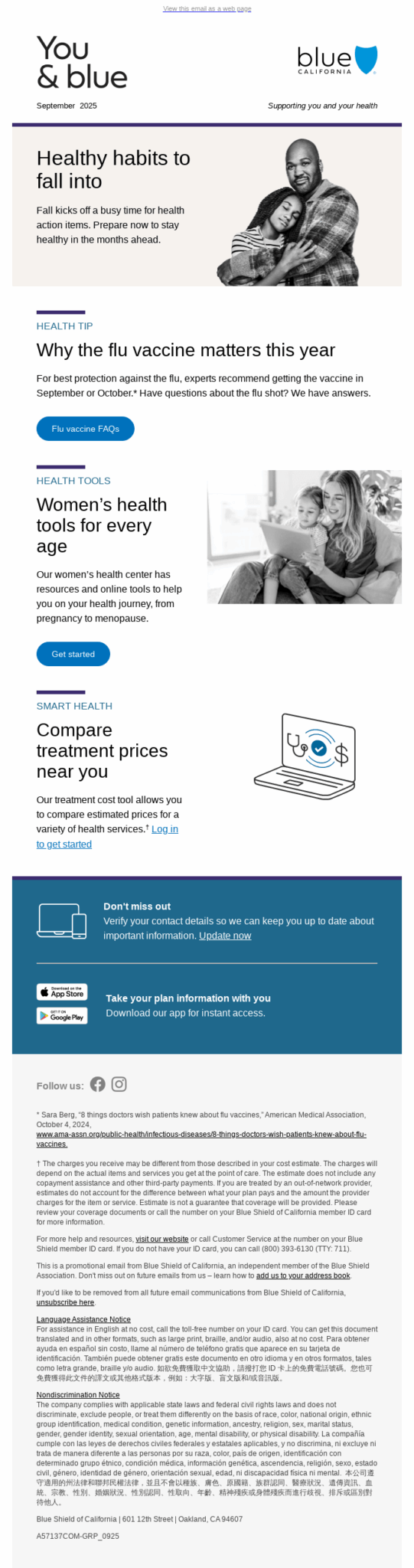
In 2026, customers expect brands to respect their time. Emails that are easy to scan, clearly written, and purpose-driven are far more likely to be read and acted upon. Simplicity does not mean oversimplification—it means thoughtful communication that puts the customer first.
5. Segment Your Email List
Not all insurance customers are the same, and treating them as a single audience limits the effectiveness of your campaigns. Segmentation allows insurers to group subscribers based on relevant criteria such as policy type, lifecycle stage, location, behavior, or engagement history.
Segmented email campaigns deliver more relevant content, which leads to higher open rates, better engagement, and fewer unsubscribes. For example, a homeowner policyholder should not receive the same messaging as someone interested in health or auto insurance. Similarly, a long-term customer may need different communication than a new lead.
In 2026, segmentation is increasingly dynamic. Lists update automatically based on customer actions, ensuring that emails remain aligned with current needs. By sending the right message to the right audience, insurance companies improve efficiency and strengthen relationships at scale.
6. Personalize Your Email Content
Personalization goes beyond using a recipient’s first name. In insurance email marketing, meaningful personalization reflects an understanding of the customer’s situation, preferences, and history. This can include referencing policy details, renewal dates, coverage types, or previous interactions.
When emails feel personalized, they feel more relevant and less like mass communication. This is especially important in insurance, where customers expect tailored advice and attentive service. Personalized emails demonstrate that your company recognizes individuals, not just accounts.
In 2026, personalization is often driven by data and automation. However, it must be used responsibly. Over-personalization or careless use of sensitive information can feel intrusive. The best approach is thoughtful, purposeful personalization that enhances clarity and usefulness rather than drawing attention to data collection.
7. Automate for Common Campaign Types
Automation is one of the greatest advantages of email marketing for insurance businesses. Many insurance emails are triggered by predictable events such as sign-ups, renewals, claims, or anniversaries. Automating these campaigns ensures timely delivery and consistent messaging without manual effort.
Automated workflows help prevent missed opportunities and reduce operational strain. For example, renewal reminders can be scheduled well in advance, with follow-ups triggered based on customer response. Educational drip campaigns can nurture leads over time without requiring constant oversight.
In 2026, automation is more intelligent and flexible, allowing insurers to adjust messaging based on real-time behavior. When used thoughtfully, automation enhances customer experience by delivering relevant communication exactly when it is needed.
8. Leverage AI-Powered Writing Assistants
AI-powered writing tools have become increasingly valuable in insurance email marketing. These tools help teams draft clearer messages, refine tone, and adapt content for different audiences while maintaining consistency.
AI assistants can support subject line generation, content optimization, and readability improvements, making it easier to produce high-quality emails at scale. They are particularly useful for teams that need to manage large volumes of communication across multiple customer segments.
However, AI should be used as a support tool, not a replacement for human judgment. In insurance, accuracy, empathy, and compliance are critical. In 2026, the most effective insurers use AI to enhance efficiency while ensuring that final messaging is reviewed and aligned with brand values and regulatory standards.
9. Perform A/B Testing
A/B testing allows insurance marketers to compare different versions of an email to see what performs best. This could involve testing subject lines, call-to-action wording, layout, or send times. Over time, these insights help improve engagement and conversion rates.
Testing is especially important in insurance because small changes in clarity or tone can significantly affect how messages are perceived. What resonates with one audience segment may not work for another.
In 2026, successful A/B testing is structured and continuous. Insurers test one variable at a time, analyze results carefully, and apply learnings across future campaigns. This data-driven approach ensures ongoing improvement rather than relying on assumptions.
10. Monitor and Adjust
Email marketing is not a set-and-forget strategy. Monitoring performance metrics is essential to understanding what works and what needs improvement. Open rates, click-through rates, conversion rates, and unsubscribe trends all provide valuable insights into audience behavior.
Beyond metrics, insurers should also pay attention to qualitative signals such as customer feedback and support inquiries related to emails. These insights often reveal gaps in clarity or relevance that numbers alone cannot show.
In 2026, continuous optimization is a defining characteristic of successful insurance email programs. By regularly reviewing performance and making informed adjustments, insurers ensure that their email strategy evolves alongside customer expectations and market conditions.
Bringing It All Together
Insurance email best practices revolve around responsibility, relevance, and refinement. By prioritizing compliance, clarity, personalization, and continuous improvement, insurers can transform email from a basic communication tool into a powerful driver of trust and long-term value.
When these best practices are applied consistently, insurance emails become more than messages—they become reliable touchpoints that support customers throughout their journey and reinforce confidence in your brand.
FAQs
1. What are the most important elements of an insurance email?
The most important elements of an insurance email revolve around clarity, trust, relevance, and compliance. Because insurance communications often involve sensitive information and high-stakes decisions, every email must be structured carefully to serve the customer first.
At the top, a clear and honest subject line is essential. It should accurately reflect the content of the email and explain why the message matters to the recipient. Misleading or vague subject lines may increase short-term opens, but they erode trust over time, which is especially damaging in the insurance industry.
Inside the email, clear messaging is critical. Insurance emails should be written in plain language, avoiding unnecessary jargon or overly technical explanations. Customers should immediately understand what the email is about, what information is being shared, and whether any action is required from them. Structuring content with short paragraphs, headings, or bullet points makes complex topics easier to digest.
Another key element is relevance. Insurance emails perform best when they are directly connected to the recipient’s situation—such as their policy type, lifecycle stage, or recent interaction. Relevant emails feel helpful rather than intrusive and are far more likely to be read and trusted.
Compliance and transparency are also non-negotiable elements. Every insurance email must clearly identify the sender, respect opt-in preferences, and provide an easy way to unsubscribe. Any policy-related information should be accurate and aligned with official terms. Transparency around data usage and communication frequency further reinforces credibility.
Finally, a strong insurance email includes a clear purpose or call to action, even if that action is simply to stay informed. Whether the email is educational, transactional, or promotional, the reader should understand why the message exists and what the next step is.
2. What kind of content should you prioritize in insurance email marketing?
Insurance email marketing is most effective when it prioritizes value-driven, customer-centric content over aggressive sales messaging. Since insurance decisions are based on trust and long-term relationships, content should focus on helping, educating, and reassuring customers rather than constantly pushing products.
Educational content should be a top priority. This includes explanations of coverage options, guidance on how policies work, answers to common questions, and tips for reducing risk or managing premiums. Educational emails empower customers to make informed decisions and position your brand as a reliable expert.
Transactional and informational content is equally important. Emails such as welcome messages, renewal reminders, policy updates, and claim notifications provide essential information at critical moments. These emails should be timely, accurate, and easy to understand, as they directly affect customer satisfaction and retention.
Another important category is proactive content that anticipates customer needs. Seasonal tips, policy review reminders, or updates related to life events help customers feel supported rather than reactive. This type of content shows foresight and care, strengthening long-term loyalty.
Promotional content should be used strategically and sparingly. When promotions are relevant—such as offering bundled coverage options or loyalty benefits—they can add value. However, promotional emails should never overshadow service-focused communication, as excessive sales messaging can quickly damage trust.
In 2026, successful insurance email strategies balance education, service, and promotion, with a strong emphasis on relevance and timing. Content that genuinely helps customers will always outperform content that simply tries to sell.
3. What challenges do insurers face when creating emails?
Creating effective insurance emails comes with several unique challenges, largely due to the nature of the industry. One of the biggest challenges is communicating complex information clearly. Insurance products often involve detailed terms, exclusions, and legal requirements that must be conveyed accurately without overwhelming or confusing the reader.
Another major challenge is maintaining compliance while staying engaging. Insurance emails must follow strict rules around consent, privacy, and truthful representation. These requirements can sometimes make emails feel rigid or impersonal if not handled carefully. Striking the right balance between regulatory accuracy and approachable communication is an ongoing challenge.
Personalization at scale is another common obstacle. Customers expect relevant and personalized communication, but insurers often manage large and diverse customer bases. Without proper segmentation and data management, emails can feel generic and disconnected from individual needs.
Timing is also a challenge. Sending emails too frequently can lead to fatigue and unsubscribes, while infrequent communication risks being forgotten. Determining the right cadence for different types of messages—educational, transactional, or promotional—requires ongoing testing and adjustment.
Finally, insurers face the challenge of building trust in a skeptical environment. Many consumers are cautious about financial communications and data privacy. Any inconsistency, unclear messaging, or perceived misuse of data can quickly undermine confidence.
Read More: How To Do Email Marketing In 2026