Halloween is more than costumes and candy. It is a powerful time for email marketing. People feel excited, playful, and ready to shop. Brands can use this mood to connect with their audience in fun ways. A well-timed Halloween email can boost opens, clicks, and sales. It also helps brands stand out in crowded inboxes.
In 2026, inbox competition is even higher. Customers expect creative ideas, not boring sales emails. Halloween gives you a reason to be bold. You can use spooky colors, fun words, and limited-time offers. You can also tell short stories that match the season. These small touches make emails feel special.
Halloween email marketing works for many industries. Online stores, service brands, media companies, and even B2B brands can join in. The key is to stay relevant and respectful. When done right, Halloween emails feel fun, not forced. This guide will help you understand how it works and why it matters.
What Is Halloween Email Marketing
Halloween email marketing is a seasonal strategy used around the Halloween period. It focuses on sending themed emails to engage subscribers. These emails use Halloween visuals, language, and offers. The goal is to grab attention and drive action.
Brands use Halloween emails for many reasons. Some promote special sales or limited deals. Others share fun content, tips, or stories. Many use it to launch themed products or bundles. Some brands simply want to build stronger relationships with subscribers.
Halloween email marketing is not just about discounts. It is about timing and emotion. People enjoy playful messages during this season. A creative subject line or spooky design can increase open rates. When the message feels fun, people are more likely to click.
This type of marketing usually starts weeks before October 31. Brands send teaser emails first. Then they follow up with reminders and final offers. After Halloween, some brands send wrap-up or thank-you emails. When planned well, Halloween email marketing can deliver strong results year after year.
Halloween Marketing Statistics
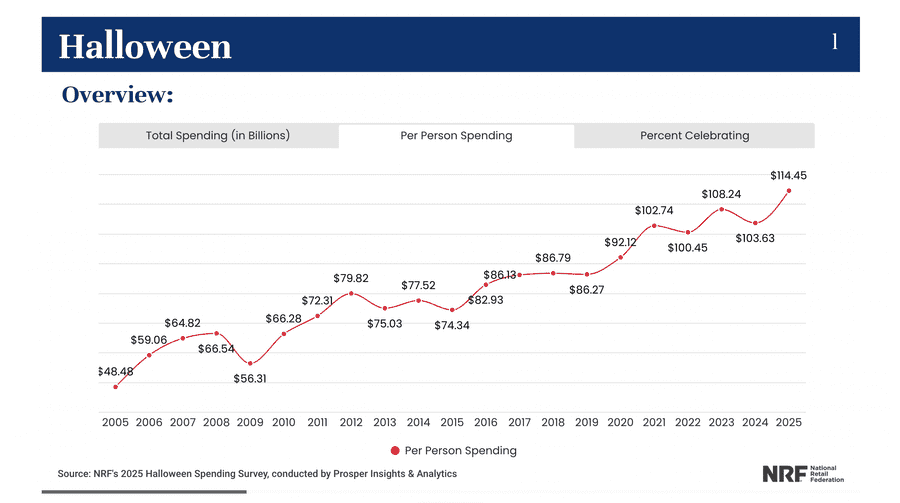
Halloween isn’t just fun for fans of spooky costumes and candy. It’s also a big opportunity for businesses and email marketers. Knowing the latest numbers helps you plan smarter and reach more people this season.
📈 Spending Trends and Consumer Behavior
-
Halloween spending is expected to reach a record $13.1 billion in 2025, up from $11.6 billion in 2024. This shows people are buying more costumes, decorations, and treats each year.
-
Consumers on average are expected to spend about $114 per person on Halloween items, which is higher than past years.
-
Nearly half of shoppers (47%) start their Halloween shopping before October, giving marketers an early window to capture attention.
-
About 56% of adults aged 25–34 begin buying Halloween items before October, making early email campaigns more effective for this group.
👻 Email and Digital Marketing Metrics
-
Halloween-themed emails tend to perform better than regular promotional emails, with a 14.7% higher open rate.
-
Around 40% of consumers make purchases based on Halloween-themed emails, showing the power of seasonal email offers.
-
Seasonal email campaigns can generate millions in extra revenue for businesses each year.
🛍️ Category Spending Breakdown
-
Halloween costume spending is projected to reach around $4.3 billion, while decoration spending is close behind at $4.2 billion.
-
Candy remains a top Halloween purchase, with expected sales of about $3.9 billion.
🎯 Engagement and Timing Insights
-
Email engagement typically spikes in the weeks leading up to Halloween, especially when campaigns include holiday visuals and offers tailored to the season.
-
Mobile optimization is essential since a large share of Halloween emails are opened on phones and tablets.
These stats show Halloween is a strong season for email marketing with high consumer interest and real spending power. Using this data, you can time campaigns better and craft messages that drive action.
Key Points to Remember When Planning Email Marketing for Halloween
Planning Halloween email marketing needs more than adding pumpkins and ghosts. Every part of your email should work together. From the subject line to the timing, small details matter a lot. Below are the most important points you should focus on when planning your Halloween email campaigns.
Have a Catchy Subject Line
The subject line is the first thing people see. If it feels boring, your email will stay unopened. Halloween gives you a chance to be creative and playful. You can use spooky words, fun phrases, or light humor. Words like “spooky,” “boo,” “trick,” or “treat” often catch attention.
Keep your subject lines short and clear. Avoid confusing messages. Make sure the reader knows there is value inside the email. You can hint at a deal, a surprise, or a limited offer. Emojis can also help when used wisely. A small pumpkin or ghost can make your email stand out in a crowded inbox.
Use Halloween-Themed Images
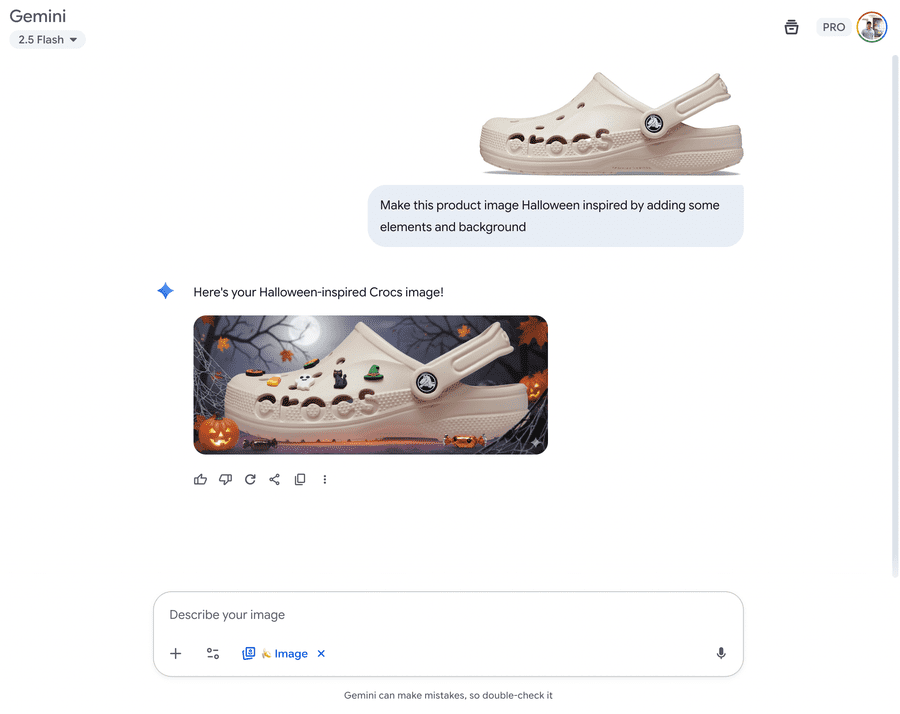
Images help set the mood fast. Halloween-themed visuals make your email feel festive and timely. You can use dark colors, pumpkins, bats, or fall leaves. These elements create a strong seasonal feel without using too many words.
Make sure your images match your brand style. Do not overload the email with graphics. Too many images can slow loading time. Always use clear images that look good on mobile screens. Also, add image text so the message is clear even if images do not load.
Use Halloween-Specific Content
Your message should match the season. Generic content does not feel special. Halloween-specific content helps readers feel connected to the moment. You can share themed tips, short stories, or fun facts related to Halloween.
You can also adjust your tone. A playful or slightly spooky voice works well. Avoid being too scary or negative. The goal is fun, not fear. When your content fits the season, people are more likely to read and engage with it.
Halloween-Specific Promotions and Discounts
Halloween is a popular shopping season. Many people expect special deals during this time. Offering Halloween-themed discounts can increase clicks and sales. You can create limited-time offers, bundle deals, or flash sales.
Use clear deadlines to create urgency. Phrases like “ends on Halloween night” work well. You can also rename your discounts to match the theme, such as “Spooky Savings” or “Treat Yourself Deals.” Make sure the offer is easy to understand and easy to redeem.
Send Multiple Email Campaigns
One email is usually not enough. People check their inbox at different times. Sending multiple Halloween emails helps you stay visible. You can start with a teaser email early in the month. Then follow up with reminders as Halloween gets closer.
Each email should have a clear purpose. One can focus on awareness. Another can push a deal. A final email can create urgency. Do not send too many emails in one day. Space them out and track engagement. This approach helps you stay helpful without feeling spammy.
When you plan carefully and respect your audience, Halloween email marketing can deliver strong results.
How To Build Your Halloween Email Marketing Strategy
A great Halloween email marketing strategy helps you connect with your audience and get results. Each step below shows you how to build a strong plan, from the first idea to the final email.
1. Plan Your Halloween Email Campaigns
Planning is the first and most important step. Start early—at least 4–6 weeks before October 31. Early planning gives you time to build anticipation and avoid last-minute rush.
Steps to Plan Effectively:
-
Set clear goals: Do you want more sales, website visits, or newsletter sign-ups?
-
Know your audience: Look at past email data. See which types of content got the most opens and clicks.
-
Build a campaign calendar: List each email you will send, the date, the message theme, and the offer.
-
Define success metrics: Track open rate, click-through rate, and conversions to see what worked best.
When you plan ahead, you reduce stress and improve performance.
2. Choose a Halloween Email Design
Your email design should reflect the Halloween season while staying true to your brand. A strong design catches attention and encourages readers to engage.
Design Tips That Work in 2026:
-
Use Halloween colors: Black, orange, purple, and deep green help set a spooky mood.
-
Mix fun and clarity: Add themed graphics like pumpkins, spiders, and candy, but keep the layout clean and easy to read.
-
Optimized for mobile: Most users open email on phones, so your design must look good on small screens.
-
Accessible design: Use readable fonts and include alt text for images so everyone can understand the message.
Good design keeps attention and makes your offer clear fast.
3. Create Spooky Email Copy and Visuals
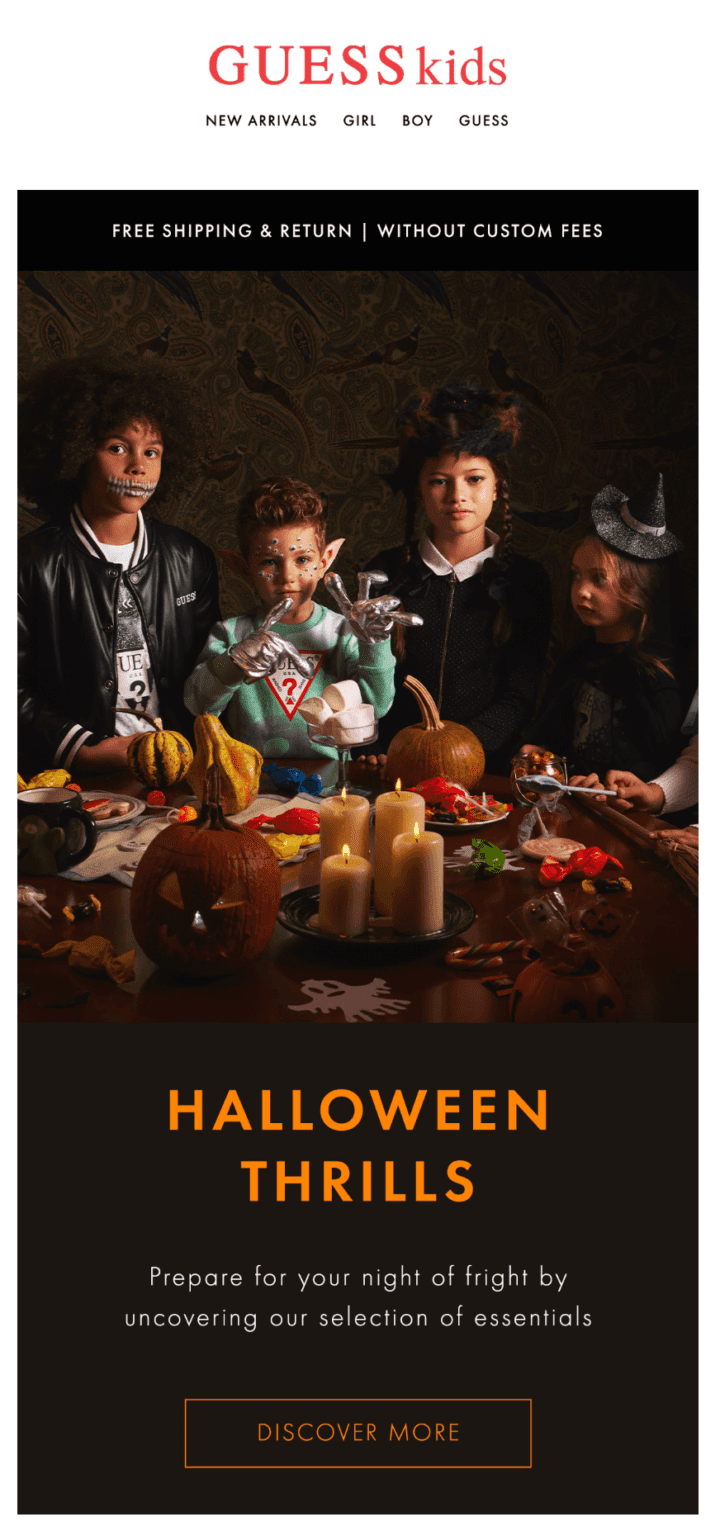
Your email message (copy) and visuals should work together to excite readers. Spooky doesn’t mean scary or confusing. It means fun, creative, and on-theme.
Copy Tips:
-
Use playful language: “Don’t miss our wicked deals!” or “Treat yourself to savings!”
-
Keep sentences short: Busy readers skim emails, so simple sentences are easier to read.
-
Highlight benefits: Tell readers what they get (discount, limited offer, free gift).
Visual Tips:
-
Use custom images or illustrations: A themed header image sets the tone instantly.
-
Balance text and visuals: Too many graphics can distract from your offer.
-
GIFs or subtle animation: A moving element can grab attention without being overwhelming.
Together, strong copy and visuals make your email memorable.
4. Write Halloween Email Subject Lines
Your subject line tells the reader what your email is about. It affects whether someone opens your email or ignores it.
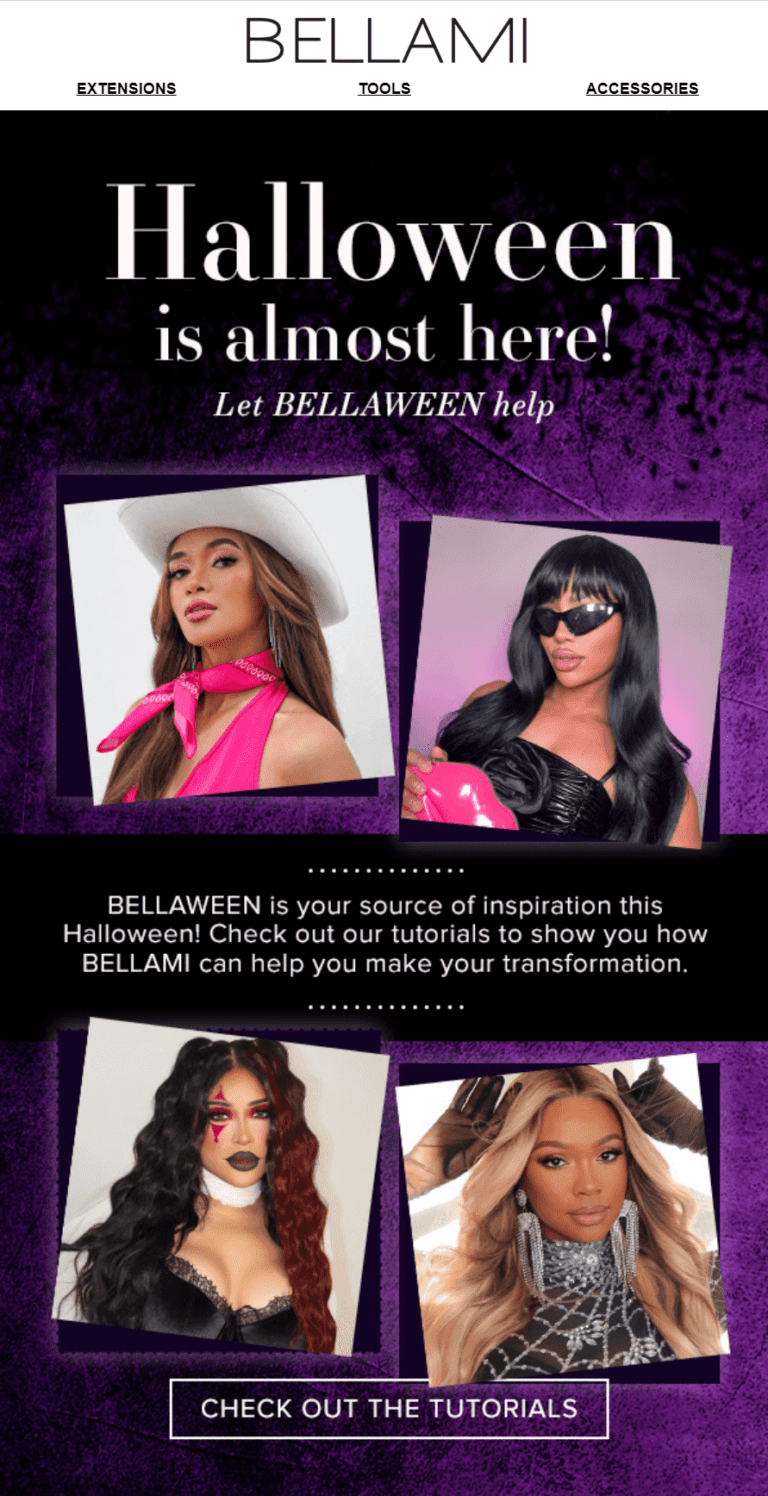
Subject Line Strategies for 2026:
-
Keep it short and punchy: Aim for 5–8 words max.
-
Add urgency or curiosity: Words like “Today Only!” or “Unmask the Deal Inside.”
-
Use emojis sparingly: A pumpkin 🎃 or ghost 👻 can make your email stand out.
-
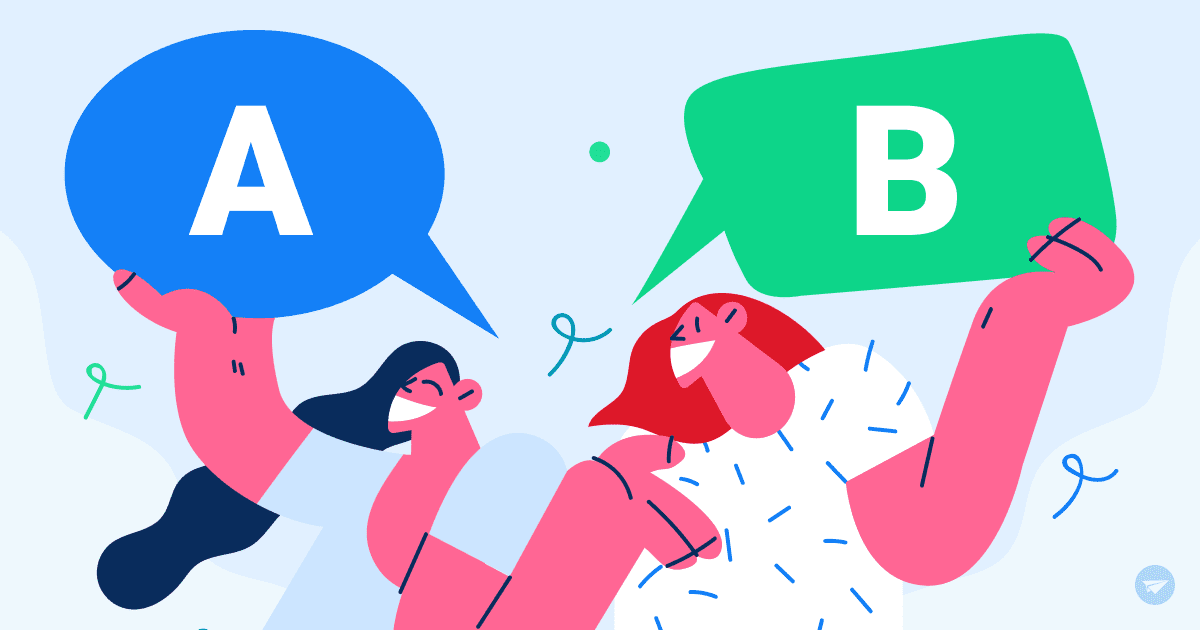
Test variations: Try two or more subject lines to see which performs better (A/B testing).
A strong subject line boosts your open rate, which affects the whole campaign’s success.
5. Prepare Post-Click Halloween Landing Pages
The journey shouldn’t stop when someone clicks your email. The page they land on must match the Halloween theme and make it easy to complete the action you want.
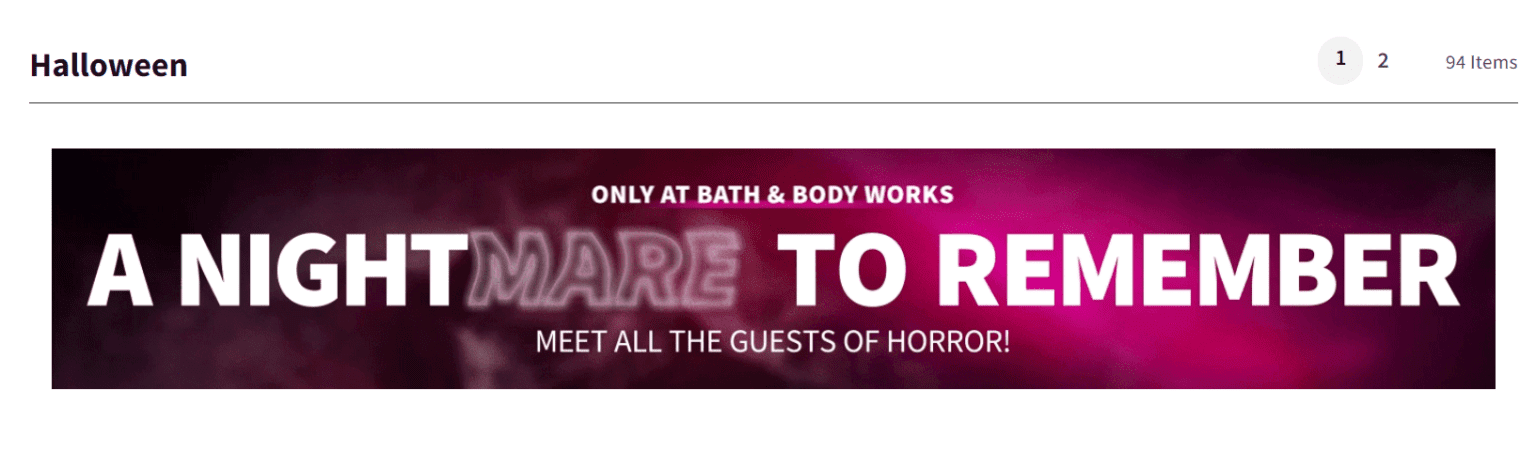
Features of Effective Landing Pages:
-
Visual continuity: Use the same design and theme from your email so the experience feels smooth.
-
Simple layout: Remove distractions so the focus stays on your offer.
-
Clear call to action (CTA): Make buttons big and easy to find (“Shop Now,” “Claim Your Treat”).
-
Fast load times: Slow pages reduce conversions, especially on mobile.
Whether you’re promoting products, signing up for events, or sharing content, great landing pages improve results.

6. Offer Halloween-Themed Products
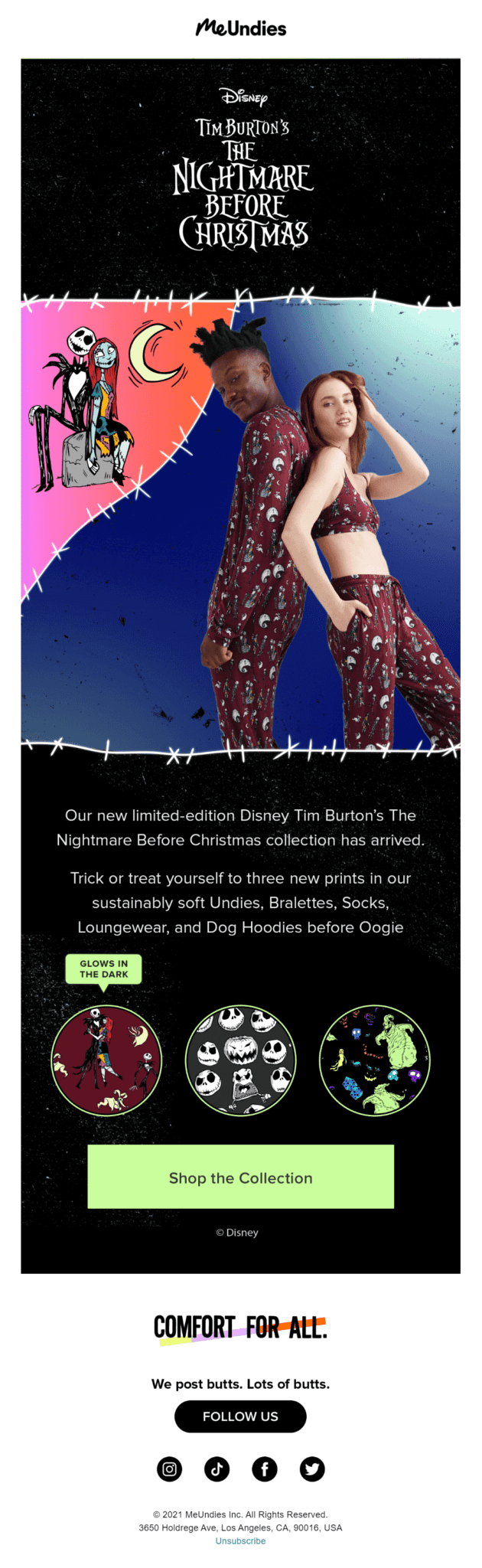
Halloween-themed products give your campaign a clear reason to exist. Seasonal items feel fresh and limited, which increases interest. These products can be physical items, digital offers, or special bundles.
You can introduce limited-edition versions of your regular products. This may include Halloween packaging, spooky names, or themed add-ons. Bundles work very well during this season because they feel like a “treat.” For service-based businesses, you can offer Halloween-only plans, bonus features, or themed experiences.
Make sure these products are easy to find in your emails. Highlight them with clear images and short descriptions. Always explain what makes them special and why they are only available for a short time. Scarcity plays a big role in Halloween marketing success.
7. Target Specific Customer Segments
Not every subscriber reacts the same way to Halloween emails. That is why customer segmentation is very important. Sending the right message to the right group improves engagement and reduces unsubscribes.
You can segment your audience based on past purchases, location, behavior, or interests. For example, loyal buyers can receive early access offers. New subscribers can get simple Halloween welcome deals. Inactive users can receive fun re-engagement emails with light discounts.
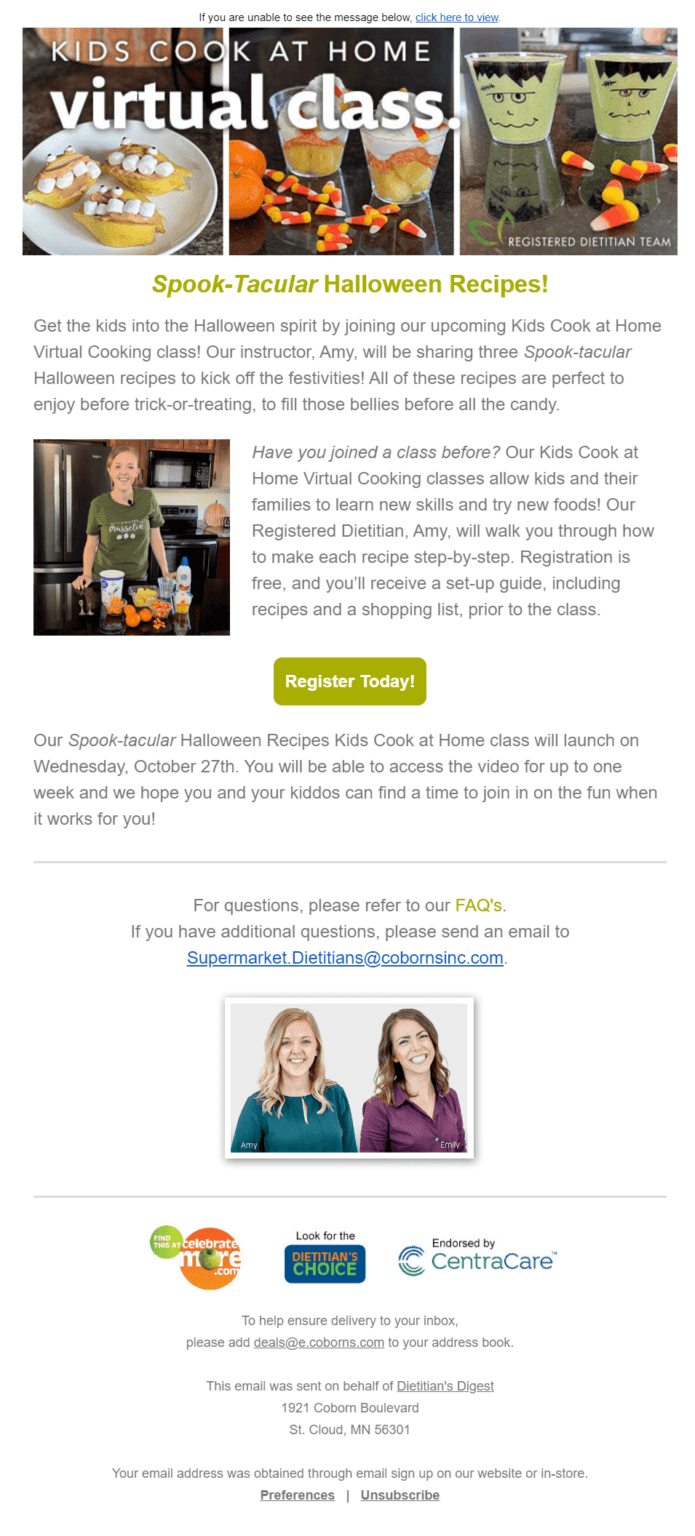
Personalized emails feel more relevant. When people feel the message is made for them, they are more likely to open and click. Segmentation also helps you avoid sending overly promotional emails to users who prefer content-based messages.
8. Plan a Grand Halloween Sale
A big Halloween sale creates excitement and urgency. Many shoppers wait for seasonal sales, and Halloween is one of the best times to launch one. A well-planned sale can drive high traffic and strong conversions.
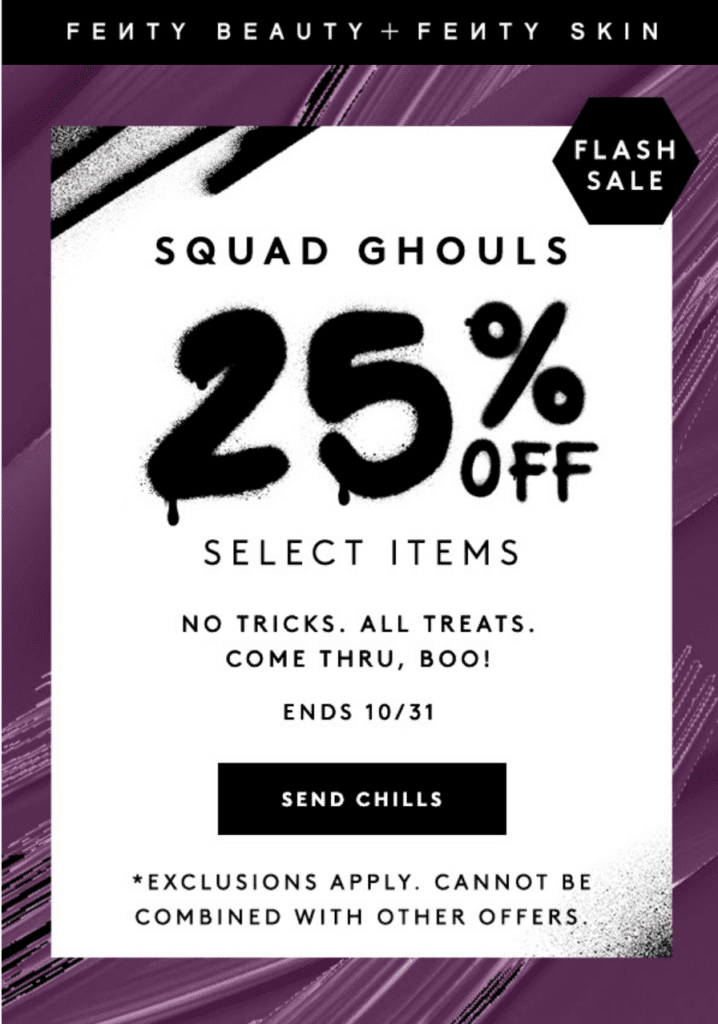
Start by choosing the type of sale. You can run a site-wide discount, flash sale, or countdown deal. Set clear start and end dates. Halloween night deadlines work very well. Use countdown timers in emails to increase urgency.
Promote the sale through multiple emails. Begin with a teaser, then follow with reminder emails, and finish with a last-chance message. Make sure the discount rules are simple and easy to understand. Confusing offers reduce trust and clicks.
9. Reward Customer Loyalty
Halloween is a great time to thank your loyal customers. Rewarding them builds trust and long-term relationships. Loyal subscribers are also more likely to buy again when they feel appreciated.
You can offer exclusive discounts, early access to Halloween deals, or special gifts. Loyalty-only emails should feel personal and warm. Use friendly language and thank them for being part of your community.
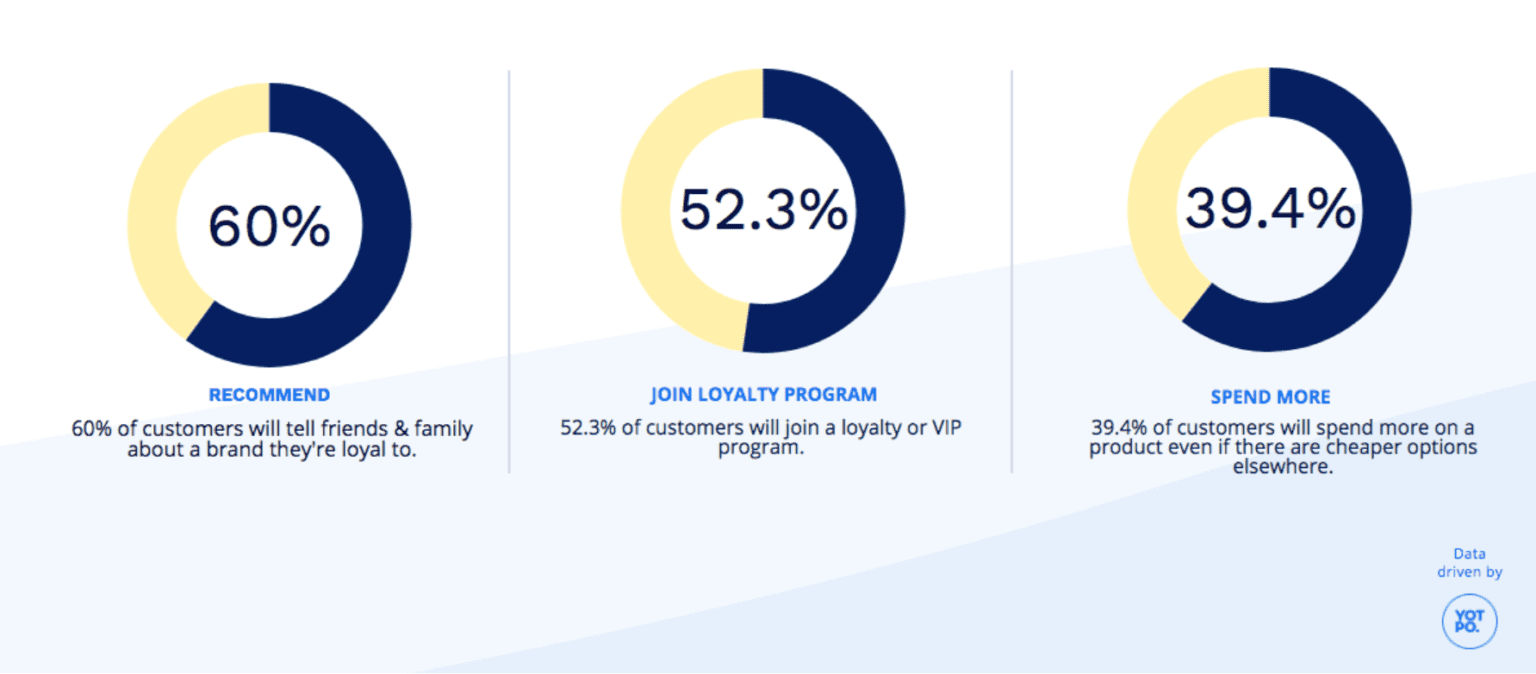
You can also reward loyalty with points, bonus credits, or free upgrades. These rewards do not always need large discounts. Small gestures often create strong emotional value. When customers feel valued, they are more likely to stay engaged beyond the Halloween season.
10. Integrate Social and Email Marketing
Email and social media work best when used together. When you connect both channels, your Halloween campaigns reach more people and feel more consistent. Email helps you deliver direct messages, while social media helps spread excitement.
You can promote your Halloween emails on social platforms. Share teasers, countdown posts, or sneak peeks of your offers. Inside your emails, add social media buttons and invite readers to follow or share. You can also highlight your social contests or hashtag campaigns in emails.
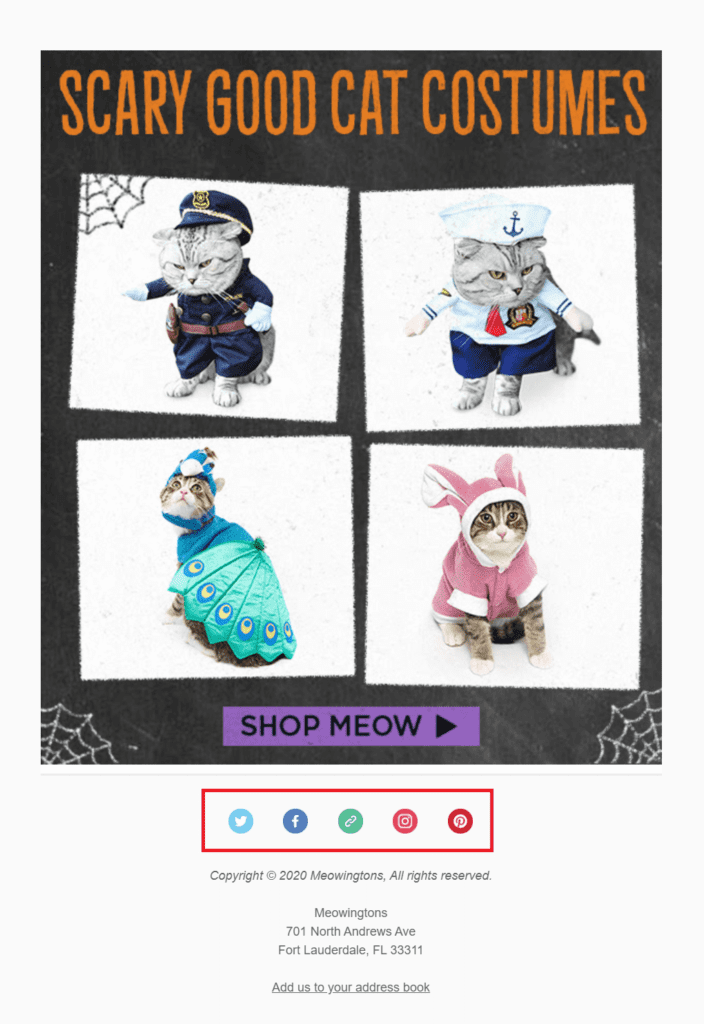
This cross-channel approach builds stronger brand presence. It also keeps your Halloween message active across multiple touchpoints, not just the inbox.
11. Use Email Marketing Automation
Automation saves time and improves consistency. During busy seasons like Halloween, automated emails help you stay organized and responsive.
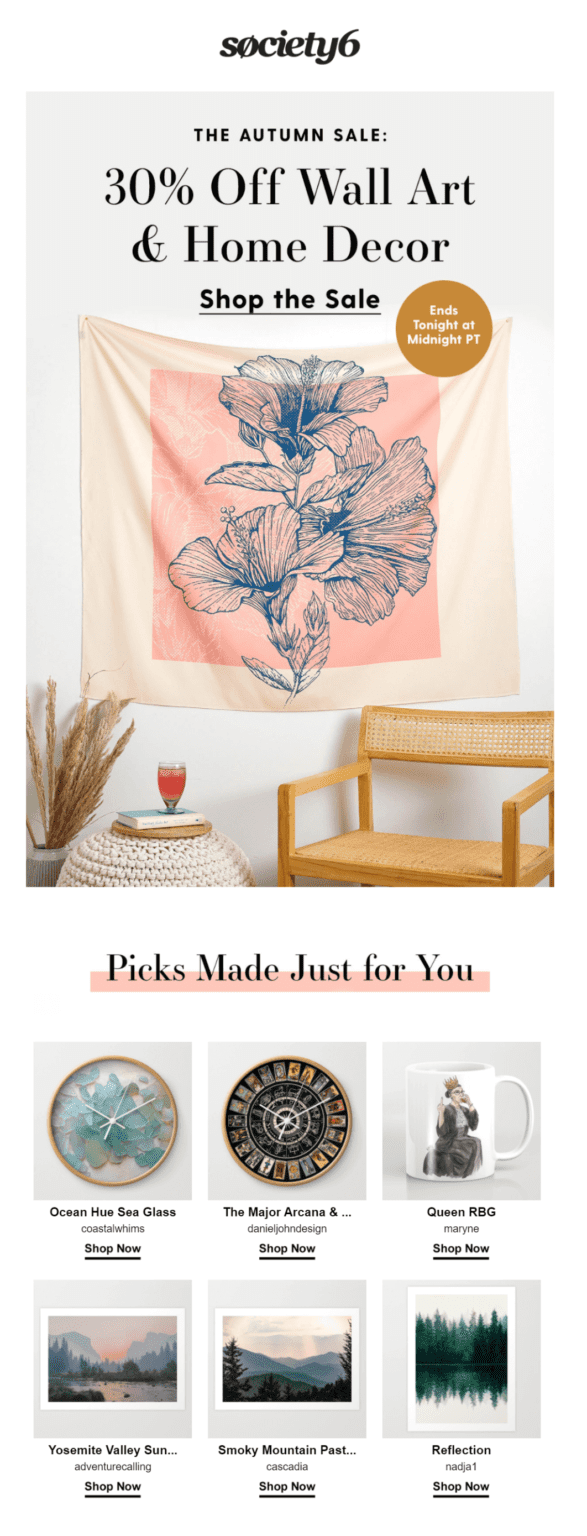
You can automate welcome emails with Halloween themes for new subscribers. Cart reminder emails can also include spooky visuals and limited-time offers. Scheduled campaign sequences ensure emails go out at the right time without manual effort.
Automation also allows behavior-based emails. For example, users who click but do not buy can receive follow-up messages. This keeps your Halloween campaigns running smoothly while still feeling personal.
12. Leverage User-Generated Content
User-generated content builds trust and authenticity. During Halloween, people love sharing costumes, decorations, and themed purchases. This content is valuable for your email campaigns.
You can ask customers to share photos, reviews, or short stories. Feature the best content in your emails. This makes your brand feel more real and community-driven. It also shows how others enjoy your products or services.
Always get permission before using customer content. Give credit where possible. When customers see themselves featured, they feel proud and more connected to your brand.
13. Create Interactive Emails
Interactive emails keep readers engaged longer. They turn passive reading into active participation. This works especially well during fun seasons like Halloween.
You can add polls, quizzes, scratch-to-reveal offers, or clickable images. Simple interactions like “Pick your treat” or “Choose your costume” increase clicks. Interactive elements also make emails more memorable.
Keep interactions simple and mobile-friendly. Too many features can slow down the email. When done right, interactive emails boost engagement and improve overall campaign performance.
14. A/B Test for Next Halloween
Testing helps you learn what works best. Halloween campaigns give you a great chance to gather data for future improvements.
You can test subject lines, email designs, call-to-action buttons, or send times. Send two versions of the same email to small groups. Then use the better-performing version for the rest of your list.
Save your test results. Review them after Halloween ends. These insights help you plan stronger campaigns next year. Each test brings you closer to higher opens, more clicks, and better results in the next Halloween season.
Halloween Email Examples
Real-world Halloween email examples help you understand how brands use creativity, timing, and messaging to engage subscribers. Below are detailed examples from different industries, showing how Halloween email marketing can work in many ways.
SIMPLER HAIR COLOR
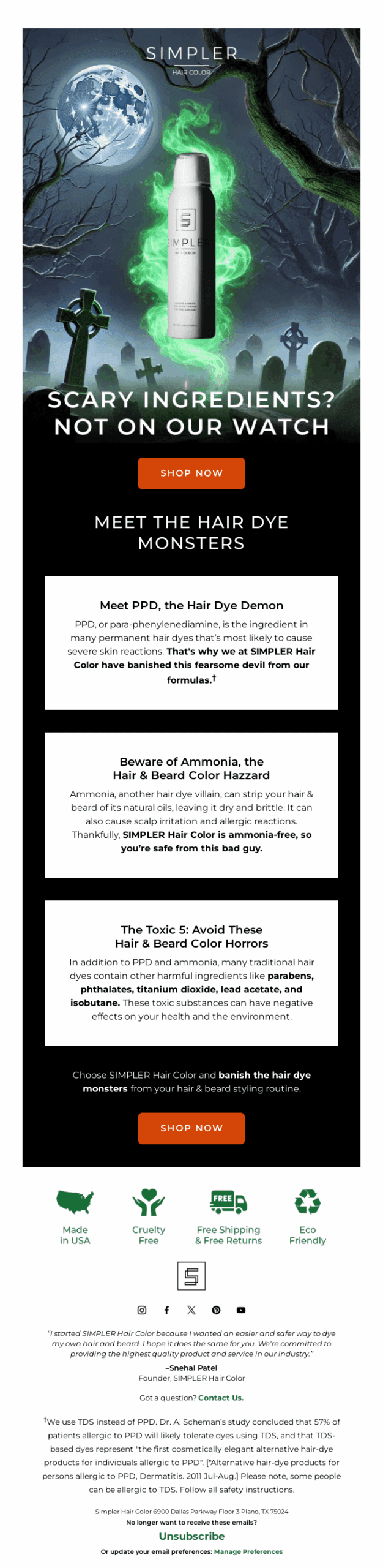
This brand uses Halloween as a chance to connect with customers on a personal level. Instead of focusing only on discounts, the email leans into emotions and storytelling. The design often uses warm fall colors with subtle Halloween touches, not overly spooky visuals.
The email content focuses on transformation, which fits both hair care and Halloween themes. Messaging highlights “change,” “fresh looks,” or “fall refresh.” Calls to action are clear and supportive, encouraging users to try something new before Halloween events.
This approach works well because it blends seasonal fun with real customer needs. It feels helpful, not sales-heavy. The brand keeps the email simple, friendly, and easy to read on mobile devices.
Cameron’s Coffee
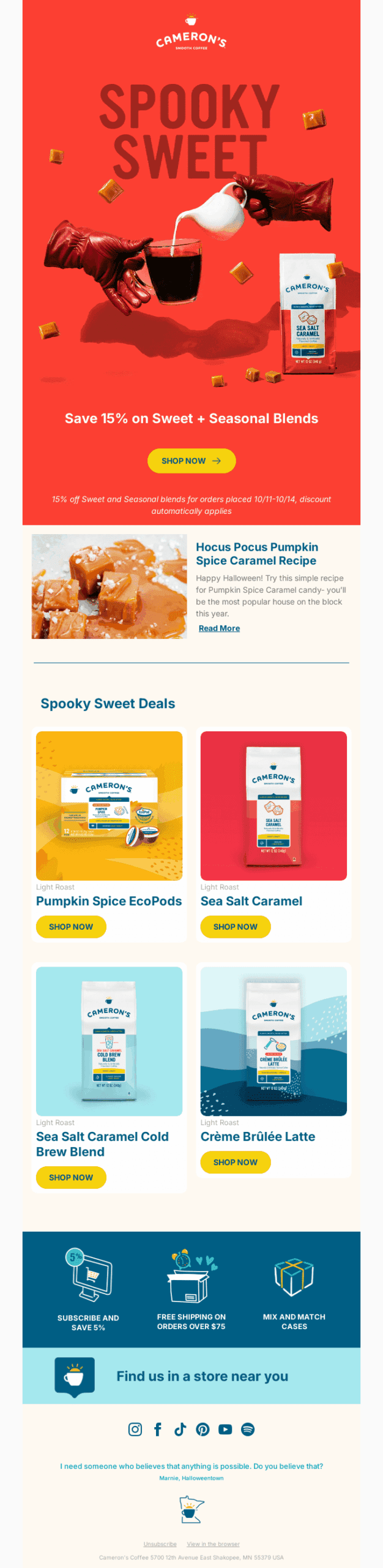
Cameron’s Coffee uses Halloween emails to create excitement around limited-time products. Their emails often feature bold visuals, cozy fall tones, and playful Halloween language. The theme connects well with seasonal drinks and flavors.
The messaging focuses on urgency and comfort. Words like “limited batch” or “only this season” encourage quick action. Product images are clear and inviting, making readers want to click and explore.
The email structure is clean. A strong headline leads the message, followed by short descriptions and a clear call to action. This makes it easy for readers to understand the offer without scrolling too much.
National Geographic
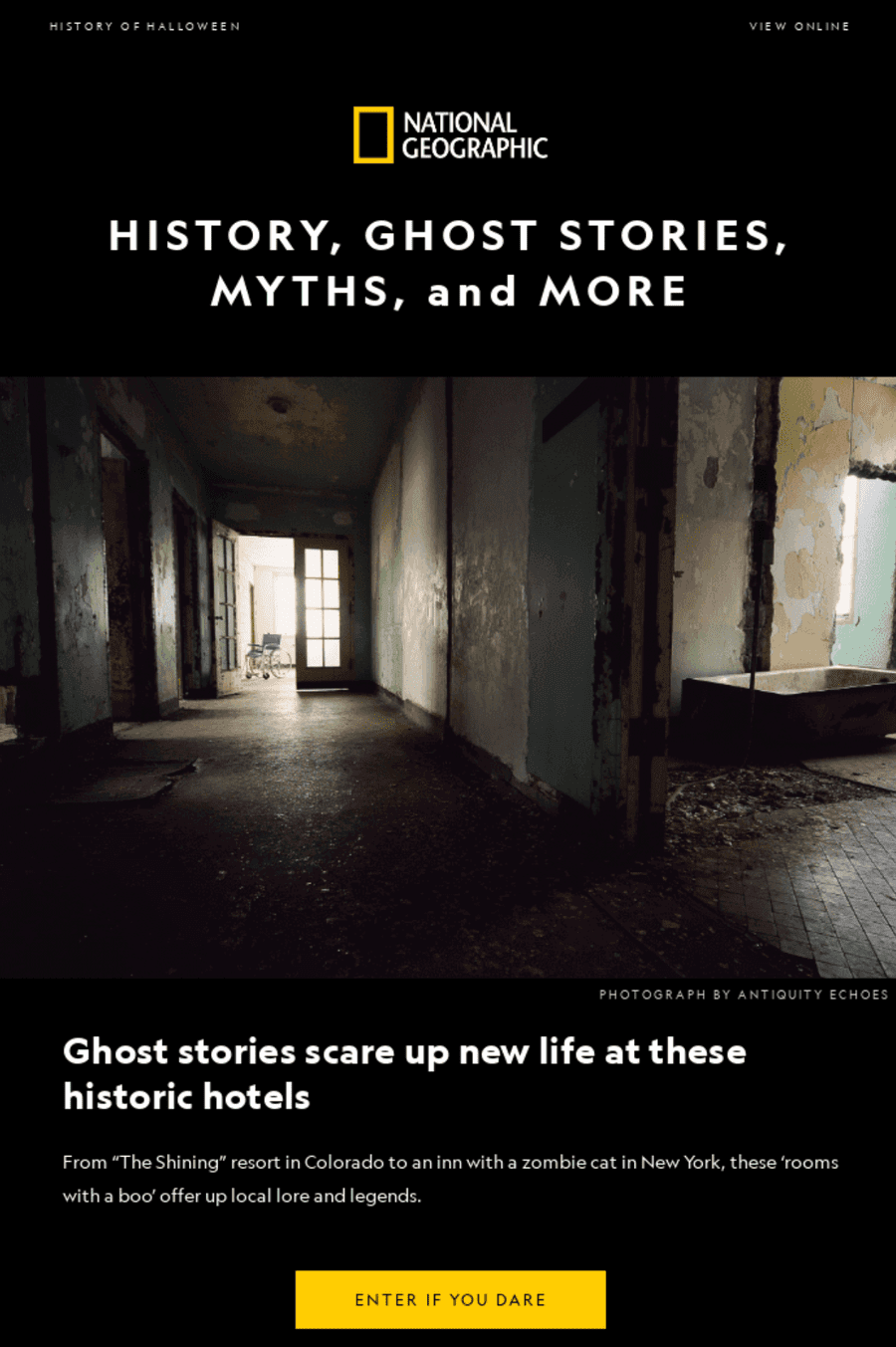
This brand uses Halloween in a more educational and story-driven way. Instead of selling products, the emails focus on curiosity and learning. Halloween themes are used to explore topics like wildlife, history, or mysterious places.
The visuals are high-quality and immersive. Dark tones and dramatic images create a spooky but informative feel. The email content invites readers to learn, watch, or read more rather than buy.
This approach shows that Halloween emails do not need discounts to be effective. Value-driven content can build strong engagement and trust, especially for brands focused on education or media.
Restream
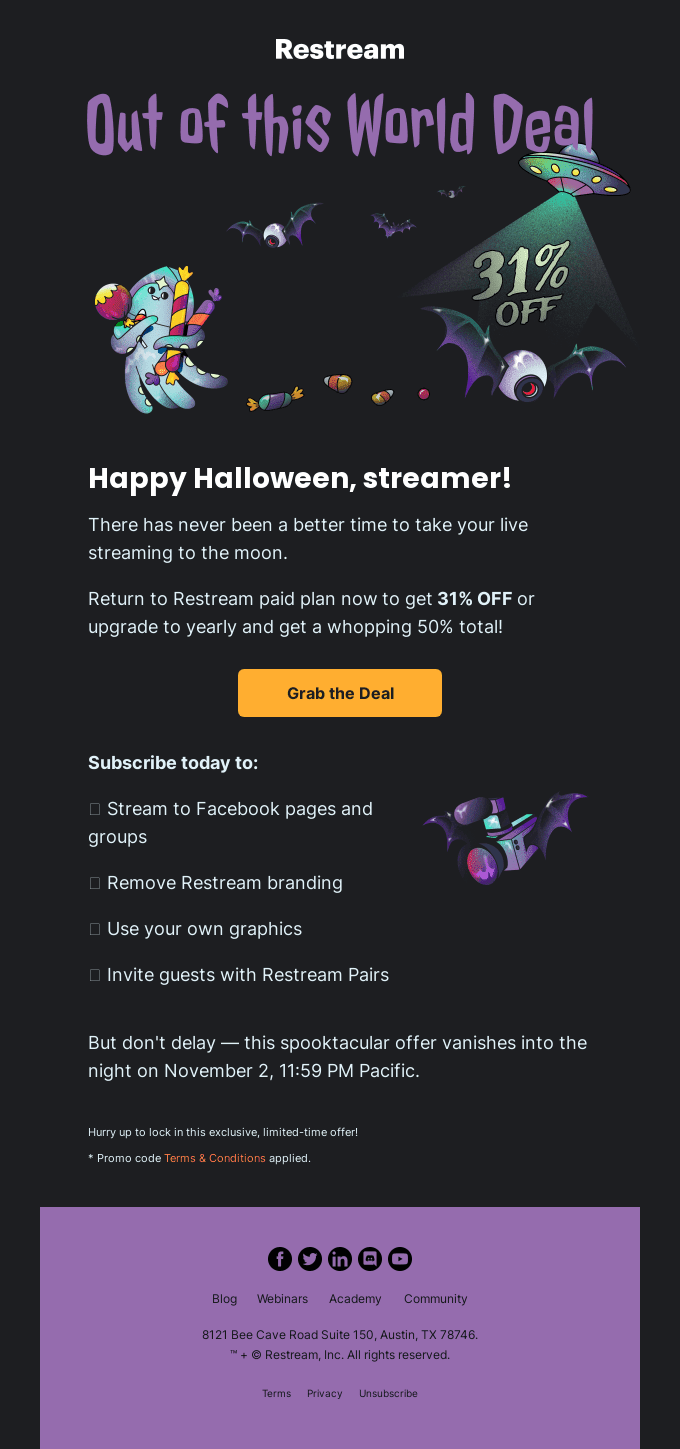
Restream uses Halloween emails to highlight features and encourage platform use. The tone is playful and tech-friendly. Halloween visuals are mixed with clean design, keeping the brand identity strong.
The email content often includes themed tips, feature highlights, or fun challenges. For example, it may encourage users to host a Halloween-themed live stream or event. This helps users imagine real use cases.
Clear calls to action guide users toward trying new features. The email feels useful and timely, not promotional. This makes it effective for both new and existing users.
What Are the Best Halloween Email Campaigns to Send?
The best Halloween email campaigns capture the fun of the season while giving real value to your audience. These campaigns should feel festive, engaging, and easy to act on. Below are some of the most effective Halloween email campaign types you can use to plan your strategy.
Spooky-Themed Promotions
Spooky-themed promotions are the most common and effective Halloween campaigns. These emails use Halloween visuals, colors, and language to promote special offers. The goal is to grab attention and create excitement.
You can use playful words like “spooky savings” or “treat yourself.” Dark themes, pumpkins, and fall colors help set the mood. Keep the message simple and focus on one main offer. A clear deadline increases urgency and clicks.
This type of campaign works well for both products and services. It feels natural during the Halloween season and matches customer expectations.
Mystery Sales
Mystery sales create curiosity. These emails tease an unknown reward, such as a surprise discount or hidden deal. Customers need to click to reveal the offer.
The subject line is very important here. It should hint at something exciting without giving details. Inside the email, explain how the mystery works in clear steps. Make sure the reward feels worth the click.
Mystery campaigns increase engagement because people love surprises. They also keep readers interested longer than regular promotional emails.
Exclusive Early Access
Early access campaigns reward your most engaged subscribers. These emails offer special deals before the public sale begins. This makes customers feel valued and important.
You can send these emails to loyal customers or VIP segments. Use clear language to explain that the offer is limited and private. Include a countdown or end time to increase urgency.
Exclusive access builds trust and loyalty. It also helps spread out traffic before your main Halloween sale goes live.
Educational Emails
Educational Halloween emails focus on value instead of selling. These emails share tips, guides, or helpful information related to the season.
For example, you can share Halloween planning tips, safety advice, or themed ideas linked to your industry. Use visuals to keep the email interesting. Keep the tone friendly and informative.
These campaigns work well for brands that want to build long-term relationships. They also help balance promotional emails and reduce fatigue.
Post-Halloween Campaigns
Post-Halloween emails are often overlooked, but they are very effective. These campaigns target people after October 31, when excitement is still fresh.
You can send thank-you emails, clearance offers, or follow-up content. This is a good time to promote leftover stock or extended deals. The tone should feel relaxed and appreciative.
Post-Halloween campaigns help extend the season and capture last-minute interest. They also provide a smooth transition into your next marketing phase.
Conclusion
Halloween email marketing is a powerful way to connect with your audience during a fun and high-engagement season. When done right, it helps your brand stand out in busy inboxes and drives real results. From creative subject lines to themed visuals, every detail plays a role in success.
The key is planning early and staying consistent. A clear strategy allows you to mix promotions, storytelling, and value-driven content. Segmenting your audience, testing ideas, and using automation also improve performance. Halloween emails should feel exciting, not forced.
Most importantly, focus on your audience. Understand what they enjoy and how Halloween fits your brand voice. Whether you aim to increase sales, boost engagement, or build loyalty, seasonal emails help you achieve those goals.
By using the ideas, strategies, and examples in this guide, you can create Halloween email campaigns that feel timely, creative, and effective—both now and in future seasons.
You might also like: How to build an email list in 2026