Email marketing remains one of the most effective channels to reach, engage, and retain your audience in 2026. Unlike social media posts that get buried or search ads that disappear, well-crafted emails land directly in your subscribers’ inboxes — where you have their full attention. But not all email content is created equal. To truly maximise engagement and build stronger connections with your audience, it’s essential to diversify the kinds of emails you send.
Strategically mixing different types of content helps you nurture relationships, boost conversions, and keep subscribers excited about hearing from you.
What is Email Content?
Email content refers to the information, messaging, visuals, and calls-to-action (CTAs) delivered to subscribers through email campaigns. It includes everything from subject lines and preview text to body copy, images, buttons, and links. The purpose of email content is to inform, engage, nurture, or convert subscribers depending on your marketing objective.
In 2026, effective email content is:
-
Personalized using subscriber data and behavior
-
Relevant to where someone is in the customer journey
-
Mobile-optimized
-
Value-driven, not just promotional
-
Strategically segmented
Email content is not limited to sales messages. In fact, high-performing email strategies balance different types of content to maintain engagement and reduce unsubscribes.
Common Examples of Email Content
-
Welcome emails – Introduce your brand and set expectations
-
Promotional emails – Share discounts, flash sales, or special offers
-
Educational content – Send blog posts, guides, or tutorials
-
Newsletters – Provide curated updates and insights
-
Behavioral emails – Triggered messages based on user actions
-
Loyalty updates – Reward milestones and exclusive perks
-
Survey emails – Gather feedback and customer insights
When strategically combined, these content types help businesses build trust, increase retention, and drive consistent revenue from email marketing.
1. The Welcome Journey
What Is a Welcome Email Series?
The welcome journey refers to a sequence of emails sent automatically to new subscribers right after they join your list. Rather than sending one generic “hello,” a well-designed welcome series carefully guides subscribers through their first interactions with your brand. These emails aim to make a strong first impression, introduce what your brand stands for, and set the tone for future communication.
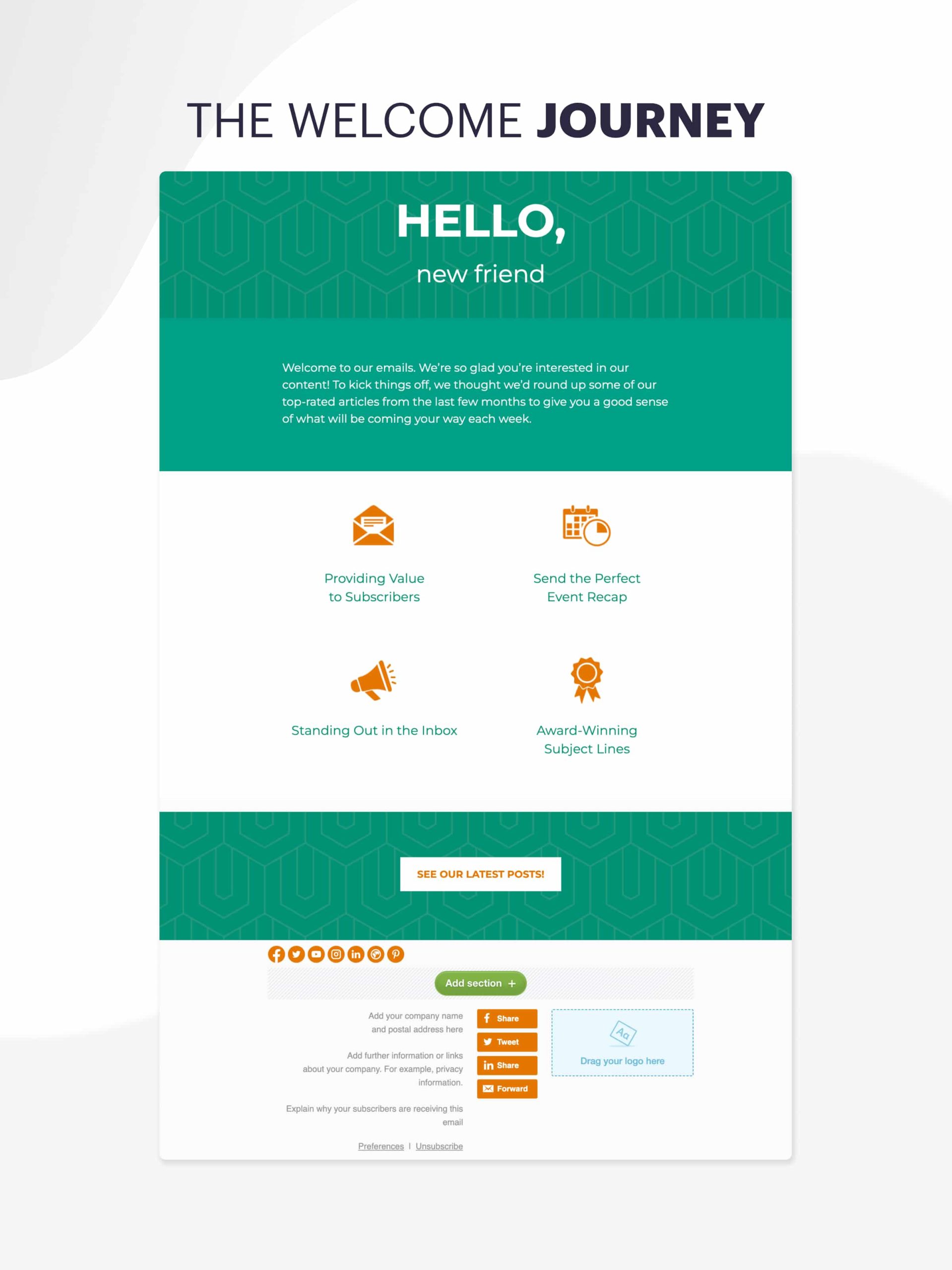
Research shows that welcome emails typically generate significantly higher open rates — sometimes up to two to three times higher — than other types of marketing emails because people are most engaged right after signing up.
Why It Matters
A thoughtfully structured welcome series builds trust and encourages interaction from the outset. It answers key questions new subscribers might have, explains the value they can expect, and helps reduce unsubscribe rates later on. Instead of waiting for subscribers to figure out your brand on their own, you proactively lead them through a smooth introduction.
Typical Components of a Welcome Journey
-
Warm Greeting & Thank You: Start by expressing gratitude for joining, and set expectations for what types of emails they’ll receive.
-
Brand Introduction: Share your mission, values, and what makes you unique — this builds connection and context.
-
Value Proposition: Highlight benefits of being subscribed, such as exclusive content, early access, or loyalty perks.
-
Incentives (Optional): Offer a first-time discount, welcome gift, or free resource to encourage engagement.
-
Clear Next Steps: Include a strong call-to-action (CTA) like visiting your blog, exploring products, or updating preferences.
Best Practices for Effective Welcome Emails
-
Send quickly: Mail your first welcome message within minutes to an hour after signup to capitalize on initial interest.
-
Personalise where possible: Use the subscriber’s name or behaviour (e.g., what they signed up for) for more relevance.
-
Keep it clear and concise: Make sure the message is simple enough to understand at a glance, especially on mobile.
-
Set expectations: Let subscribers know how often you’ll email them so they feel informed and in control.
A strong welcome journey lays the groundwork for lasting subscriber engagement and should be one of the first sequences you automate in your email strategy.
2. Promotions & Offers
What Are Promotional Emails?
Promotional emails are messages designed to motivate subscribers to take a specific action — often related to purchasing. These can include limited-time deals, seasonal discounts, flash sales, free shipping codes, bundles, or exclusive offers just for your email list.
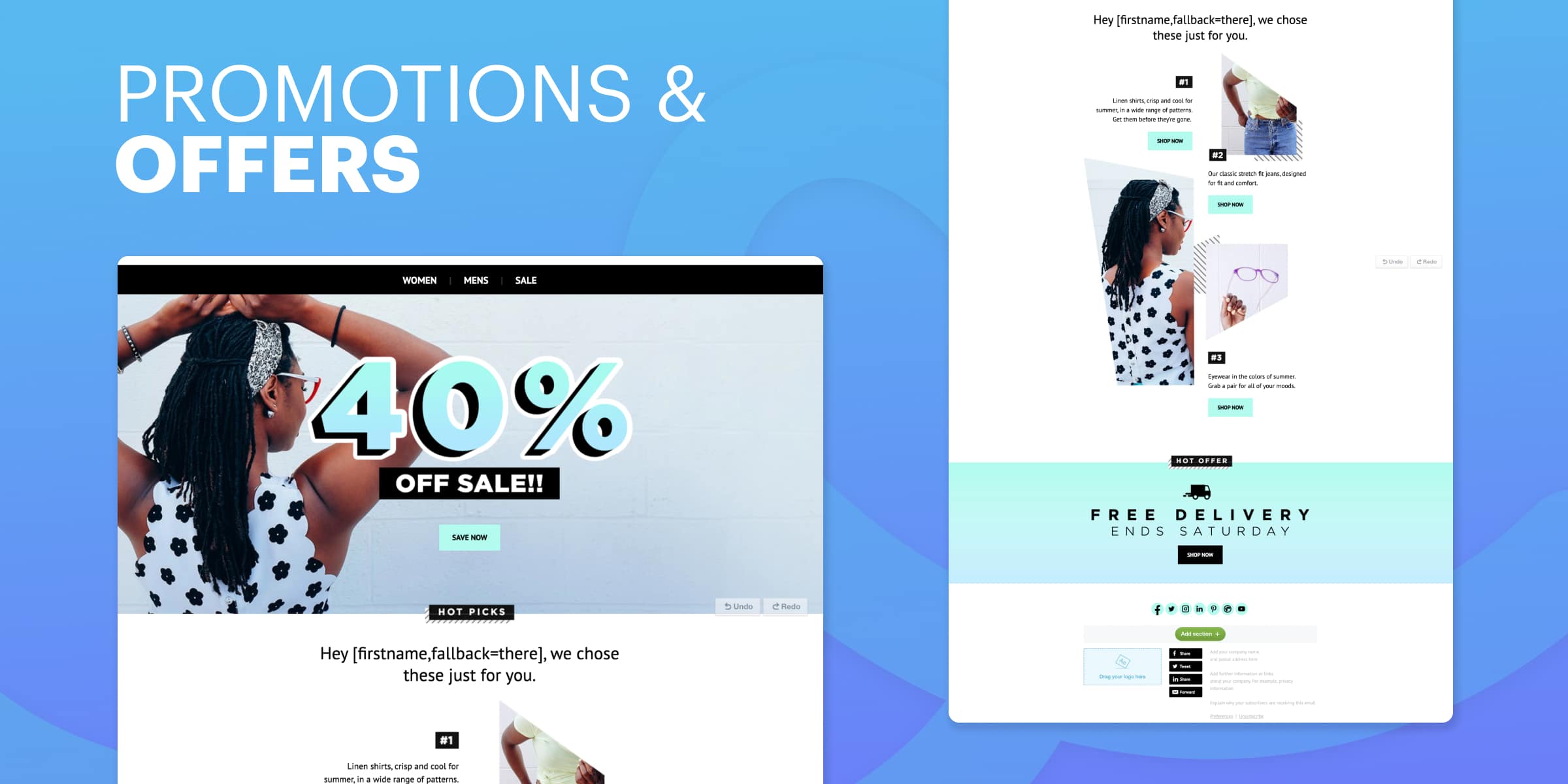
These emails are a staple in most email marketing strategies because they speak directly to a subscriber’s desire for value and savings. When done well, promotions can increase sales, attract repeat customers, and improve overall revenue from your email program.
Why Promotions Still Work
People join email lists partly because they expect to get good deals and perks they won’t see elsewhere. Offering exclusive discounts or time-sensitive offers makes subscribers feel valued and gives them an incentive to act. But it’s important to balance promotional content with other email types so your list doesn’t feel overwhelmed with sales pitches.
Types of Promotions You Can Send
-
Discount codes: Percentage or fixed-amount discounts on purchases.
-
Seasonal or holiday offers: Sales tied to key dates like Black Friday, New Year, Valentine’s Day, etc.
-
Free shipping incentives: Often increases conversions more than a small discount.
-
Flash sales: Short-term deals that create urgency.
-
Exclusive subscriber perks: Special offers only available to your email audience.
Crafting Effective Promotional Emails
-
Use clear headlines: Your subject line should highlight the offer and why it matters (e.g., “48-Hour Flash Sale — 30% Off!”).
-
Focus on benefits: Explain how the offer solves a problem or adds value for the reader.
-
Add urgency and scarcity: Words like “limited time,” “only X hours left,” or countdown timers increase conversions.
-
Strong CTAs: Use buttons like “Claim Your Discount” or “Shop Now” so readers know exactly what to do next.
-
Visual appeal: Include eye-catching product images and clean layouts to make your offering irresistible.
Avoiding the “Salesy” Trap
While promotions can drive revenue, too many overly sales-oriented emails may fatigue your audience or even feel spammy. Mix promotional messages with value-driven content such as helpful guides, newsletters, and personalised insights to keep your list engaged and receptive.
3. Guides, Blogs & Other Content
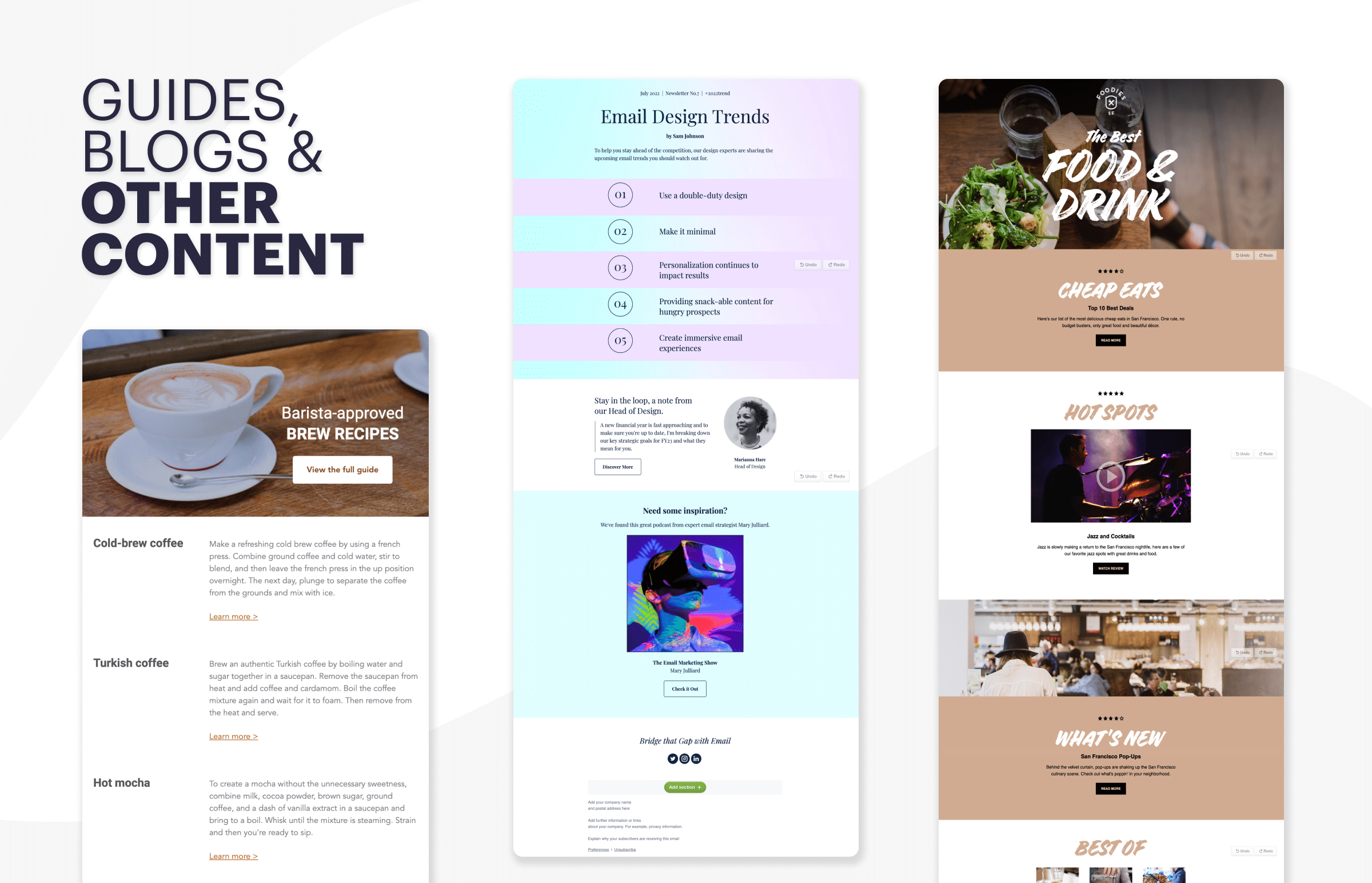
Educational and value-driven emails are essential for building long-term relationships. Instead of directly asking for a sale, these emails provide helpful information that solves problems, answers questions, or inspires action.
Why Educational Emails Matter
Modern subscribers expect more than discounts. They want insights, expertise, and solutions. Sharing blog posts, how-to guides, industry reports, and tutorials positions your brand as a trusted authority rather than just a seller.
Educational content:
-
Builds credibility and trust
-
Improves engagement rates
-
Warms up leads before a purchase
-
Supports SEO by driving blog traffic
-
Nurtures prospects in longer buying cycles
Types of Educational Email Content
-
How-to guides and tutorials
-
Industry insights and trend reports
-
Case studies
-
Expert tips and checklists
-
Webinar invitations and recordings
-
Ebooks and downloadable resources
Best Practices for Sending Content Emails
-
Segment based on interests: Send content aligned with what subscribers care about.
-
Keep it scannable: Use bullet points, short paragraphs, and clear headings.
-
Add a strong CTA: “Read the full guide,” “Download now,” or “Learn more.”
-
Repurpose smartly: Turn blog posts into email summaries with a link to read more.
-
Track engagement: Monitor clicks to understand what topics resonate most.
Educational emails are especially powerful for B2B businesses, SaaS companies, coaches, and content-driven brands, but they are valuable for nearly every industry.
4. Loyalty & Rewards
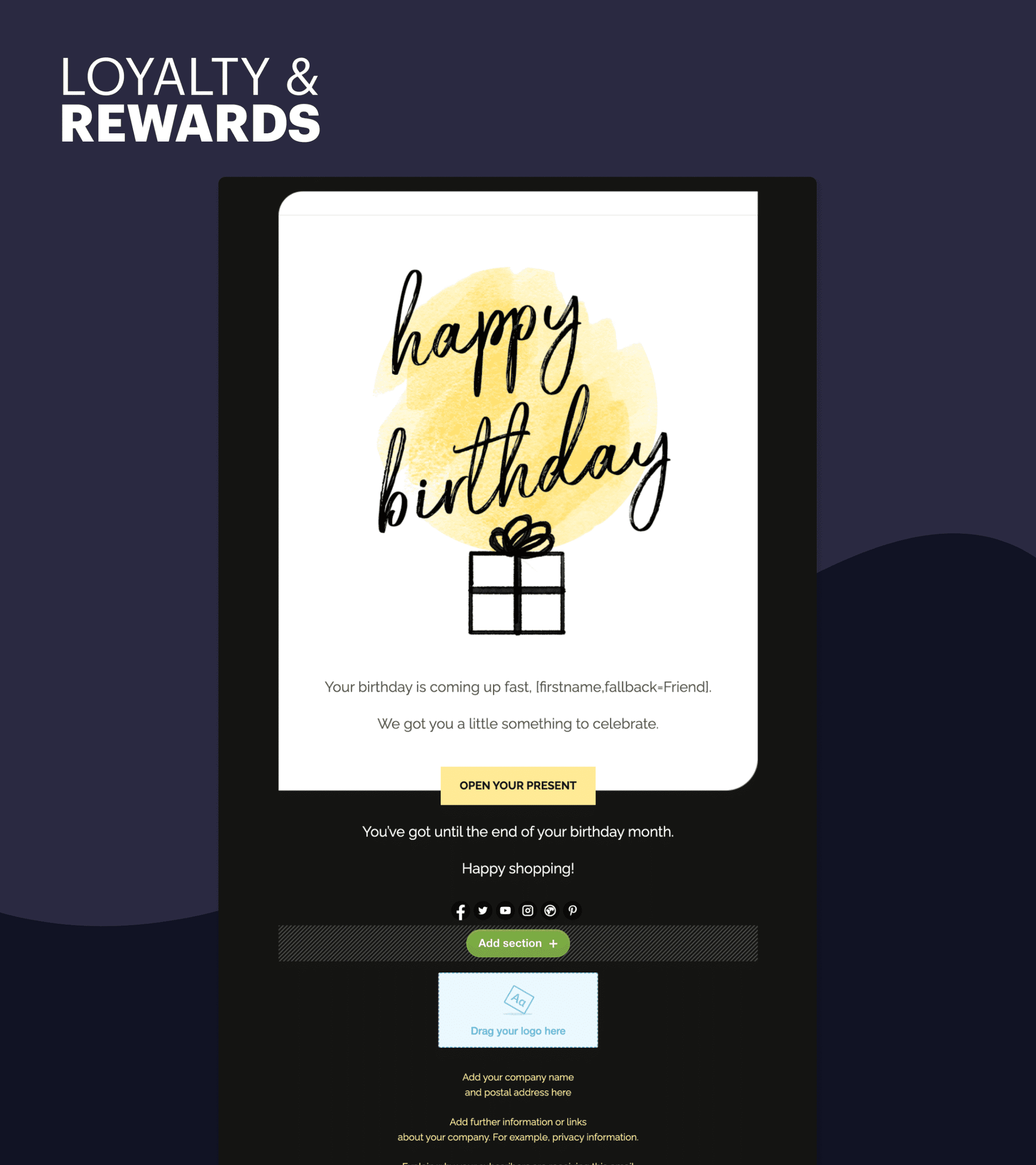
Retention is often more profitable than acquisition. Loyalty and rewards emails are designed to recognize repeat customers, encourage continued engagement, and strengthen brand relationships.
Why Loyalty Emails Are Important
Customers who feel appreciated are more likely to:
-
Make repeat purchases
-
Spend more per transaction
-
Refer others
-
Stay subscribed longer
Loyalty emails reinforce the idea that subscribers are valued insiders — not just transactions.
Examples of Loyalty & Reward Emails
-
Points balance updates
-
Exclusive member discounts
-
VIP early access to new products
-
Birthday or anniversary rewards
-
Referral program invitations
-
Tier upgrade notifications
How to Make Loyalty Emails Effective
-
Personalize the experience: Mention the customer’s name, points, or purchase history.
-
Create exclusivity: Use language like “Members only” or “VIP access.”
-
Celebrate milestones: Reward first purchases, yearly anniversaries, or spending thresholds.
-
Automate triggers: Send rewards automatically when customers hit certain milestones.
-
Make redemption simple: Clear instructions increase reward usage.
With rising acquisition costs in digital marketing, loyalty emails are a powerful way to increase lifetime customer value while strengthening brand trust.
5. Newsletters & Announcements
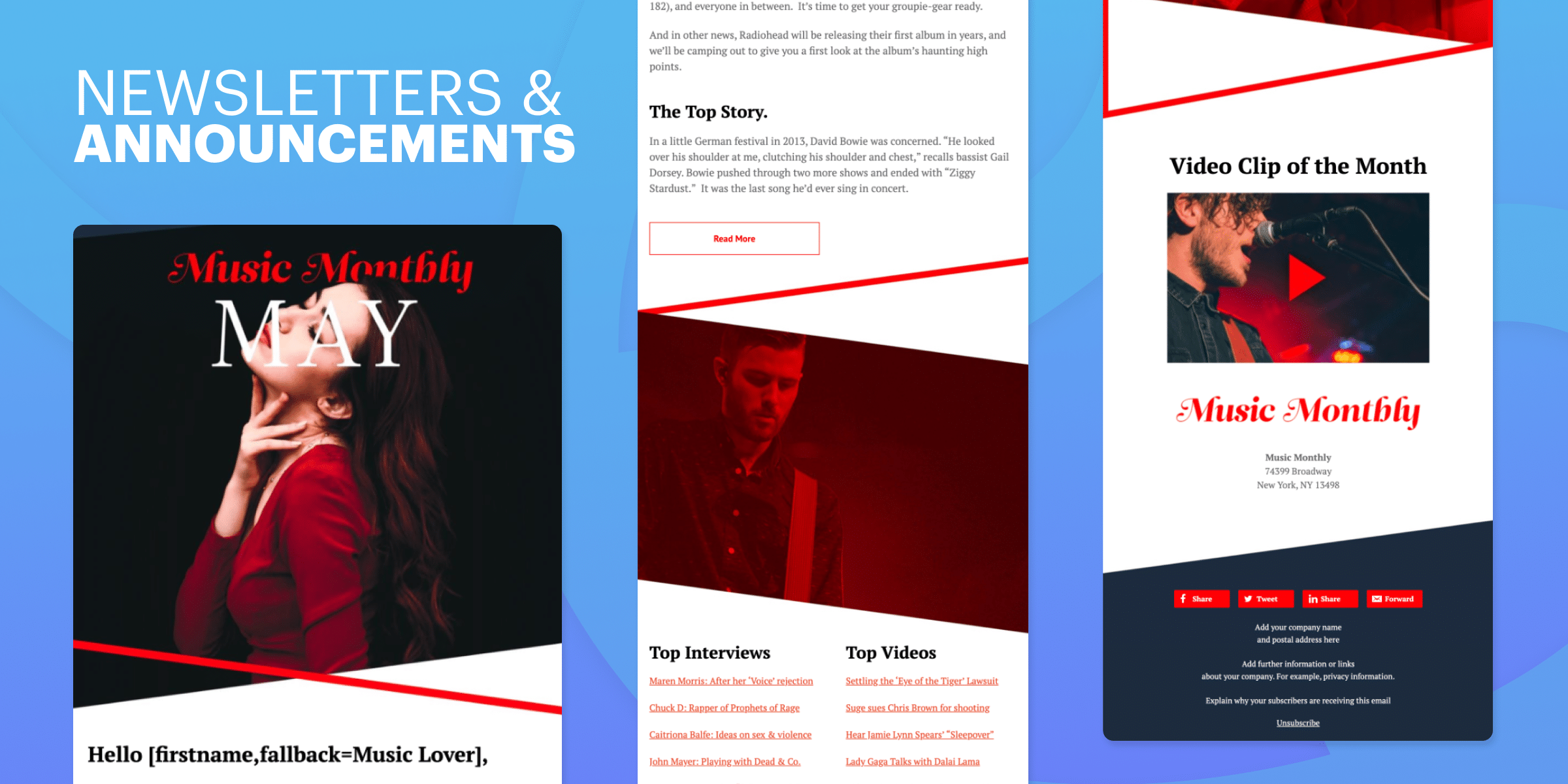
Newsletters are one of the most versatile types of email content. They provide a consistent way to stay connected with your audience while sharing updates, insights, and company news.
What is an Email Newsletter?
An email newsletter is a recurring email sent weekly, biweekly, or monthly that includes curated content, updates, and valuable information for subscribers.
Unlike purely promotional emails, newsletters focus on ongoing engagement and relationship building.
What to Include in a Newsletter
-
Recent blog posts
-
Product updates
-
Industry news
-
Upcoming events
-
Company milestones
-
Curated tips or tools
-
Community highlights
Announcements You Can Send
-
New product launches
-
Feature updates
-
Rebranding news
-
Business expansions
-
Partnerships
-
Upcoming sales or events
Best Practices for Newsletters
-
Stick to a consistent schedule: Predictability builds anticipation.
-
Keep a clean design: Avoid clutter and focus on readability.
-
Balance content types: Mix education, updates, and light promotions.
-
Use compelling subject lines: Drive opens without being clickbait.
-
Monitor performance metrics: Open rates, click-through rates, and unsubscribes reveal audience interest.
In today’s crowded inbox environment, newsletters succeed when they are informative, concise, and genuinely helpful. When done right, they become something subscribers look forward to — not something they ignore.
6. Behavioral-Based Messaging
Behavioral-based messaging refers to emails that are automatically triggered based on a subscriber’s actions, preferences, or interactions with your brand. Instead of sending the same campaign to everyone, these emails respond to real-time behavior — making them highly relevant and significantly more effective.
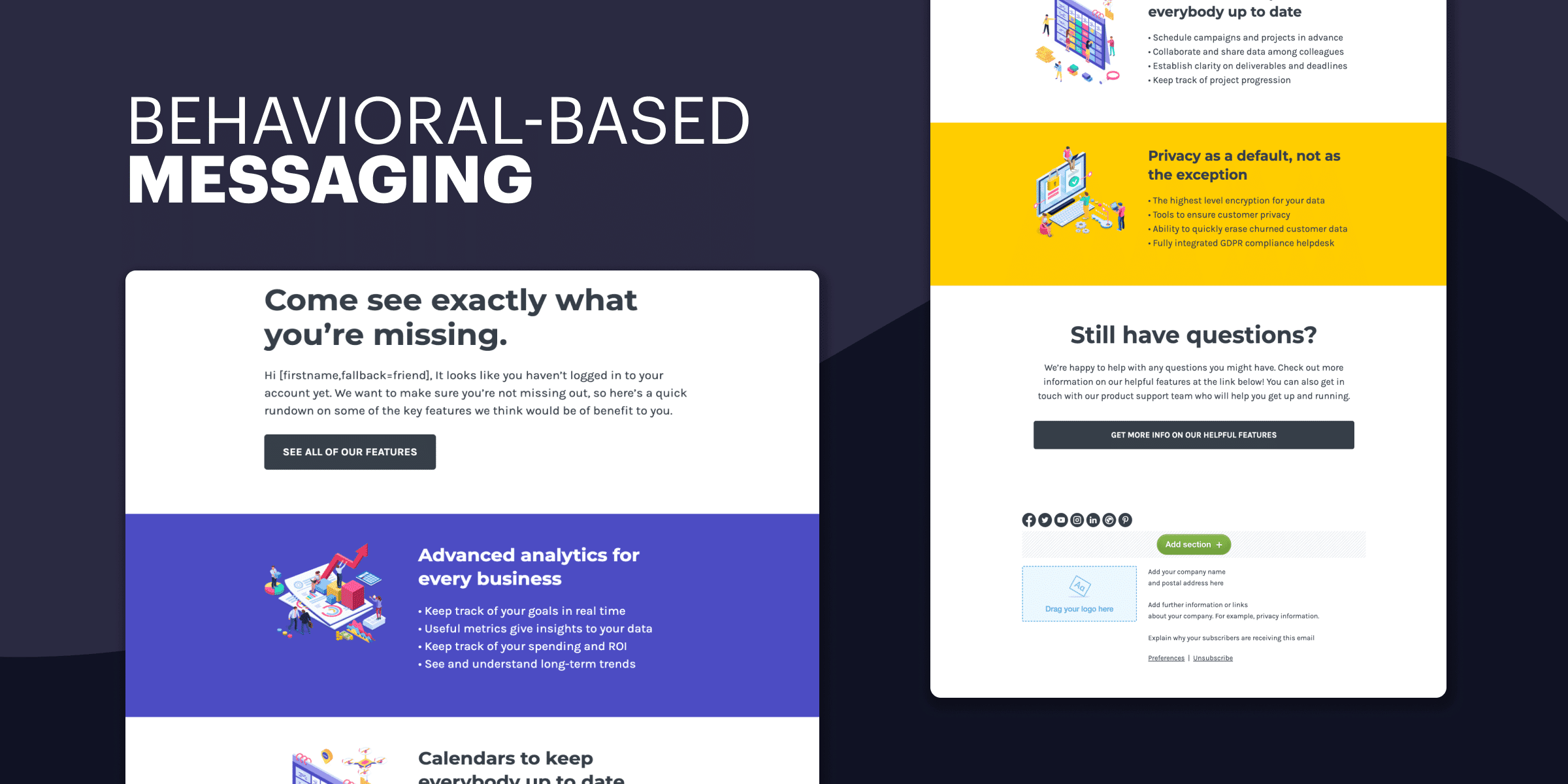
In 2026, behavioral email automation is one of the most powerful drivers of engagement and revenue because it delivers the right message at the right time.
Why Behavioral Emails Work
These emails perform well because they are:
-
Timely – Sent immediately after a specific action
-
Personalized – Based on individual activity
-
Contextual – Relevant to what the user just did
-
High-intent – Triggered by demonstrated interest
Subscribers are far more likely to open and click when the message directly relates to something they’ve already shown interest in.
Common Types of Behavioral Emails
1. Abandoned Cart Emails
Sent when a customer adds items to their cart but doesn’t complete the purchase. These emails often include:
-
Product images
-
Reminder messaging
-
Social proof
-
Limited-time discounts
-
Clear checkout CTA
Abandoned cart emails consistently deliver some of the highest conversion rates in ecommerce email marketing.
2. Browse Abandonment Emails
Triggered when a subscriber views a product or service page but doesn’t take action. These emails typically:
-
Highlight the viewed product
-
Offer related recommendations
-
Provide helpful information to reduce hesitation
3. Post-Purchase Emails
Sent after a customer completes a transaction. These can include:
-
Order confirmations
-
Shipping updates
-
Product care instructions
-
Cross-sell recommendations
-
Requests for reviews
These emails reinforce trust and open opportunities for additional sales.
4. Re-Engagement Campaigns
Designed for inactive subscribers who haven’t opened emails in a while. These emails may:
-
Offer exclusive incentives
-
Ask if they want to remain subscribed
-
Highlight new updates or features
5. Milestone & Anniversary Emails
Triggered by key dates such as:
-
Signup anniversary
-
Customer birthday
-
One-year purchase milestone
These build emotional connection and strengthen loyalty.
Best Practices for Behavioral Messaging
-
Segment deeply: Use website behavior, purchase history, and email engagement data.
-
Automate intelligently: Use marketing automation platforms to trigger emails instantly.
-
Keep the message focused: Address one specific action.
-
Test timing: Sometimes a 1-hour delay works better than 24 hours.
-
Monitor performance: Track conversions, not just opens.
Behavioral emails allow brands to move beyond batch-and-blast campaigns and create a personalized customer journey that feels tailored and relevant.
7. Testimonials & Reviews
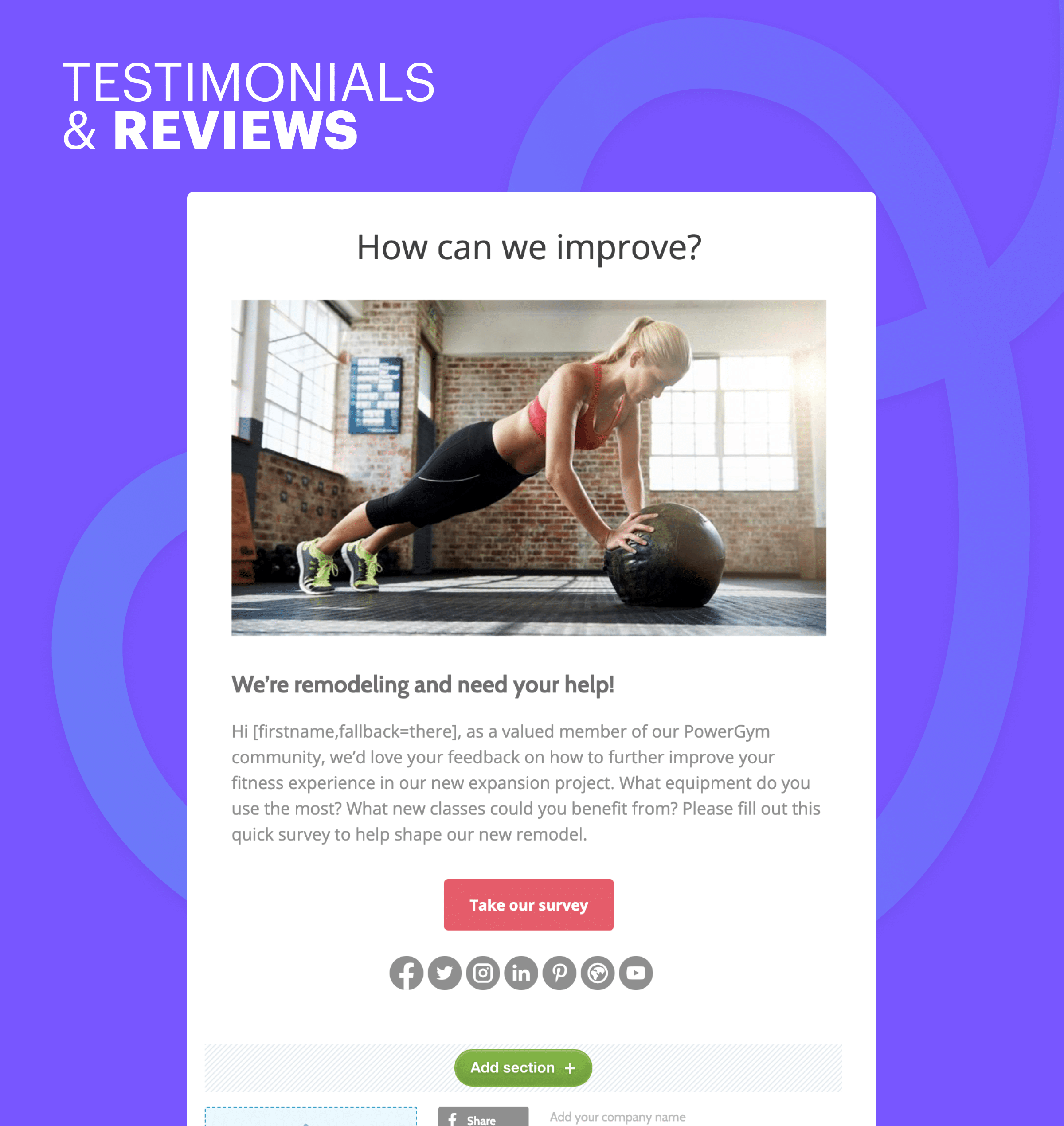
Testimonials and review emails use social proof to build credibility and encourage purchasing decisions. In today’s digital landscape, consumers rely heavily on peer feedback before making a purchase — and email is a powerful channel to showcase that trust.
Why Social Proof Matters
Modern buyers trust other customers more than marketing messages. Featuring real feedback:
-
Reduces purchase anxiety
-
Builds credibility
-
Validates product quality
-
Increases conversion rates
-
Strengthens brand reputation
When subscribers see that others have had positive experiences, they’re more confident in taking the next step.
Types of Testimonial & Review Emails
1. Customer Success Stories
Share in-depth stories showing how a customer achieved results using your product or service. These work particularly well for:
-
SaaS companies
-
Service providers
-
B2B brands
Include metrics, quotes, and clear outcomes when possible.
2. Product Review Highlights
Feature short customer reviews directly in the email. This can include:
-
Star ratings
-
User photos
-
Short testimonial quotes
-
“Top-rated product” badges
3. User-Generated Content (UGC)
Encourage customers to share:
-
Photos
-
Videos
-
Social media mentions
Including real visuals increases authenticity.
4. Review Request Emails
After purchase, send automated emails asking customers to leave feedback. Timing is important — typically a few days after delivery or product use.
Best Practices for Using Testimonials
-
Use real names (with permission) for credibility.
-
Include photos where possible.
-
Highlight specific benefits rather than generic praise.
-
Add a CTA like “See Why Customers Love This” or “Shop Top-Rated Products.”
-
Rotate testimonials regularly to keep content fresh.
When strategically integrated into email campaigns, testimonials reduce friction in the buyer journey and can significantly improve conversion rates.
8. Surveys and Net Promoter Feedback
Survey emails are designed to gather feedback directly from your audience. They help businesses understand customer satisfaction, identify improvement areas, and make data-driven decisions.
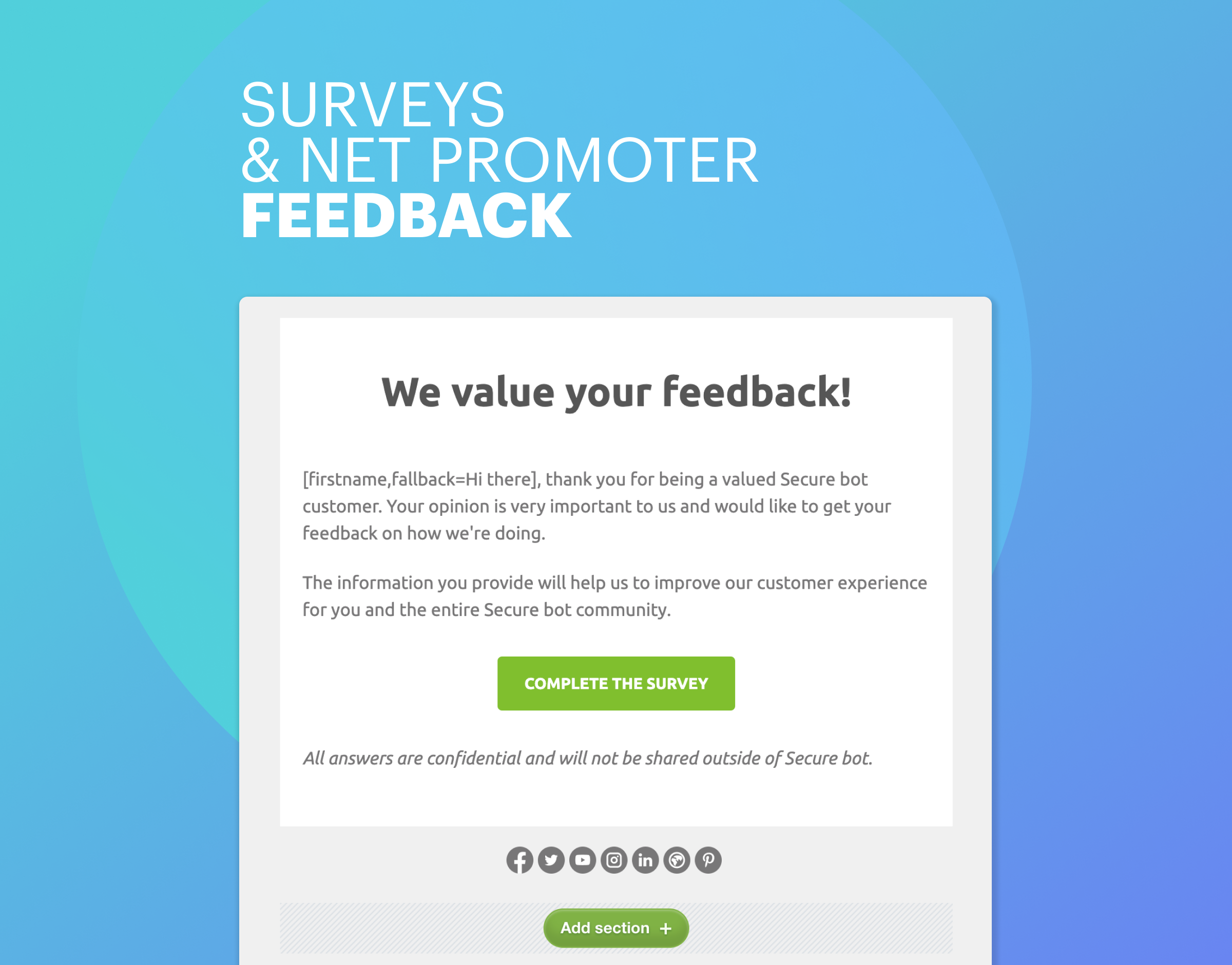
One of the most widely used feedback methods is the Net Promoter Score (NPS) — a system that measures customer loyalty by asking how likely someone is to recommend your brand to others.
Why Feedback Emails Are Essential
Customer feedback emails:
-
Provide insights into satisfaction levels
-
Identify product or service issues
-
Reveal opportunities for improvement
-
Strengthen customer relationships
-
Show that you value customer opinions
Brands that actively listen to customers often experience higher retention rates.
Types of Survey Emails
1. Post-Purchase Surveys
Sent after a transaction to evaluate:
-
Checkout experience
-
Delivery satisfaction
-
Product quality
2. NPS Emails
Ask a simple question:
“On a scale of 0–10, how likely are you to recommend us?”
Customers are categorized into:
-
Promoters (9–10): Loyal enthusiasts
-
Passives (7–8): Satisfied but unenthusiastic
-
Detractors (0–6): Unhappy customers
This scoring system provides a measurable way to track customer loyalty over time.
3. Product Feedback Surveys
Used to improve features, services, or content.
4. Churn or Exit Surveys
Sent when someone unsubscribes or cancels a subscription to understand why.
Best Practices for Survey Emails
-
Keep surveys short and easy to complete.
-
Use single-question formats when possible.
-
Offer incentives (optional) like discounts or rewards.
-
Optimize for mobile.
-
Follow up on negative feedback quickly.
Collecting feedback is only valuable if action follows. Closing the loop — by responding to feedback and implementing improvements — builds trust and demonstrates accountability.
Keep Your Content Fresh and Exciting!
Sending the same type of email repeatedly can lead to subscriber fatigue, lower engagement rates, and increased unsubscribes. To maintain strong performance in 2026’s competitive inbox environment, your email strategy must stay dynamic, relevant, and audience-focused.
Refreshing your content doesn’t mean reinventing your strategy every month — it means continuously optimizing based on data, trends, and customer behavior.
Rotate Your Email Types
Balance promotional emails with educational content, loyalty rewards, testimonials, and behavioral messages. A healthy mix keeps your audience engaged and prevents your brand from feeling overly sales-driven.
For example:
-
Week 1: Educational guide
-
Week 2: Promotion
-
Week 3: Newsletter update
-
Week 4: Customer story or testimonial
Variety builds anticipation and keeps subscribers curious about what’s coming next.
Use Data to Drive Content Decisions
Monitor key performance metrics such as:
-
Open rates
-
Click-through rates
-
Conversion rates
-
Unsubscribe rates
-
Revenue per email
If blog content gets more clicks than promotions, increase educational sends. If loyalty emails generate repeat purchases, expand that segment. Data should guide your content calendar.
Segment and Personalize
Generic emails are easier to ignore. Modern audiences expect relevance.
Segment based on:
-
Purchase history
-
Browsing behavior
-
Engagement activity
-
Geographic location
-
Customer lifecycle stage
Use personalization tokens and dynamic content blocks to tailor messaging for different segments. Even small personalization adjustments can significantly improve engagement.
Experiment with New Formats
Keep your emails visually and structurally interesting by testing:
-
Interactive elements (polls, GIFs, countdown timers)
-
Short-form storytelling
-
Video thumbnails
-
Product carousels
-
Minimalist design layouts
A/B testing subject lines, CTAs, layouts, and sending times helps identify what resonates most with your audience.
Stay Relevant to Trends and Seasons
Align campaigns with:
-
Seasonal events
-
Industry trends
-
Customer milestones
-
Product launches
Timely content feels more engaging and increases urgency. Subscribers are more likely to act when messaging connects with current interests or events.
Clean and Maintain Your Email List
Engagement drops when you consistently email inactive subscribers. Regularly:
-
Run re-engagement campaigns
-
Remove inactive contacts
-
Update preferences
A healthy list improves deliverability and keeps your engagement metrics strong.
Fresh, strategic email content ensures your audience continues to see value in staying subscribed. When your emails are helpful, timely, and engaging, your subscribers won’t just open them — they’ll look forward to them.
Read More: Email Marketing Benchmarks By Industry, Region & Day [2026 Update]