
Choosing the right email sending API is essential for developers and businesses that rely on reliable email delivery, automation, and scalability. Whether you’re sending transactional emails, marketing campaigns, or large-scale notifications, the right platform can significantly improve performance and deliverability.
In this comprehensive guide, we compare the best email API services in 2026, including both free and paid solutions. You’ll discover the top email API providers along with their key features, pricing models, advantages, and limitations to help you make an informed decision.
In this article, we’ll cover:
- An overview of modern email API services
- A comparison of the best transactional email APIs
- Key features and capabilities of each provider
- Pros and cons to consider before choosing a service
- Pricing structures for developers, startups, and enterprises
- Common use cases such as bulk email, email automation, and SMTP integrations
We’ll also explore how integrating the right email API can improve deliverability, streamline email automation, and strengthen your marketing infrastructure.
By the end of this guide, you’ll be able to choose the best email API for your application, website, or business in 2026.
The Best Email API Services at a Glance
Below is a quick summary of the best email API services available in 2026, highlighting the key players in the email API landscape. These services cater to varying needs, from sending transactional emails to facilitating marketing campaigns.
| Email API Provider | Type | Pricing | Best For |
|---|---|---|---|
| SendGrid | Transactional | Free tier | High-volume sending |
| Mailgun | Transactional | Pay-as-you-go | Developers |
| Amazon SES | SMTP/API | Low cost | Scalable solutions |
| Postmark | Transactional | Competitive | Fast delivery |
| MailerSend | Transactional | Free tier | Developers |
| SMTP.com | SMTP/API | Free trial | Reliable delivery |
| Brevo | Marketing + API | Free tier | Marketing automation |
| SparkPost | Transactional | Free tier | Enterprise sending |
| Elastic Email | Bulk email | Pay-as-you-go | Budget sending |
| Zoho Mail API | Transactional | Free plan | Secure integrations |
Each of these email API services has distinct features and pricing models, ensuring that you’ll find an option that suits your specific use case. For a deeper insight into integrating email APIs effectively, consider exploring email deliverability strategies.
What is an Email API?
An email API (Application Programming Interface) is a powerful tool that enables applications to send, receive, and manage emails programmatically. By utilizing an email API, developers can integrate email communication directly into their applications without extensive coding. This functionality is essential for businesses seeking to automate their email processes, whether for transactional emails, marketing campaigns, or notifications.
Email APIs serve various purposes, including sending bulk emails, managing subscriptions, and ensuring email delivery through reliable protocols. With a seamless connection to email servers, these services improve deliverability rates, making them vital for businesses that rely on efficient communication.
For an overview of the benefits of email automation, you may refer to this resource. Additionally, understanding transactional email API comparisons is crucial for selecting the most suitable API for your specific needs.
Our Methodology: How We Tested
To evaluate the best email API services in 2026, we adopted a comprehensive testing methodology. Our approach involved analyzing each provider based on several critical factors including performance, features, pricing, and usability for developers. We conducted in-depth hands-on testing, utilizing each API in real-world scenarios to assess reliability and speed in email delivery, alongside user experience.
We also evaluated the email sending API capabilities by examining integration ease, documentation quality, and support services offered. Each service provider was assessed on scalability to determine how well they handle varying email volumes, which is crucial for businesses that anticipate growth.
Furthermore, we conducted a competitive analysis of transactional email API offerings, factoring in customer reviews and expert opinions. This helped us highlight the strengths and weaknesses of each API platform. For additional insights into securing reliable deliveries, readers can explore our guide on email marketing benefits. The combination of these rigorous evaluations ensures that our comparisons are not only current but also relevant for developers looking to implement effective email solutions.
A Closer Look at the Best Email APIs for 2026
As we explore the best email API services available in 2026, it’s important to highlight key players shaping the landscape. Services like SendGrid and Mailgun continue to excel in transactional email API capabilities, offering robust features for developers. For businesses focused on email marketing, platforms such as Brevo and Elastic Email provide strong automation and campaign management tools integrated with their email APIs.
Security is another critical aspect; many modern APIs boast strong encryption and authentication methods, ensuring data safety. Features like real-time tracking and analytics enhance user engagement, making these email API services invaluable. Additionally, scalability is a common theme; providers like Amazon SES support massive email volumes while maintaining performance.
Selecting the right API tailored to your needs can streamline operations significantly. For further guidance on implementation, consider reading about email marketing best practices to optimize your strategy.
Below are the top email API services for developers and businesses in 2026. Each provider offers different strengths including transactional email delivery, marketing automation, or scalable infrastructure.
1. SendGrid
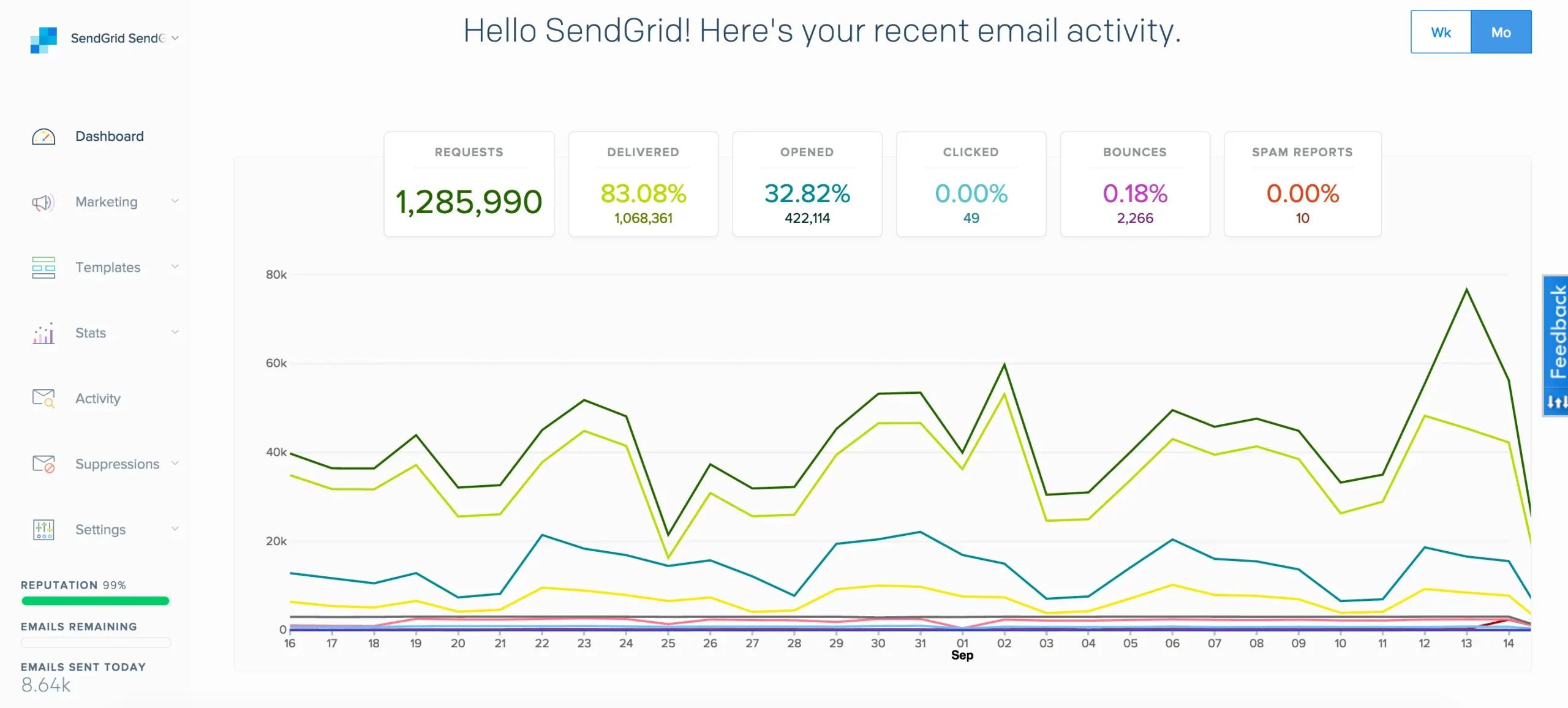
SendGrid is a leading name when it comes to email API services, providing developers with a powerful and flexible solution for email communication. As one of the best email APIs available, it caters to all needs, whether for transactional emails or bulk campaigns. SendGrid’s easy-to-use platform comes with comprehensive documentation, making integration straightforward for both novice and experienced developers.
Key Features:
- Robust transactional email API with high deliverability rates.
- Real-time analytics for tracking email performance.
- Scalable infrastructure that grows with your business.
- User-friendly dashboard for managing email campaigns.
- Strong security measures, including TLS encryption.
Pros:
- Highly reliable email delivery.
- Comprehensive customer support options.
- Flexible pricing plans catering to different needs.
Cons:
- Some users find the pricing slightly on the higher side for advanced features.
Pricing: SendGrid offers a free tier that allows for a limited number of emails per month, with scalable paid plans starting at competitive rates.
Best For: Developers and businesses seeking a reliable, scalable email API with robust transactional email capabilities.
2. Mailgun
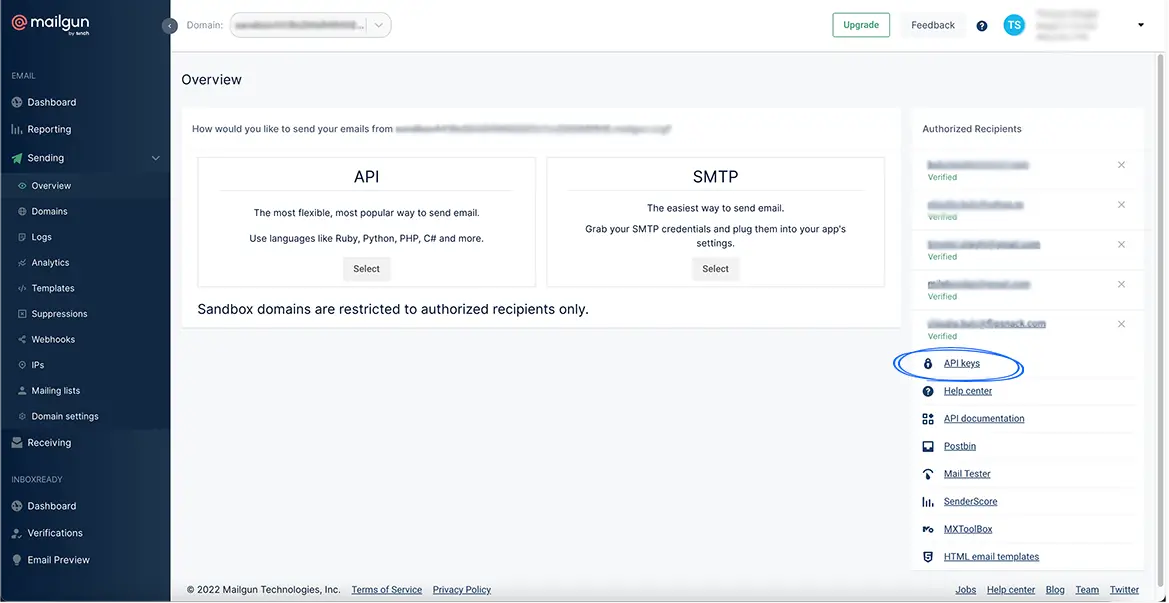
Mailgun stands out as one of the best email APIs for 2026, particularly for developers looking for a robust email sending API. Its focus on transactional emails, combined with features designed for seamless integration, makes it a strong contender in the email API landscape. Mailgun provides extensive documentation and a user-friendly interface, ensuring developers can implement email solutions effectively.
Key Features:
- Advanced analytics tools for monitoring email performance.
- Powerful and scalable infrastructure, ideal for high-volume email sending.
- Flexible API options, including REST and SMTP email API capabilities.
- Real-time email tracking and detailed reporting functionalities.
- Strong compliance measures and security features, including GDPR support.
Pros:
- Scalability to handle large email campaigns effortlessly.
- Rich features for email validation and deliverability optimization.
- Flexible pricing plans including a pay-as-you-go option.
Cons:
- The learning curve may be steep for beginners unfamiliar with API integrations.
Pricing: Mailgun offers a free tier with limited email sends, and pricing scales based on usage, making it suitable for various business needs.
Best For: Developers and businesses requiring a secure and scalable email API service for both transactional and bulk emails. For insights on related email practices, check out this guide on email deliverability.
3. Amazon SES
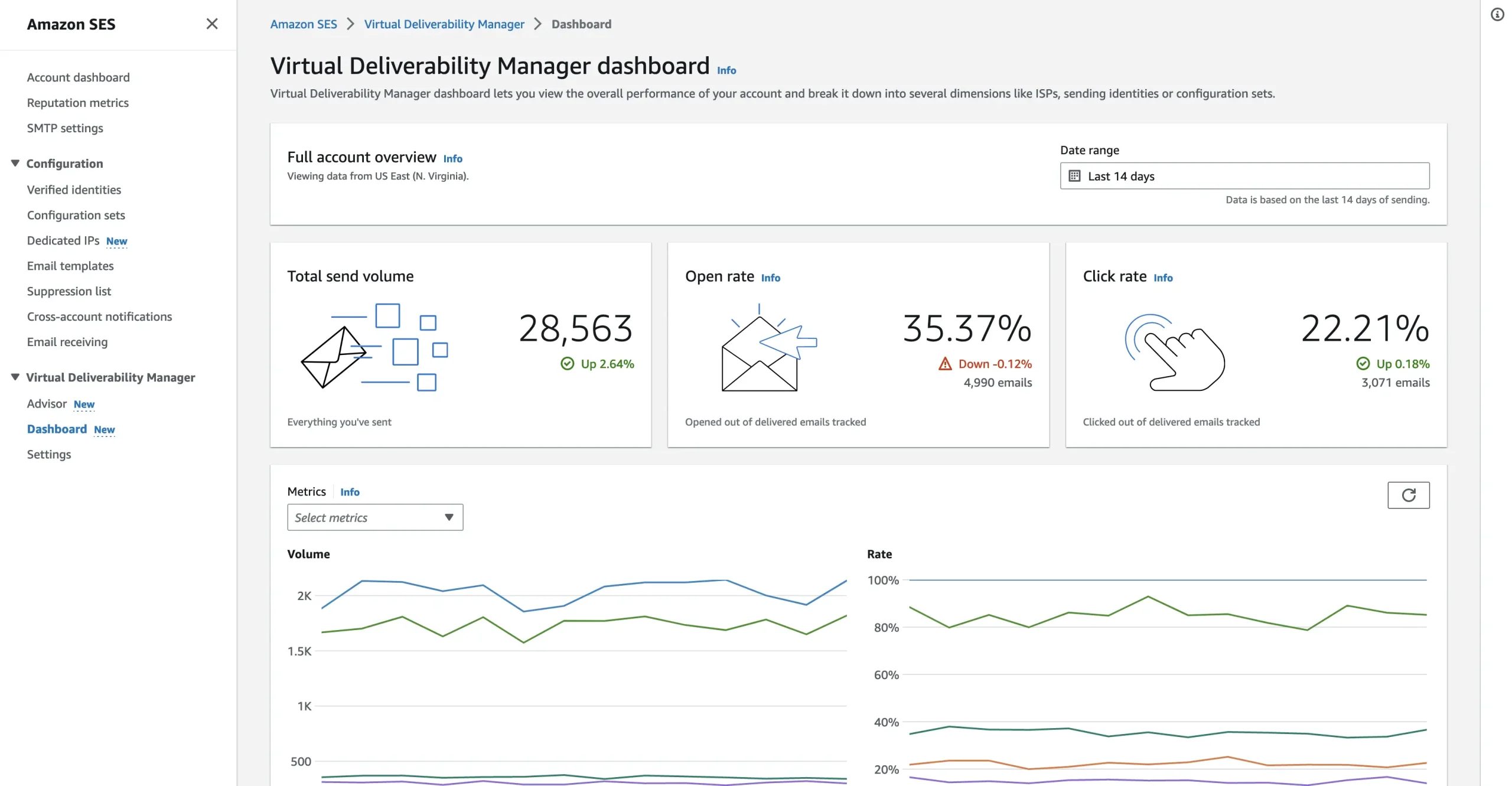
Amazon SES (Simple Email Service) is a powerful email sending API provided by Amazon Web Services, making it an ideal choice for developers looking for a cost-effective solution in 2026. Known for its scalability and reliability, Amazon SES excels in handling both transactional and marketing emails seamlessly, which elevates it to one of the best email APIs available today.
Key Features:
- Pay-as-you-go pricing model, allowing you to control costs.
- High deliverability rates with robust anti-spam features.
- Integration with other AWS services for comprehensive emailing solutions.
- Support for both SMTP and API-based integrations.
- Enhanced security features, including TLS encryption.
Pros:
- Cost-effective solution, especially for large volumes of emails.
- Excellent scalability options to match business growth.
- Comprehensive documentation and support from the AWS community.
Cons:
- User interface can be complex for those unfamiliar with AWS.
Pricing: Amazon SES offers a generous free tier, allowing users to send a limited number of emails each month, with additional charges for exceeding this limit.
Best For: Businesses and developers seeking an affordable, scalable email API that integrates well within the AWS ecosystem. To learn more about email best practices, visit this resource on email marketing best practices.
4. Postmark
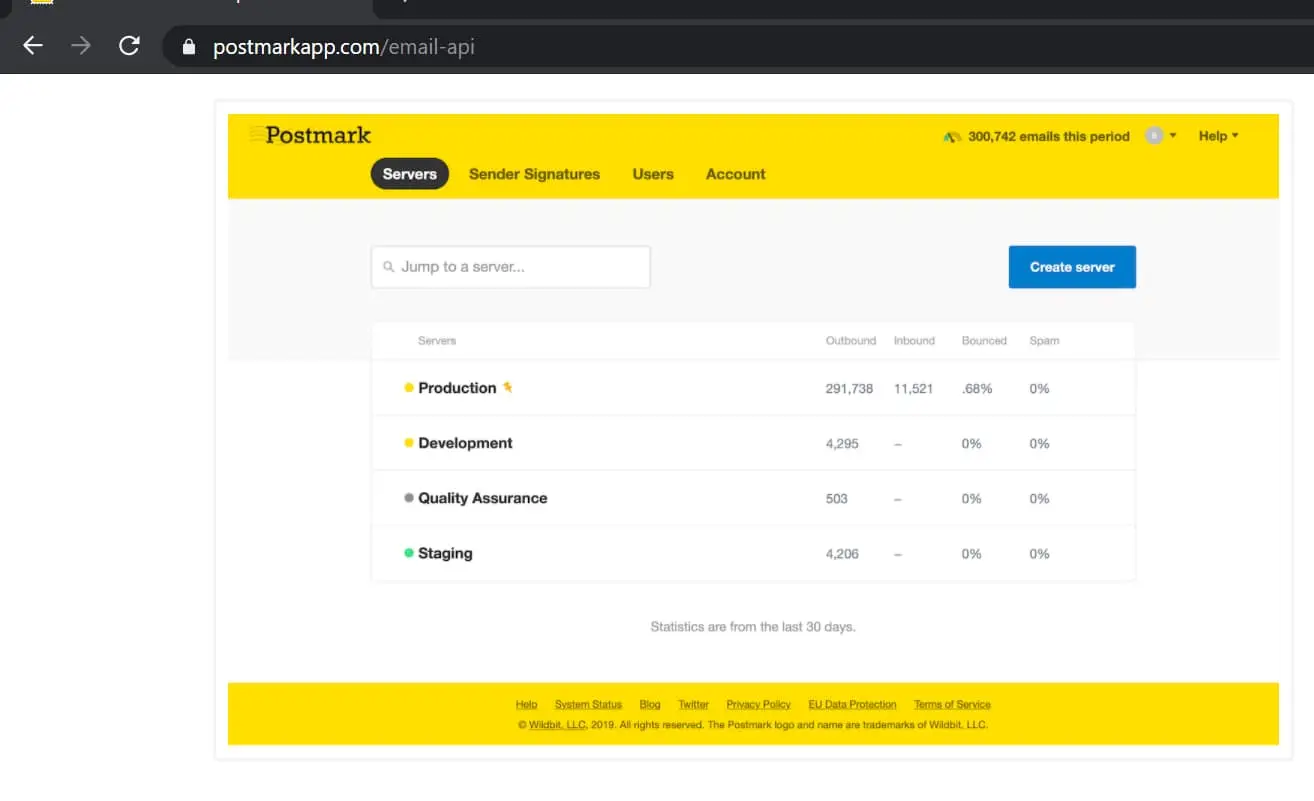
Postmark stands out as a leading email API service in 2026, primarily designed for transactional emails. Offering exceptional deliverability rates, Postmark is geared towards developers and businesses that prioritize fast and reliable email communication.
Key Features:
- High-speed delivery for transactional emails, ensuring user engagement.
- Intuitive dashboard for easy monitoring of email performance.
- Comprehensive analytics, including open and click tracking.
- Dedicated IP addresses for improved sender reputation.
- Robust security measures, supporting TLS encryption.
Pros:
- Outstanding deliverability specifically for time-sensitive emails.
- Simple integration process suitable for developers.
- Transparent pricing with a pay-as-you-go model for scalability.
Cons:
- Limited marketing automation features compared to some competitors.
Pricing: Postmark features a transparent pricing model starting with a free tier for initial users, allowing businesses to scale as their email needs grow.
Best For: Companies focused on reliable transactional email delivery without the complexities of marketing automation. For further insights into email automation, visit this detailed guide on email automation.
5. MailerSend
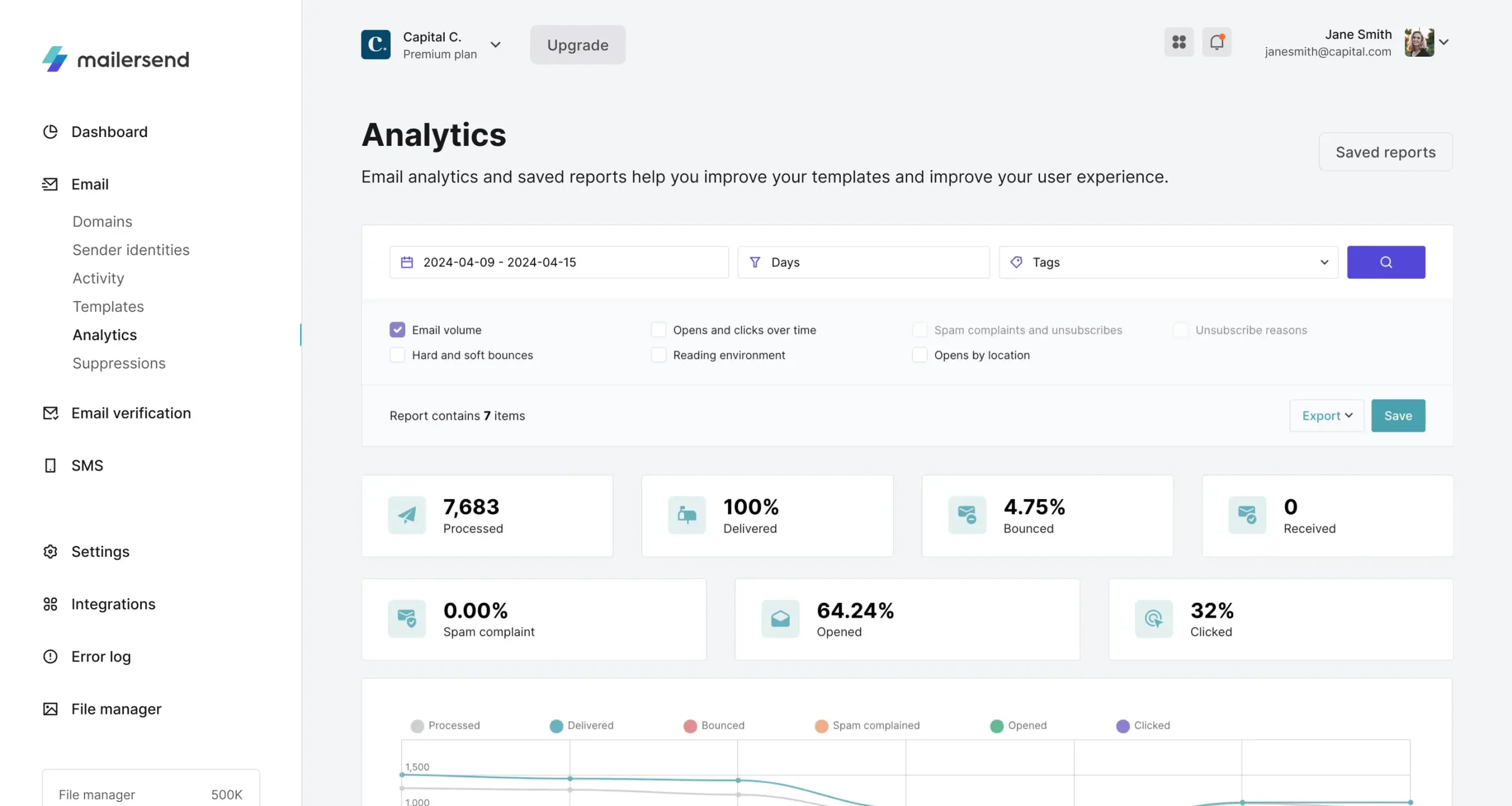
MailerSend has emerged as one of the best email API options for 2026, tailored for developers and businesses alike. Its primary focus is on seamless integration and effective email delivery, providing a versatile platform for transactional and marketing emails.
Key Features:
- Drag-and-drop email builder for easy design customization.
- Advanced analytics with real-time performance tracking.
- Support for both SMTP and RESTful API usage.
- Template management for consistent branding across campaigns.
- Webhook support for immediate notifications on delivery statuses.
Pros:
- Intuitive user interface makes setup and management simple.
- Highly customizable templates and automation tools.
- Strong customer support with extensive documentation.
Cons:
- Pricing can be a concern for larger email volumes compared to competitors.
Pricing: MailerSend offers a free tier to help new users get started, with affordable pay-as-you-go options for scaling up based on usage.
Best For: Developers and marketing teams looking for a flexible solution that balances functionality and ease of use. For tips on effective email campaigns, check out this guide on email marketing best practices.
6. SMTP.com
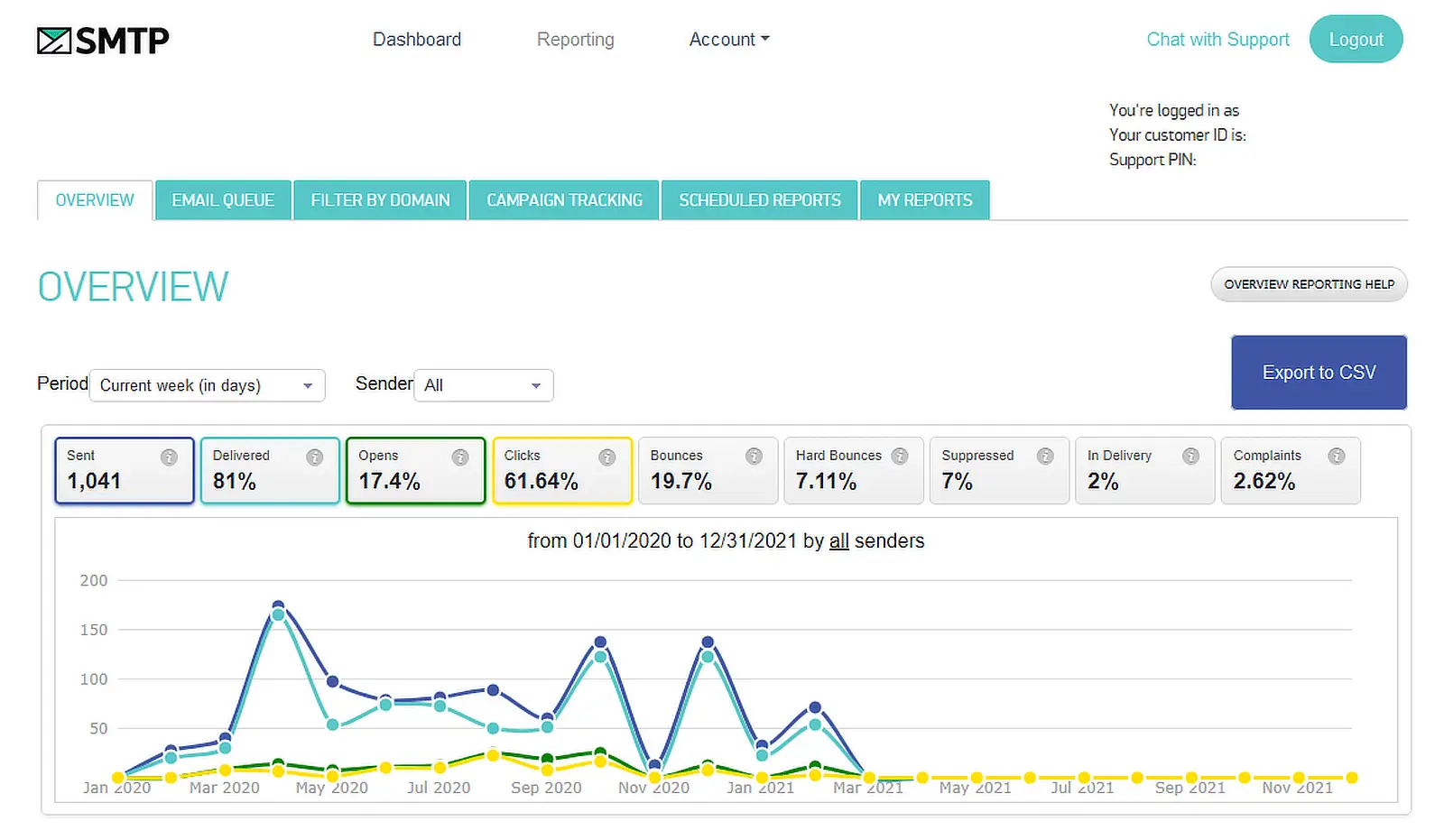
SMTP.com is recognized as one of the leading email API services in 2026, designed to provide robust email delivery solutions for businesses of all sizes. With a strong reputation for reliability, SMTP.com focuses on transactional emails while also offering tools for email marketing campaigns.
Key Features:
- Reliable email delivery ensuring high open rates.
- Advanced analytics for tracking email performance and engagement.
- Scalable infrastructure to support varying email volumes.
- Customizable templates and automation features for marketing needs.
- Comprehensive API documentation for seamless integration.
Pros:
- Excellent deliverability rates enhance user engagement.
- Flexible pricing models cater to different business needs.
- Effective customer support to assist with technical queries.
Cons:
- User interface may feel less modern compared to newer platforms.
Pricing: SMTP.com provides a free trial to help potential users explore their features, with competitive pricing that scales with usage. This approach makes it one of the best email API providers for both start-ups and established enterprises.
Best For: Companies looking for reliable transactional email solutions and those interested in integrating email marketing features. For insights on improving email deliverability, check this guide on email deliverability.
7. Brevo
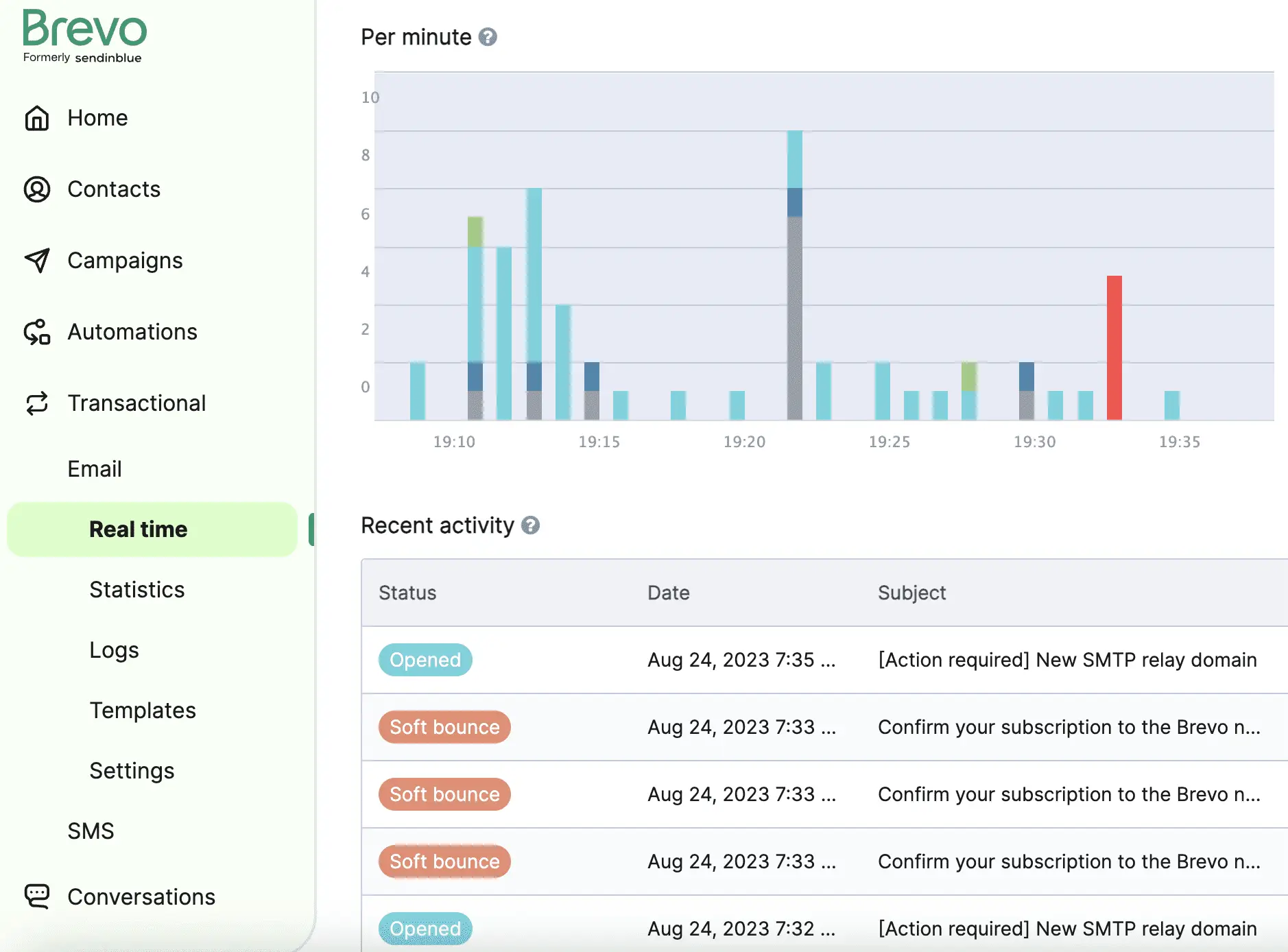
Brevo stands out among the best email API services in 2026, offering a versatile platform geared toward email marketing and transactional messages. Brevo’s user-friendly interface and automated features make it an excellent choice for developers seeking efficiency in their email campaigns.
Key Features:
- Comprehensive API documentation to support quick integration.
- Automation tools to streamline email workflows and campaigns.
- Real-time analytics for tracking performance and user engagement.
- Multiple deployment options, including SMTP and RESTful API.
- Flexible pricing plans catering to different business needs.
Pros:
- Highly responsive customer support with extensive resources.
- Robust automation capabilities reduce the workload on marketing teams.
- Affordable pricing options for startups and growing businesses.
Cons:
- Some users may find the initial setup complex due to advanced features.
Pricing: Brevo offers a free tier with essential features, alongside scalable paid plans that grow with your needs. This flexibility positions it among the best email API options for diverse users. For effective email automation examples, explore this article on email automation examples.
Best For: Marketing teams and developers wanting a user-friendly yet powerful email solution.
8. SparkPost
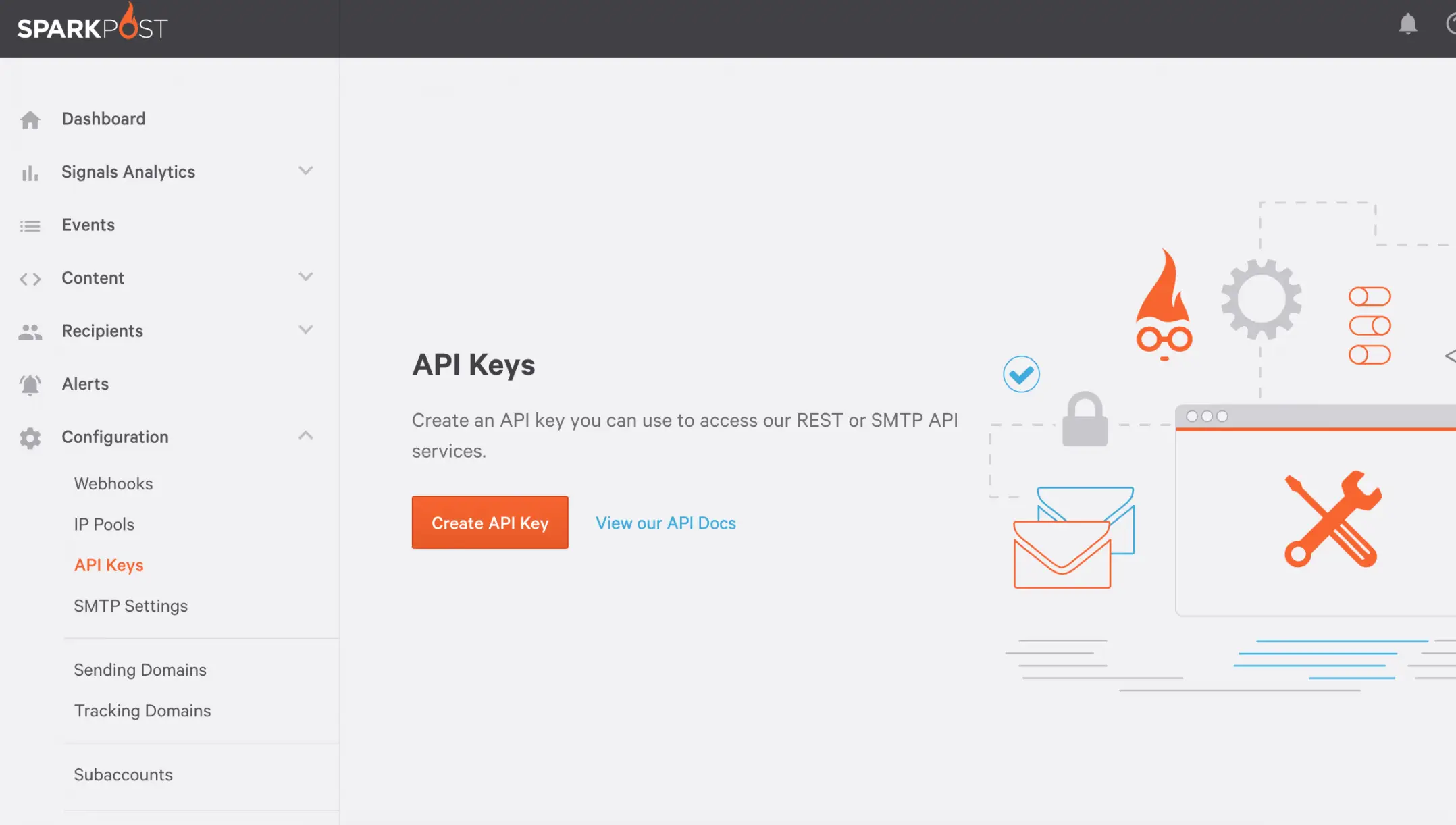
SparkPost is a powerful email API platform designed for businesses that require high-performance email delivery and advanced analytics. Known for its robust infrastructure and data-driven approach, SparkPost provides developers with reliable tools for sending transactional and bulk emails efficiently.
SparkPost focuses heavily on deliverability and performance monitoring, making it a strong choice for organizations that rely on email for critical communication and customer engagement.
Key Features:
- Advanced email delivery API built for high-volume email sending.
- Real-time analytics and performance monitoring tools.
- Powerful RESTful API and SMTP integration for flexible implementation.
- Detailed event tracking for opens, clicks, bounces, and engagement.
- Strong deliverability optimization with reputation monitoring tools.
Pros:
- Excellent analytics and reporting capabilities for email performance.
- Highly scalable infrastructure suitable for enterprise-level email sending.
- Developer-friendly API with extensive documentation.
Cons:
- Pricing and advanced features may be more suitable for larger businesses or enterprises.
Pricing:
SparkPost offers flexible pricing plans based on email volume, including a limited free tier for developers and startups. Paid plans scale depending on the number of emails sent and additional advanced features required.
Best For: Developers and businesses that need a high-performance email API with advanced analytics, deliverability insights, and scalable infrastructure for large email volumes.
9. Elastic Email
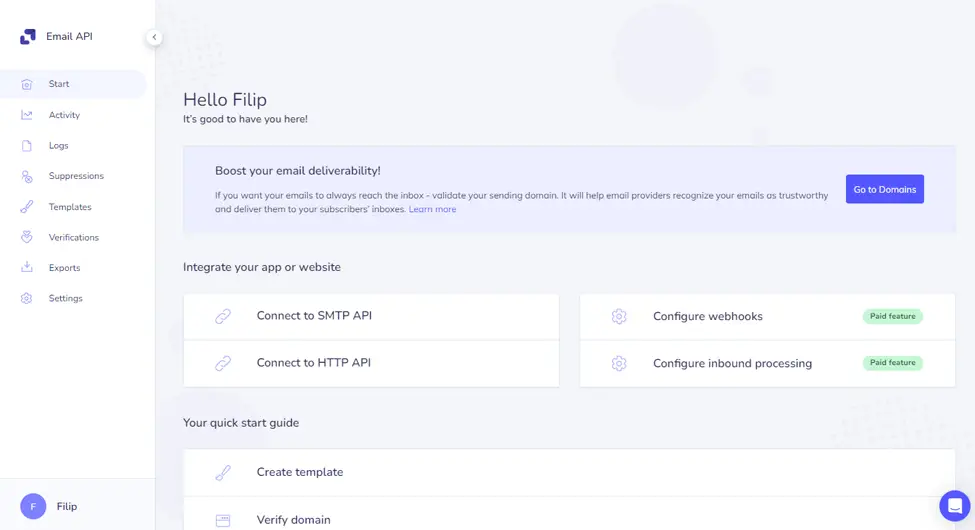
Elastic Email is a powerful and cost-effective email API service designed for businesses and developers who need scalable email delivery and marketing capabilities. Known for its affordability and flexible infrastructure, Elastic Email provides both transactional email API functionality and email marketing tools, making it a versatile option for various email communication needs.
Key Features:
- High-volume email delivery with a reliable SMTP and RESTful email API.
- Advanced email marketing tools including campaign creation and automation.
- Real-time analytics and reporting for monitoring email performance.
- Built-in email template editor for designing professional email campaigns.
- Powerful contact management and segmentation capabilities.
Pros:
- Very affordable pricing compared to many competitors.
- Scalable infrastructure suitable for both small and large businesses.
- Comprehensive API documentation for developers.
Cons:
- User interface may feel less modern compared to newer email platforms.
Pricing:
Elastic Email offers flexible pricing based on usage, including a free plan for limited sending and affordable pay-as-you-go options for higher email volumes. This makes it an excellent choice for businesses looking for a budget-friendly email API solution.
Best For:
Developers and businesses seeking a low-cost, scalable email API service for transactional emails, bulk email campaigns, and marketing automation.
10. Zoho Mail API
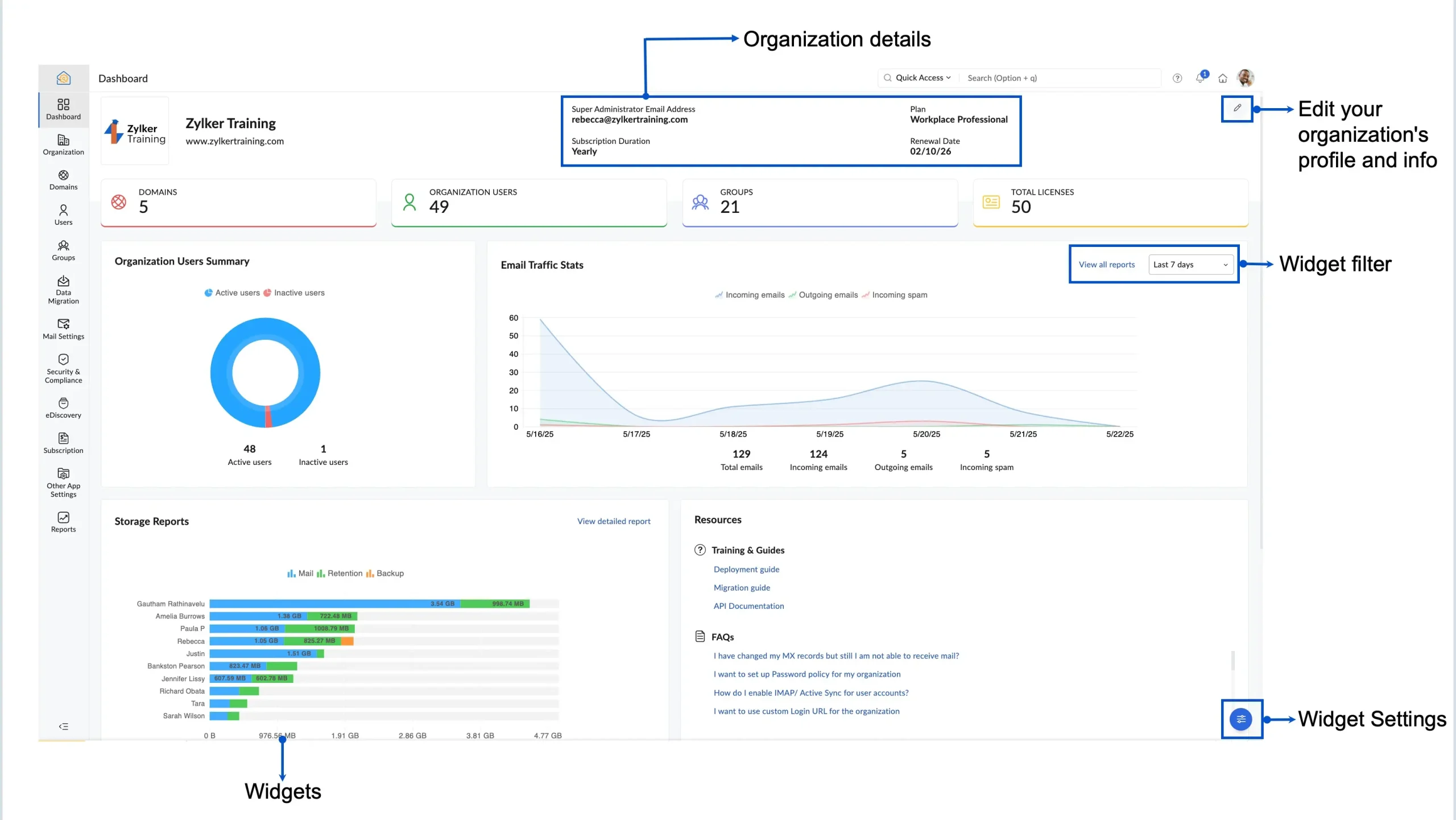
Zoho Mail API stands out as a reliable option among the best email APIs available in 2026, particularly favored by businesses needing a detailed email management solution. This API is optimal for transactional emails and integrates seamlessly with other Zoho products, making it a versatile choice for developers.
Key Features:
- Robust email delivery with a high deliverability rate.
- Comprehensive SMTP support for easy setup and integration.
- Detailed analytics providing insights into email performance.
- User-friendly REST API for smooth interaction with various platforms.
Pros:
- Strong security measures, enhancing user data protection.
- Affordable pricing tiers suited for various business needs.
- Excellent customer support readily available for developers.
Cons:
- Limited third-party integrations compared to some competitors.
Pricing: The Zoho Mail API offers a free plan with essential features and scalable paid options for advanced requirements, making it attractive for businesses seeking an email integration API. This API’s robust security and functionality cater well to email automation needs. Additionally, for those new to email automation, resources can be found in this guide on what email automation is.
Best For: Developers looking for a secure and user-friendly email API solution for transactional and automated email needs.
Key Features to Look for in an Email API Provider
When evaluating the email API services, several vital features should be considered to ensure you select the right provider. First, look for reliable email delivery APIs that guarantee high deliverability rates, as this directly impacts your communication effectiveness. Next, scalability is essential; the API should accommodate growing email needs without compromising performance.
Security is also crucial. A secure email API will protect your data and ensure compliance with regulations. Another important feature is comprehensive analytics, providing insights like open rates, click-through rates, and user engagement metrics to refine your strategy. Additionally, an intuitive dashboard can enhance usability for developers working with the transactional email API.
Integration capabilities are also a priority; the best email API providers should support both SMTP and RESTful services for versatile application development. Ensure you consider the availability of customer support, as prompt assistance can be invaluable when managing email campaigns. For more details on effective email marketing best practices, check out this resource to improve your email campaigns.
Lastly, evaluate pricing structures to find an affordable email API service that aligns with your budget while offering the features you need.
Feature Comparison: Email API Services
To help developers and businesses choose the right platform quickly, the table below compares the most important features of the best email API services available in 2026.
| Provider | Delivery Rate | Pricing | Key Features | Integration Options |
|---|---|---|---|---|
| SendGrid | 99% | Free tier available | Email analytics, scalable infrastructure | REST & SMTP |
| Mailgun | 96% | Pay-as-you-go | Powerful API, email validation | REST & SMTP |
| Amazon SES | 99% | Low-cost pay-as-you-go | Highly scalable, AWS integration | SMTP & API |
| Postmark | 99.9% | Starts at $10/month | Fast transactional delivery | REST |
| MailerSend | 98% | Free tier available | Email templates, analytics | REST & SMTP |
| SMTP.com | 98% | Free trial | High deliverability, SMTP relay | SMTP & API |
| Brevo | 97% | Free tier available | Marketing automation, segmentation | SMTP & API |
| SparkPost | 98% | Free tier available | Real-time analytics, deliverability tools | REST |
| Elastic Email | 97% | Pay-as-you-go | Bulk email delivery, automation | REST & SMTP |
| Zoho Mail API | 95% | Free & paid plans | Secure email integration | SMTP & REST |
These key features and comparisons are essential in selecting the Best email API that meets your technical and budgetary needs. By considering the delivery rates, pricing tiers, and integration flexibility listed here, you can make informed decisions on email API services. For more tips on optimizing your email engagement, visit this resource.
Pricing Comparison: What You’ll Actually Pay for Your Email API
When evaluating the pricing structures of the best email API services in 2026, it’s crucial to understand what you’ll actually pay. Most providers offer tiered plans, with free options available for low-volume users. For instance, services like SendGrid and Mailgun have free tiers that allow sending a limited number of emails monthly, appealing to developers and startups. Paid plans often range from $10 to $100 per month, depending on features such as the number of emails sent, additional analytics, or automation tools.
Companies like Amazon SES offer pay-as-you-go models, which can be highly economical as costs are based on actual usage. When selecting an API, consider not just the monthly fee but also potential costs for overages. Keeping these factors in mind helps in identifying the most affordable email API service that fits your specific needs.
How to Choose the Right Email API for Your Needs
Choosing the right email API for your needs involves several critical factors. Start by assessing your specific requirements. Are you looking for a transactional email API with high deliverability rates, or an email marketing API with robust automation features? Prioritize the functionalities you need, such as support for bulk email sending, secure integrations, and user-friendly documentation for developers.
Next, evaluate pricing models. Free tiers may be appealing for basic projects, but consider whether the paid plans provide adequate features and support for scaling your email communication. Additionally, review the performance metrics, such as delivery rates and speed of sending, to ensure that the email service can handle your volume without compromising quality.
Don’t overlook integration capabilities. A scalable email API should work seamlessly with your existing tools and platforms. Always check user feedback and expert reviews to gauge reliability and customer support. For detailed guidance on selecting the optimal email API, you can refer to this resource. With these considerations in mind, you’ll be equipped to choose an email API that aligns with your business objectives effectively.
Best Email API Tools by Use Case
When looking for the best email API tools tailored to specific use cases, consider the following categories:
- Transactional Email: Providers like SendGrid and Amazon SES excel in delivering high-priority transactional emails, ensuring reliable delivery.
- Email Marketing: Platforms such as Brevo and Elastic Email provide automation, campaign management, and bulk email capabilities, making them ideal for marketing campaigns and promotional messaging.
- Email Integration: For seamless integration with existing applications, consider APIs like Postmark, which offer simple REST endpoints and great documentation.
- Email Notification: Twilio SendGrid is especially noted for providing reliable email notification APIs that integrate smoothly into web applications.
Each service has its unique strengths, so evaluate your needs against these classifications to identify the best email API for your projects. Additionally, if you’re interested in understanding the benefits of email marketing, check out this useful resource.
Best for Developers
For developers seeking robust functionality, the best email API services provide extensive features and superior documentation. Services like SendGrid and Mailgun offer comprehensive APIs designed for scalability, making them ideal for applications requiring seamless email integration. Each service supports RESTful interfaces, ensuring efficient communication between your app and their system.
Key factors to consider include support for event-driven architectures and detailed analytics. For optimal performance, tools must handle bulk email sending, maintain high deliverability, and ensure security. Furthermore, resources such as email automation examples can guide developers in implementing effective email solutions based on best practices.
Best for Email Marketing
When it comes to email marketing, finding the best email API is essential for maximizing your campaign effectiveness. Services like Brevo and Elastic Email offer powerful email marketing APIs that streamline campaign management. With features such as customizable templates, audience segmentation, and robust analytics, these platforms cater to marketers’ needs.
Additionally, they facilitate integration with e-commerce platforms and CRM systems, ensuring seamless workflows. If you want to deepen your understanding of email marketing strategies, consider visiting this insightful resource. Ultimately, selecting the right email API can significantly enhance your marketing efforts and improve customer engagement.
Best for Transactional Emails
When sending transactional emails, it’s essential to choose the best email API that guarantees swift and reliable delivery. Providers like SendGrid and Amazon SES excel in this category, ensuring that important notifications, confirmations, and alerts reach users promptly. These APIs offer robust features, including real-time tracking and analytics, enabling businesses to monitor delivery success rates effectively. Additionally, they prioritize high deliverability and secure email transmission, critical for maintaining customer trust. For a broader understanding of email delivery dynamics, refer to this informative guide.
Email API FAQs
What is an Email API? An email API is a set of protocols that allows applications to send, receive, and manage email. It is particularly valuable for developers needing seamless email integration within their applications. The best email API services offer features that simplify transactional email delivery and email marketing campaigns.
- Are Email APIs Free? Many email API providers offer free tiers with limited usage options. However, for businesses with higher volume requirements, selecting a paid plan ensures access to enhanced features and better support.
- What is a Transactional Email API? This type of API focuses on sending automated emails triggered by specific actions, like confirmations or notifications. They are crucial for operational communication.
- How do I choose the right Email API? Evaluate factors such as deliverability rates, scalability, integration ease, and customer support to find the right solution for your needs.
For additional insights into effective email strategies, consider exploring this comprehensive guide.
What is an Email API used for?
An email API is used to integrate email capabilities into applications, enabling developers to manage email sending, receiving, and analytics seamlessly. It’s essential for automating communications, such as transactional emails, newsletters, or marketing campaigns. The best email API solutions provide scalability and security, ensuring reliable email delivery.
How does email delivery differ from email API?
Email delivery focuses on the process of ensuring emails reach recipients’ inboxes, whereas an email API allows developers to programmatically send, track, and manage these emails within their applications. Understanding this distinction is crucial for leveraging the best email API to enhance your email marketing efforts. Explore more about effective email communication through this guide on email deliverability.
What to consider when using a free email API?
When selecting a free email API, consider the limitations on sending volumes and features provided. Free tiers typically lack advanced functionality, which can hinder scalability. Ensure the chosen provider offers sufficient security and compliance measures to protect sensitive data. For email automation options, check out this resource to enhance your understanding.
Can I use multiple email APIs?
Yes, you can use multiple email APIs simultaneously. This approach allows developers to leverage the unique strengths of different email API services. For instance, one API may excel in transactional emails, while another might offer superior marketing automation. Just ensure that integrating various APIs doesn’t complicate your application’s architecture or affect performance.
Conclusion
In conclusion, selecting the best email API services in 2026 requires careful consideration of your specific needs. With a variety of options available, it’s important to identify whether you prioritize features like scalability, security, or ease of integration. The top contenders provide both free and paid plans that cater to different use cases, whether for transactional emails, bulk marketing, or automated notifications.
Reviewing the comparisons presented will guide you in finding the ideal solution. A reliable email delivery platform should not only improve message deliverability but also streamline your overall communication strategy. For a comprehensive overview of email marketing strategies, I recommend visiting this valuable resource. This will further help you maximize the potential of your chosen email service provider, ensuring optimal performance and consistent deliverability.